1929: Inside the Greatest Crash in Wall Street History--and How It Shattered a Nation
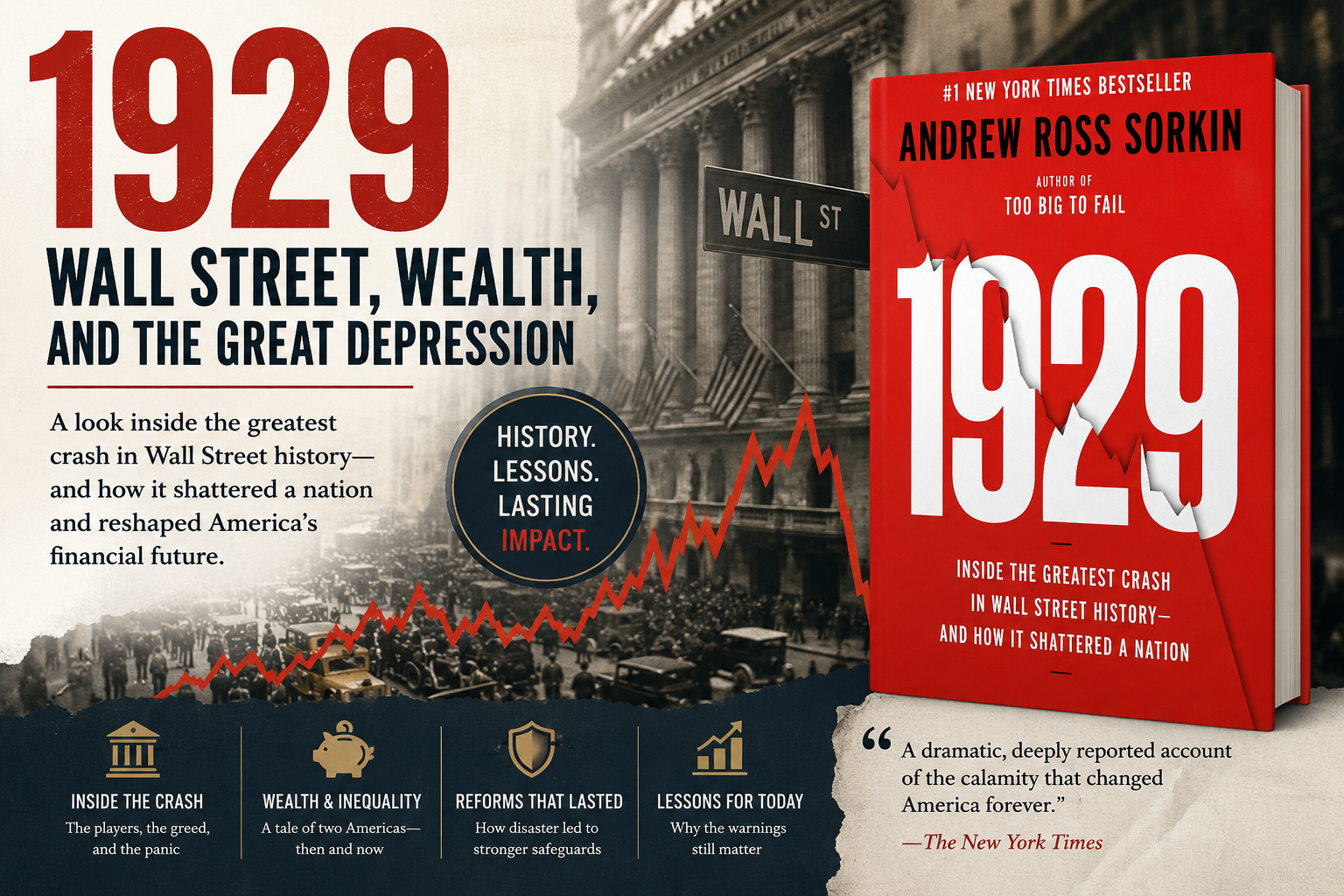
The book is less a “general history of ordinary Americans” and more an inside narrative of the financiers, bankers, politicians, and speculators who helped create the speculative bubble and then struggled to contain the collapse.
For many Americans outside the Northeast financial centers, life was still modest, regional, practical, and far less connected to speculative wealth. Large parts of the country were rural or industrial-working-class. The “Roaring Twenties” prosperity was real, but unevenly distributed. The book’s focus on New York elites can therefore feel almost foreign compared to family memories passed down through ordinary households.
The book is not simply about a market collapse. It is about what happens when a society begins to believe that prosperity is permanent, that risk no longer matters, and that wealth itself becomes detached from ordinary life.
The crash and the Great Depression exposed serious weaknesses:
almost nonexistent market regulation,
insider trading,
excessive leverage,
weak banking protections,
and little separation between speculation and ordinary banking.
The aftermath eventually led to reforms that reshaped American finance:
the SEC,
FDIC deposit insurance,
stronger disclosure rules,
banking reforms like Glass-Steagall,
and broader federal involvement in economic stability.
In other words, the suffering of the 1930s forced the country to build guardrails that many people later took for granted.
But there is also an irony the book seems to emphasize—and modern reviewers notice this too. The same patterns tend to return:
speculation,
belief that “this time is different,”
concentration of wealth,
financial innovation moving faster than regulation,
and optimism turning into panic.
Nightshade by Michael Connelly Review:
When I first realized Nightshade was introducing a brand-new main character instead of returning to familiar territory, I’ll admit I felt a little disappointed. Connelly’s long-running detectives feel like old companions, and I wasn’t sure I wanted to start over.
That hesitation didn’t last long.
Los Angeles County Sheriff’s Detective Stilwell may be “exiled” to the quiet rhythms of Catalina Island, but the calm doesn’t hold. What begins as routine island policing quickly turns dark with the discovery of a woman’s body weighted at the bottom of the harbor—known only by a streak of purple hair—and a separate investigation into poaching that uncovers violence and long-buried secrets among the island’s elite.
What surprised me most was how fresh the setting felt. Catalina Island isn’t just a backdrop—it becomes part of the story’s tension. The contrast between the island’s idyllic beauty and the darkness beneath it gives the novel an atmosphere that feels new for Connelly while still carrying his trademark precision and momentum.
Stilwell himself grows on you quickly. He’s relentless, flawed, and willing to cross lines when he believes justice demands it, very much in the spirit of Connelly’s best characters, even if he’s walking his own path.
By the time the two cases begin to intertwine, the book had fully pulled me in. Connelly once again proves how effortlessly he can build suspense, layer detail, and guide readers through a world that feels real and immersive.
In the end, what I thought might be a letdown became a reminder of why I love his writing in the first place. His novels take me into another world, and Nightshade was no exception. Reading Connelly is a kind of relief: a chance to step away from everything else and trust a master storyteller to carry you somewhere compelling.
Verdict: A strong, atmospheric start to a new character arc that feels fresh without losing the depth and drive longtime readers expect.
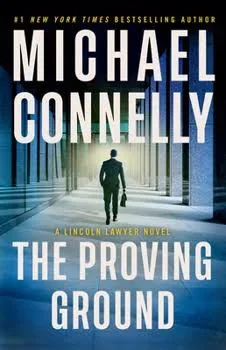
The Proving Ground: A Lincoln Lawyer Novel — Book Review
Michael Connelly’s The Proving Ground stands out in the Lincoln Lawyer series not because it abandons what works, but because it subtly shifts the terrain beneath it.
At its core, this is still a Mickey Haller novel driven by sharp dialogue, clean pacing, and Connelly’s steady command of the legal world. The pleasure of reading it comes from that familiarity—the confidence of the writing, the clarity of the plot, and the sense that the story knows exactly where it’s going. I enjoyed the book largely for those reasons alone.
What makes The Proving Ground different from the previous entries, however, is its legal pivot. Instead of focusing on criminal defense, Haller moves into civil law, filing a lawsuit rather than defending an accused client. That shift—from protecting individuals to holding an institution accountable—adds a fresh dimension to the series and reframes Haller’s role in a way that feels both natural and revealing. It’s not just a change in legal procedure; it’s a change in perspective.
The case itself centers on Tidalwaiv Technologies, an AI company whose chatbot is alleged to have influenced a violent crime. While the premise touches on timely concerns about artificial intelligence, the novel avoids turning into a cautionary screed. The real issue isn’t AI as an abstract threat, but the biases embedded in its design—the flawed assumptions, blind spots, and human decisions that shaped the system. In that sense, the technology is less the villain than the mirror.
As someone who uses AI tools like ChatGPT and finds them genuinely useful, I found this aspect of the book especially interesting. Connelly doesn’t argue that AI is inherently dangerous; instead, he explores how unexamined bias, poor oversight, and lack of accountability can turn powerful tools into harmful ones. That nuance gives the story weight without tipping into fearmongering.
Beyond the courtroom drama, Connelly weaves in personal threads—Haller’s family dynamics, disruptions caused by Los Angeles fires—that ground the novel and keep it human. These moments don’t distract from the plot; they deepen it, reminding the reader that legal battles don’t happen in isolation.
The Proving Ground may be the eighth Lincoln Lawyer novel, but it doesn’t feel like a repeat performance. It’s a confident evolution—familiar in voice, different in structure, and timely in its questions. For longtime readers, it offers something new without losing the rhythm that makes the series work. And for anyone interested in how law, technology, and human responsibility intersect, it gives you something to think about long after the case is closed.
History Matters: David McCullough