Exploring the unexpected connections that shape our lives
Book Reviews, Comments & Stories, Quotes, & Poetry & More
"Connections and Why They Matter"
Most of what happens in our life will spark a connection. Life connects with what has been found in books. Books connect with what happens in life. Use the connections to help you see more clearly. A love of reading and writing is what motivated the creation of this blog. Thank you for coming to the blog.
Have you ever said exactly what you meant and still been misunderstood?
We communicate constantly. Through conversations, emails, meetings, text messages, and the countless interactions that fill our days.
Yet despite all this communication, misunderstanding remains remarkably common.
We explain ourselves carefully, only to discover that someone heard something entirely different from what we intended.
We believe we have been clear, but the other person walks away confused, frustrated, or unconvinced.
Why does this happen?
Perhaps because meaningful communication involves much more than the words we choose.
Communication Begins Before We Speak
Most of us have been taught that better communication begins with improving how we express ourselves.
Choose the right words. Speak clearly. Make eye contact. Listen carefully.
These are valuable skills, but they are only part of the picture.
Our communication is also shaped by our attitudes, beliefs, intentions, and understanding of ourselves.
People respond not only to what we say but also to what they believe we mean.
They notice when our words and actions don't seem consistent. They sense when we are genuinely interested and when we are simply waiting for our turn to speak.
That is why authenticity matters.
Authentic communication begins with understanding what we believe, recognizing what we intend, and making a conscious effort to ensure that our words and actions reflect those intentions.
It is not about saying everything we think or expressing every feeling without restraint.
It is about communicating honestly, thoughtfully, and with an awareness of how our words affect others.
Why I Wrote The Power of Authentic Communication
Throughout my professional life, I worked with people in leadership, management, sales, career development, and many other settings where communication influenced outcomes.
One lesson became increasingly clear.
People who communicate effectively are not necessarily the most articulate or persuasive individuals in the room.
Often, they are the people who understand themselves, listen carefully, recognize different perspectives, and communicate with genuine intention.
I also came to recognize that communication problems frequently begin long before anyone speaks.
They begin with assumptions.
We assume others understand what we mean.
We assume their experiences are similar to ours.
We assume our intentions will be obvious.
And sometimes we assume that because our message makes sense to us, it should make sense to everyone else.
Those assumptions can become barriers to understanding.
I wrote The Power of Authentic Communication to explore how greater self-awareness, personal alignment, and intentional communication can help us overcome those barriers.
What Readers Will Discover
The book examines communication as a skill that develops through awareness, practice, and experience.
Among the ideas explored are:
Communicating with clarity: Understanding what you want to say and recognizing how others may interpret your message.
Aligning words with values: Building credibility through consistency between what you believe, say, and do.
Listening with intention: Moving beyond simply hearing words to understanding another person's perspective.
Navigating difficult conversations: Responding thoughtfully when emotions, disagreements, or misunderstandings arise.
Building trust and stronger relationships: Recognizing that meaningful communication depends on more than persuasion or presentation.
These principles apply to professional relationships, friendships, families, and everyday interactions.
Communication is not simply a tool we use to accomplish something.
It is one of the primary ways we establish relationships, express our identity, and influence the lives of others.
The Connection Between Identity and Communication
Much of my writing explores self-awareness, identity, and the experiences that shape who we become.
In What Matters: We Are the Sum of Small Moments, I consider how ordinary experiences, relationships, and decisions contribute to our understanding of ourselves.
The Power of Authentic Communication approaches that understanding from another direction.
Once we begin to recognize who we are, what we believe, and what matters to us, how do we express those things in our relationships with others?
Our identity influences our communication.
And our communication, in turn, influences our relationships and the way others come to understand us.
The two are inseparable.
We cannot always control how others interpret our words. Their experiences, expectations, and beliefs will influence what they hear.
But we can become more aware of what we communicate, why we communicate it, and whether our actions support the message we intend to convey.
Authentic Communication Is a Continuing Practice
No one communicates perfectly.
We misunderstand others, and they misunderstand us.
Sometimes we say too much. Sometimes we say too little. Sometimes we recognize what we should have said only after the conversation has ended.
Authentic communication does not eliminate those experiences.
It gives us a better foundation for responding to them.
We can learn to question our assumptions, listen with greater curiosity, and recognize when our intentions and words aren’t fully aligned.
Most importantly, we can become more willing to understand others rather than simply trying to make ourselves understood.
That is where meaningful communication begins.
Not with the perfect words, but with a genuine effort to connect.
Explore The Power of Authentic Communication
Have you ever wondered why some conversations build trust while others create distance, even when the words seem perfectly reasonable?
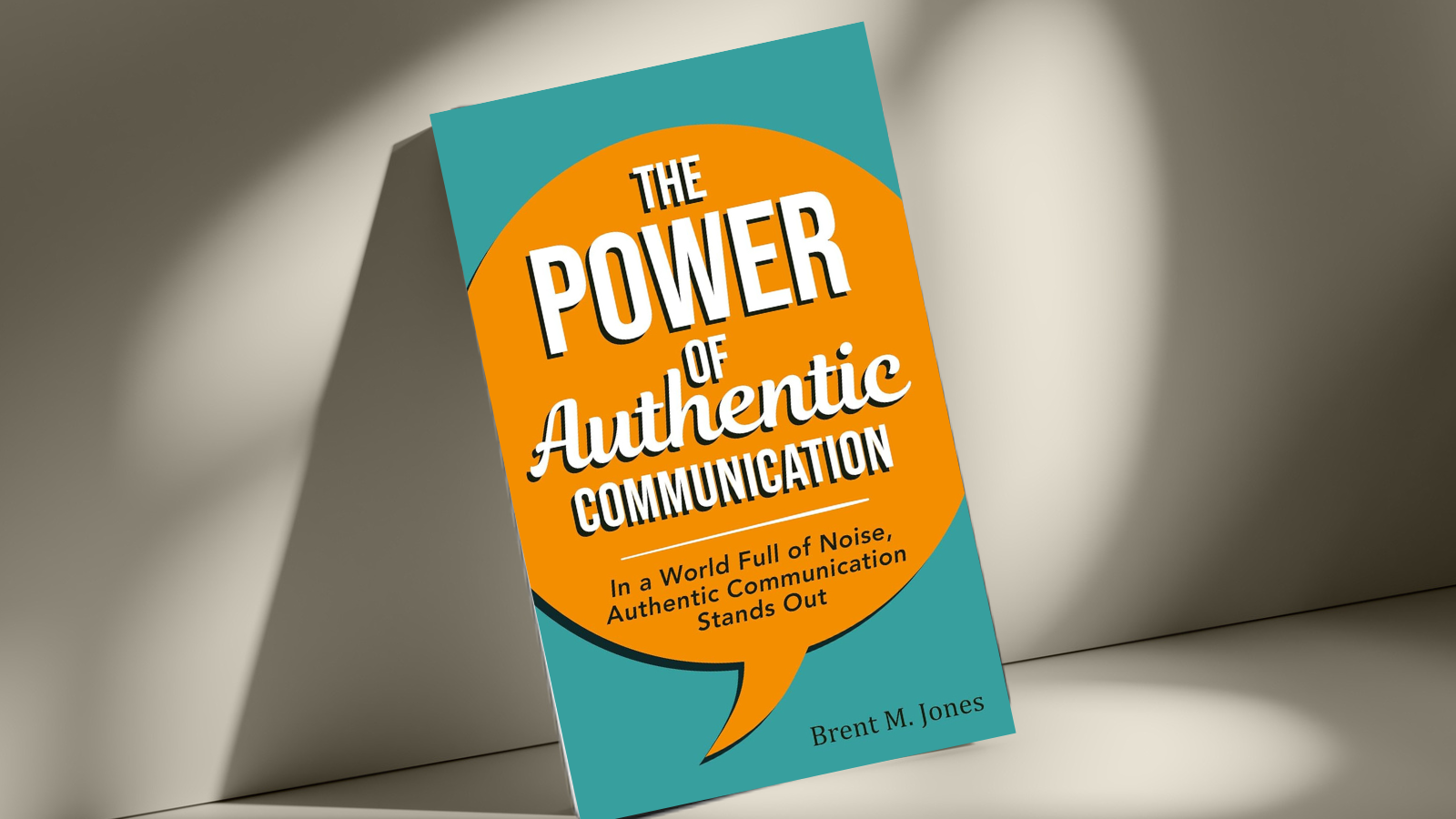
The Power of Authentic Communication: In a World Full of Noise, Authentic Communication Stands Out explores how self-awareness, clarity, personal alignment, and the relationships we build through communication connect.
Whether you want to strengthen professional relationships, navigate difficult conversations, or communicate more meaningfully in everyday life, this book offers ideas worth considering.
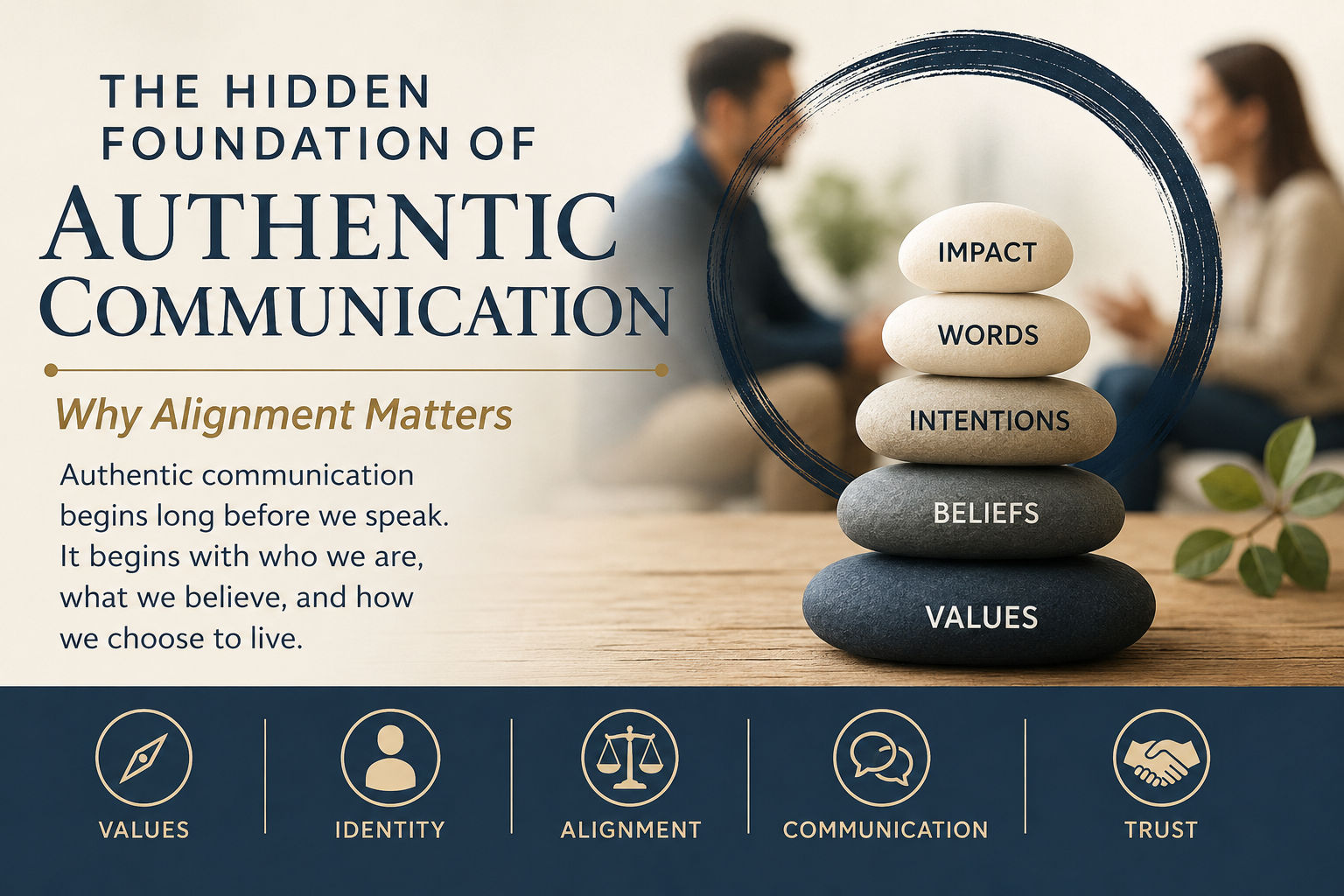
Before authentic communication becomes visible in our words, it begins with something deeper: the alignment between our values, beliefs, intentions, and actions.
Brent M. Jones writes about self-awareness, human connection, communication, and the experiences that shape our understanding of ourselves and others.
People often think authentic communication is about choosing the right words.
It isn't.
Words are only the visible part of communication.
What gives those words credibility is something much deeper.
Alignment.
When our values, beliefs, intentions, and actions point in different directions, people notice. They may not immediately understand why something feels off, but they sense the inconsistency.
Authenticity is not a communication technique.
It is the natural result of living in alignment with what we genuinely believe.
That may explain why communication can be so difficult.
Many of us spend years trying to improve how we speak before asking a more fundamental question:
"What do I truly believe?"
Communication begins there because, before we speak, we believe.
Want to explore these ideas further?
This article examines the foundation of authentic communication.