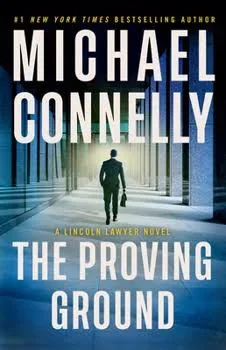
Michael Connelly’s The Proving Ground stands out in the Lincoln Lawyer series not because it abandons what works, but because it subtly shifts the terrain beneath it.
At its core, this is still a Mickey Haller novel driven by sharp dialogue, clean pacing, and Connelly’s steady command of the legal world. The pleasure of reading it comes from that familiarity—the confidence of the writing, the clarity of the plot, and the sense that the story knows exactly where it’s going. I enjoyed the book largely for those reasons alone.
What makes The Proving Ground different from the previous entries, however, is its legal pivot. Instead of focusing on criminal defense, Haller moves into civil law, filing a lawsuit rather than defending an accused client. That shift—from protecting individuals to holding an institution accountable—adds a fresh dimension to the series and reframes Haller’s role in a way that feels both natural and revealing. It’s not just a change in legal procedure; it’s a change in perspective.
The case itself centers on Tidalwaiv Technologies, an AI company whose chatbot is alleged to have influenced a violent crime. While the premise touches on timely concerns about artificial intelligence, the novel avoids turning into a cautionary screed. The real issue isn’t AI as an abstract threat, but the biases embedded in its design—the flawed assumptions, blind spots, and human decisions that shaped the system. In that sense, the technology is less the villain than the mirror.
As someone who uses AI tools like ChatGPT and finds them genuinely useful, I found this aspect of the book especially interesting. Connelly doesn’t argue that AI is inherently dangerous; instead, he explores how unexamined bias, poor oversight, and lack of accountability can turn powerful tools into harmful ones. That nuance gives the story weight without tipping into fearmongering.
Beyond the courtroom drama, Connelly weaves in personal threads—Haller’s family dynamics, disruptions caused by Los Angeles fires—that ground the novel and keep it human. These moments don’t distract from the plot; they deepen it, reminding the reader that legal battles don’t happen in isolation.
The Proving Ground may be the eighth Lincoln Lawyer novel, but it doesn’t feel like a repeat performance. It’s a confident evolution—familiar in voice, different in structure, and timely in its questions. For longtime readers, it offers something new without losing the rhythm that makes the series work. And for anyone interested in how law, technology, and human responsibility intersect, it gives you something to think about long after the case is closed.