Exploring the unexpected connections that shape our lives
Book Reviews, Comments & Stories, Quotes, & Poetry & More
"Connections and Why They Matter"
Most of what happens in our life will spark a connection. Life connects with what has been found in books. Books connect with what happens in life. Use the connections to help you see more clearly. A love of reading and writing is what motivated the creation of this blog. Thank you for coming to the blog.
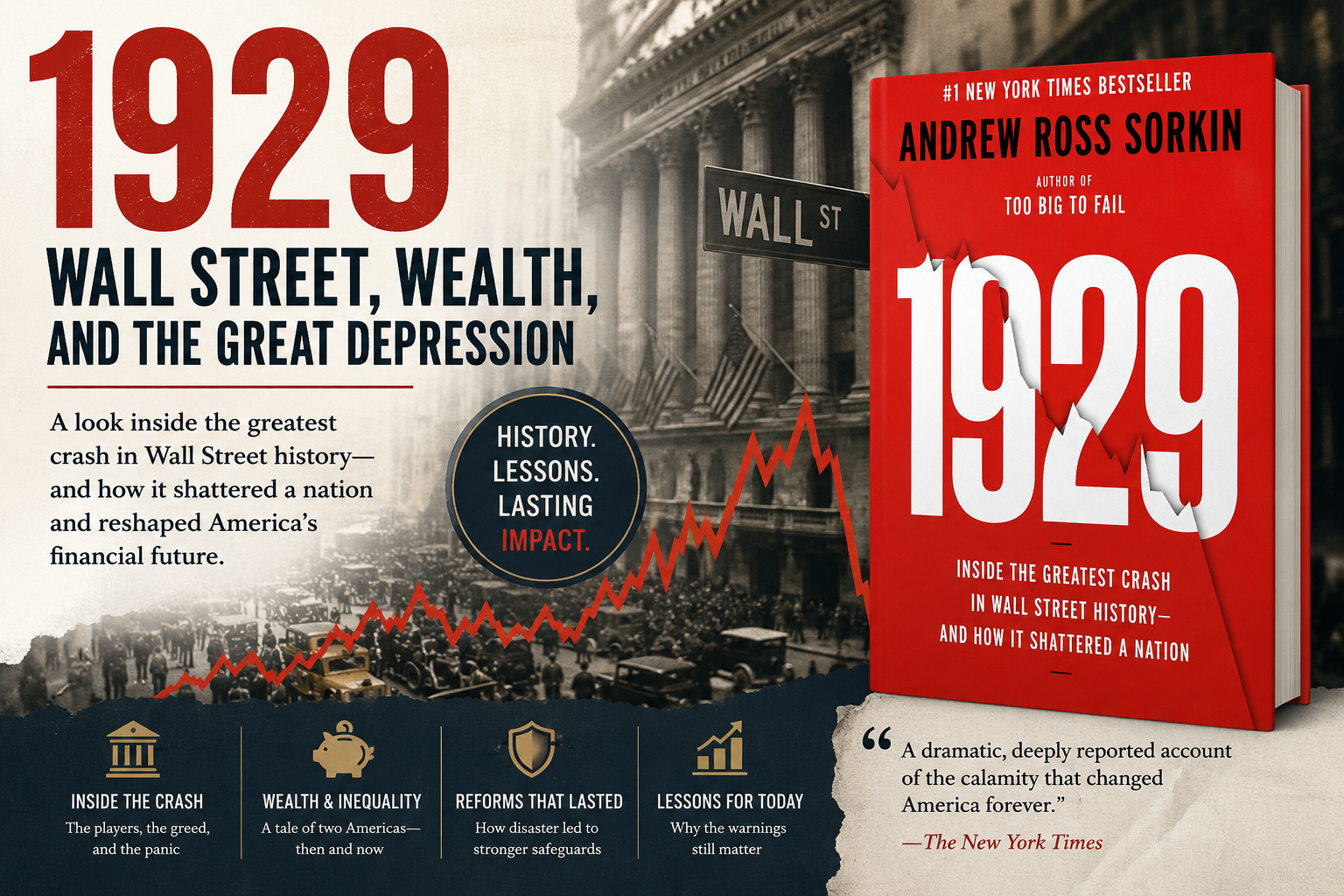
The book is less a “general history of ordinary Americans” and more an inside narrative of the financiers, bankers, politicians, and speculators who helped create the speculative bubble and then struggled to contain the collapse.
For many Americans outside the Northeast financial centers, life was still modest, regional, practical, and far less connected to speculative wealth. Large parts of the country were rural or industrial-working-class. The “Roaring Twenties” prosperity was real, but unevenly distributed. The book’s focus on New York elites can therefore feel almost foreign compared to family memories passed down through ordinary households.
The book is not simply about a market collapse. It is about what happens when a society begins to believe that prosperity is permanent, that risk no longer matters, and that wealth itself becomes detached from ordinary life.
The crash and the Great Depression exposed serious weaknesses:
almost nonexistent market regulation,
insider trading,
excessive leverage,
weak banking protections,
and little separation between speculation and ordinary banking.
The aftermath eventually led to reforms that reshaped American finance:
the SEC,
FDIC deposit insurance,
stronger disclosure rules,
banking reforms like Glass-Steagall,
and broader federal involvement in economic stability.
In other words, the suffering of the 1930s forced the country to build guardrails that many people later took for granted.
But there is also an irony the book seems to emphasize—and modern reviewers notice this too. The same patterns tend to return:
speculation,
belief that “this time is different,”
concentration of wealth,
financial innovation moving faster than regulation,