
Picture by Jamie Street Unsplash
Hope Is More Than Wishful Thinking
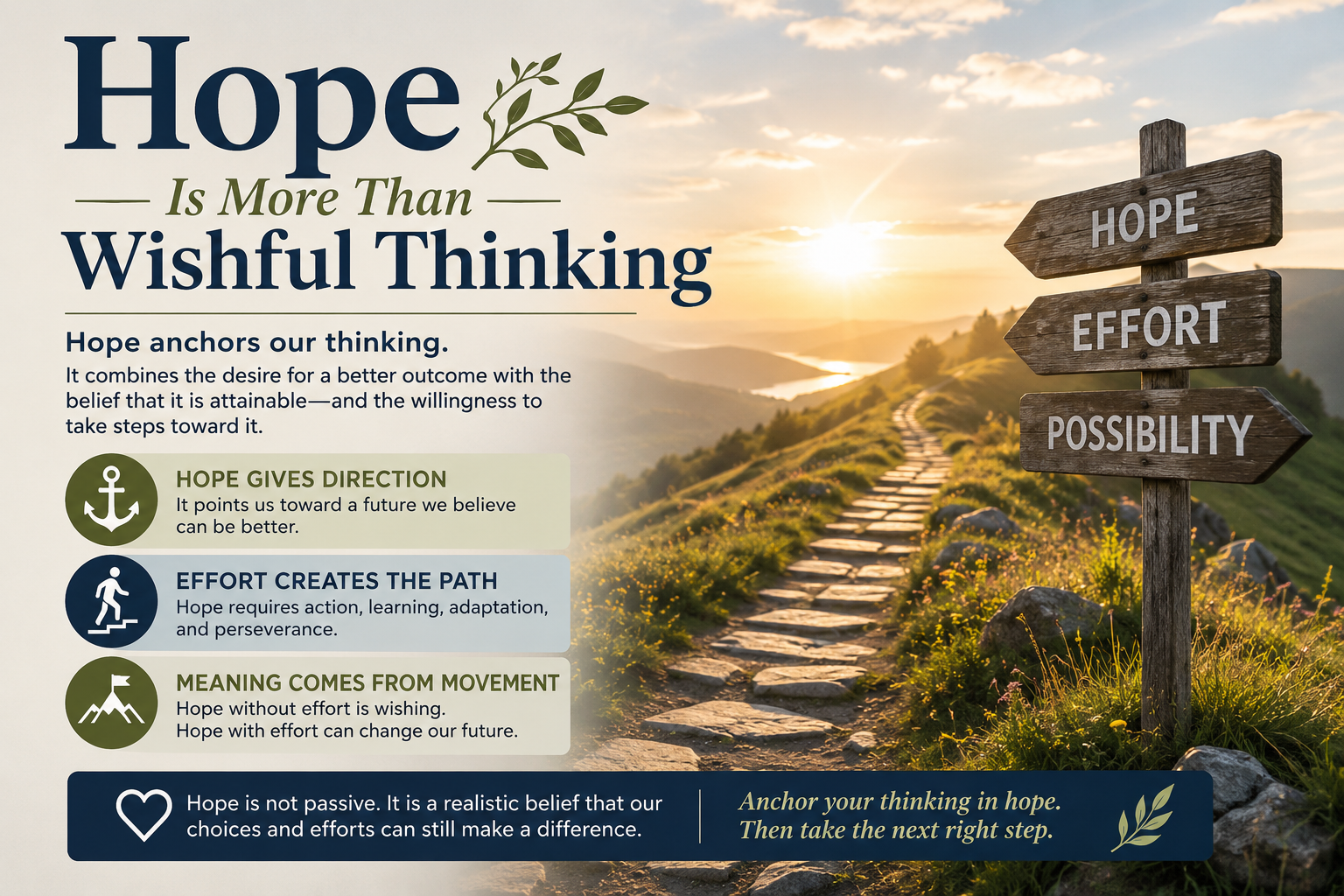
Hope is often described as an optimistic state of mind. Yet hope is more than wishing that something good will happen. Hope implies movement. It suggests that the future is not entirely fixed and that our choices, actions, and persistence still matter.
A person may hope for better relationships, improved health, meaningful work, or greater peace of mind. But hope without effort eventually becomes little more than wishful thinking. For hope to retain its value, it must be accompanied by some willingness to act, learn, adapt, or persevere.
Perhaps this is why hope can serve as an anchor for positive thinking. Positive thinking is not simply forcing ourselves to see the bright side of life. Rather, it is the ability to believe that possibilities still exist and that our participation in those possibilities matters.
Hope says, "The outcome I desire may be difficult, uncertain, or even unlikely, but there is still a path worth exploring."
Positive thinking anchored in hope is therefore neither naïve nor passive. It is a form of realism that acknowledges obstacles while refusing to surrender to them. It allows us to remain open to possibilities while accepting that meaningful outcomes usually require both patience and effort.
In that sense, hope may not merely support positive thinking. It may be one of the conditions that makes positive thinking possible in the first place.
What hopes continue to anchor your thinking, and what efforts are you willing to make in order to give those hopes a chance to become reality?
Positive Thinking May Depend on What Anchors Our Thinking

Positive thinking is often described as a soft skill. Like communication or emotional intelligence, it is assumed to be something we develop through practice and experience. Yet maintaining a positive outlook may depend on something deeper than a skill. It may depend on the beliefs that anchor the way we see other people.
Emotional intelligence is closely related. It involves recognizing our own emotions and understanding the feelings of those around us. Someone with emotional intelligence can read situations well and respond thoughtfully rather than react impulsively.
Positive thinking may depend less on effort and more on what anchors our thinking.
When we first encounter the phrase positive thinking, it often sounds like an attitude rather than a skill. A skill implies the ability to perform something well, usually through practice and improvement. Positive thinking, however, seems less like something we do and more like a way we see.
For this reason, positive thinking is often grouped among soft skills or people skills. It is assumed that those who maintain a positive outlook work better with others and handle challenges more effectively.
But there may be something deeper involved.
Simply deciding to “be positive” can feel artificial if the underlying assumptions about people remain unchanged. If our thinking about others is anchored primarily in whether they agree with us, share our beliefs, or validate our perspective, positivity becomes fragile. It lasts only as long as others meet those expectations.
A more durable form of positive thinking may come from a different anchor altogether.
If we hold a deeper conviction that there is something fundamentally worthwhile in every person—even when we disagree with them—our thinking changes. The need for others to share our views becomes less central. Appreciation can exist even in the presence of difference.
In that sense, positivity is not merely a skill or a personality trait. It is partly a reflection of what we believe about human nature itself.
When the anchor shifts, the behavior often follows.
Positive thinking then becomes less about forcing optimism and more about recognizing value that may not be immediately obvious.
In that sense, positive thinking may not be a skill we practice as much as a belief we hold. When the anchor changes, the way we see others often changes with it.
This idea—that the meaning we experience in life often grows out of the quiet ways we see people and everyday moments—also became one of the themes explored in my book What Matters: We Are the Sum of Small Moments.
Why Positivity Needs Balance
True positivity isn't about pretending life is easy. It's about learning to hold hope and reality together.
We often think of positivity as focusing on the good, looking on the bright side, or maintaining an optimistic outlook. While those qualities certainly have value, positivity without balance can easily become denial. Ignoring life's disappointments doesn't make them disappear. It simply keeps us from learning what they have to teach.
Perhaps genuine positivity begins with a different question:
Can we acknowledge both the light and the shadow without losing hope?
That question led me to think about the idea of infinity.
Infinity and Balance
Infinity is limitless, yet it can take many forms. Positive and negative numbers stretch endlessly in opposite directions, reminding us that even within something boundless there is symmetry.
Between those two infinities sits zero.
Mathematically, zero is simply the point that separates positive from negative. Symbolically, however, it can represent something more. It is a place of balance. A meeting point between expansion and restraint, gain and loss, certainty and uncertainty.
Perhaps infinity is not only about endlessness but also about relationship. Opposites help define one another. Without one, the other loses much of its meaning.
The same may be true of our lives.
Why Positivity Needs Balance
Positivity without balance can become unrealistic optimism.
If we focus only on what is pleasant and refuse to acknowledge hardship, we risk losing depth, wisdom, and empathy. We may appear optimistic on the surface while quietly avoiding the realities that help us grow.
Healthy positivity is different.
It doesn't deny disappointment. It doesn't pretend that grief, failure, or uncertainty don't exist. Instead, it recognizes that these experiences are part of being human and chooses hope anyway.
Hope built on honesty is stronger than hope built on avoidance.
The Value of Contrast
Every positive experience gains meaning because its opposite is possible.
Joy is more deeply appreciated after sorrow.
Peace feels more precious after conflict.
Gratitude often grows from seasons of scarcity.
Courage exists because fear exists.
Growth usually follows challenge rather than comfort.
Without contrast, we would have little way to recognize the value of what we experience. Light is most noticeable after darkness. Calm feels different after the storm has passed.
Life teaches us through comparison.
Living in Balance
Balance doesn't require us to remain emotionally neutral. It simply reminds us not to become trapped by either extreme.
When life is going well, balance encourages humility and gratitude.
When life becomes difficult, balance reminds us that hardship is rarely permanent. Circumstances change. Perspectives change. We change.
Rather than swinging endlessly between optimism and despair, we can learn to stand in the middle, acknowledging both reality and possibility.
That balance doesn't weaken positivity.
It gives it credibility.
A Different Way to Think About Positivity
Perhaps positivity is not the absence of difficulty but the confidence that difficulty does not have the final word.
Perhaps balance is what allows us to celebrate life's successes without becoming complacent and endure its disappointments without becoming discouraged.
The goal is not to eliminate contrast.
The goal is to learn from it.
Without struggle, resilience has little meaning.
Without uncertainty, faith requires nothing.
Without loss, gratitude is often taken for granted.
Perhaps that is one of life's quiet lessons.
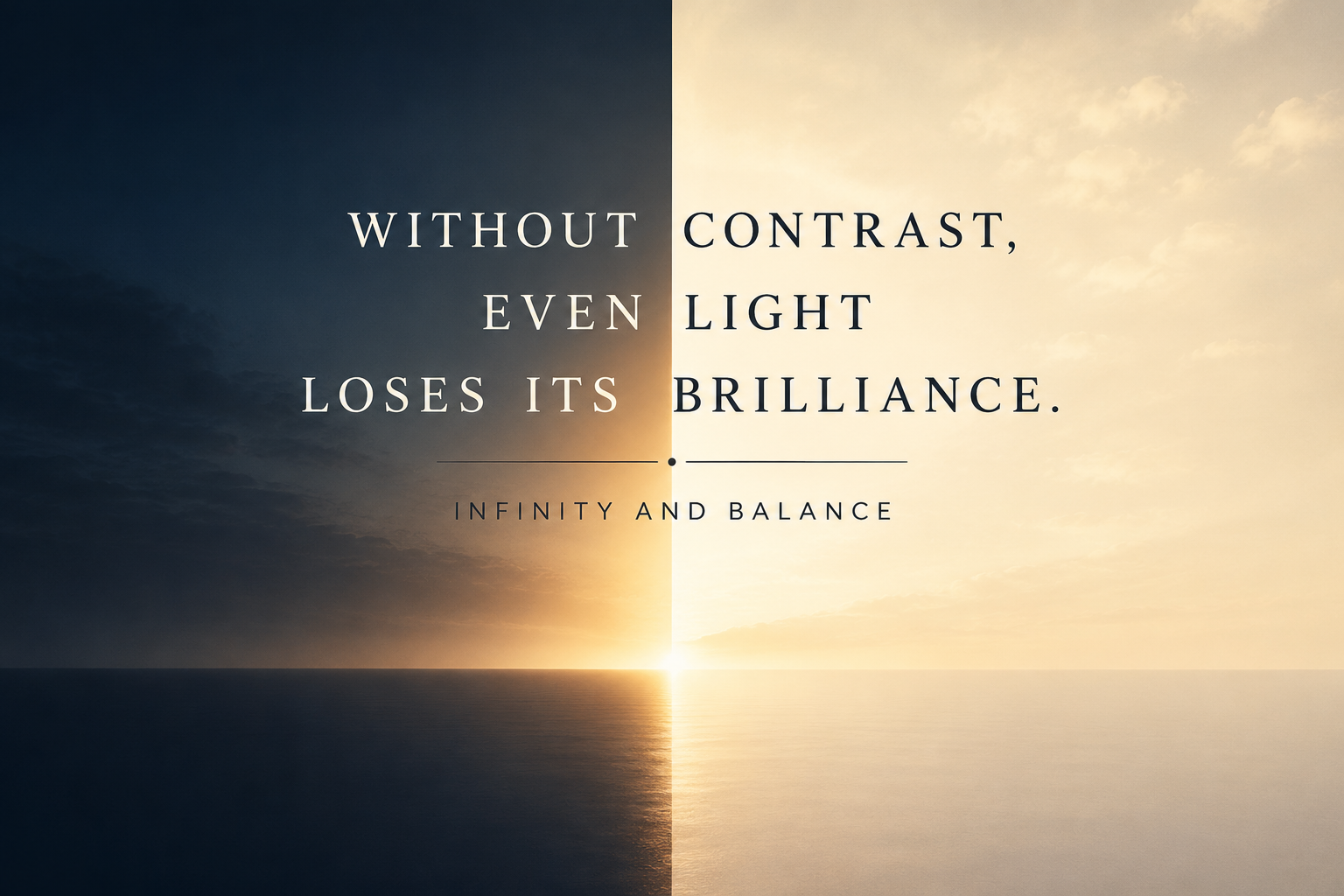
Without contrast, even light loses its brilliance.
Positivity, Balance, and the Space in Between
Positivity is often treated as a direction, something we move toward by turning away from what's difficult. We're encouraged to focus on the good, stay optimistic, and "keep things positive," as if positivity exists on its own, separate from doubt, loss, or struggle.
But positivity doesn't live in isolation.
The more I reflect on it, the more I believe positivity requires balance, not as a limitation, but as the very condition that gives it meaning.
Infinity offers a useful metaphor. It feels limitless, expansive, without edges. Yet even infinity has direction. Positive and negative stretch endlessly in opposite directions, mirroring one another. When we consider both together, something subtle appears between them: not emptiness, but balance.
Zero isn't nothing.
It's a meeting place.
In human terms, positivity works much the same way. When optimism ignores difficulty, it risks becoming denial. When it refuses to acknowledge pain, it loses depth. And when it insists on brightness at all costs, it can unintentionally silence genuine human experience.
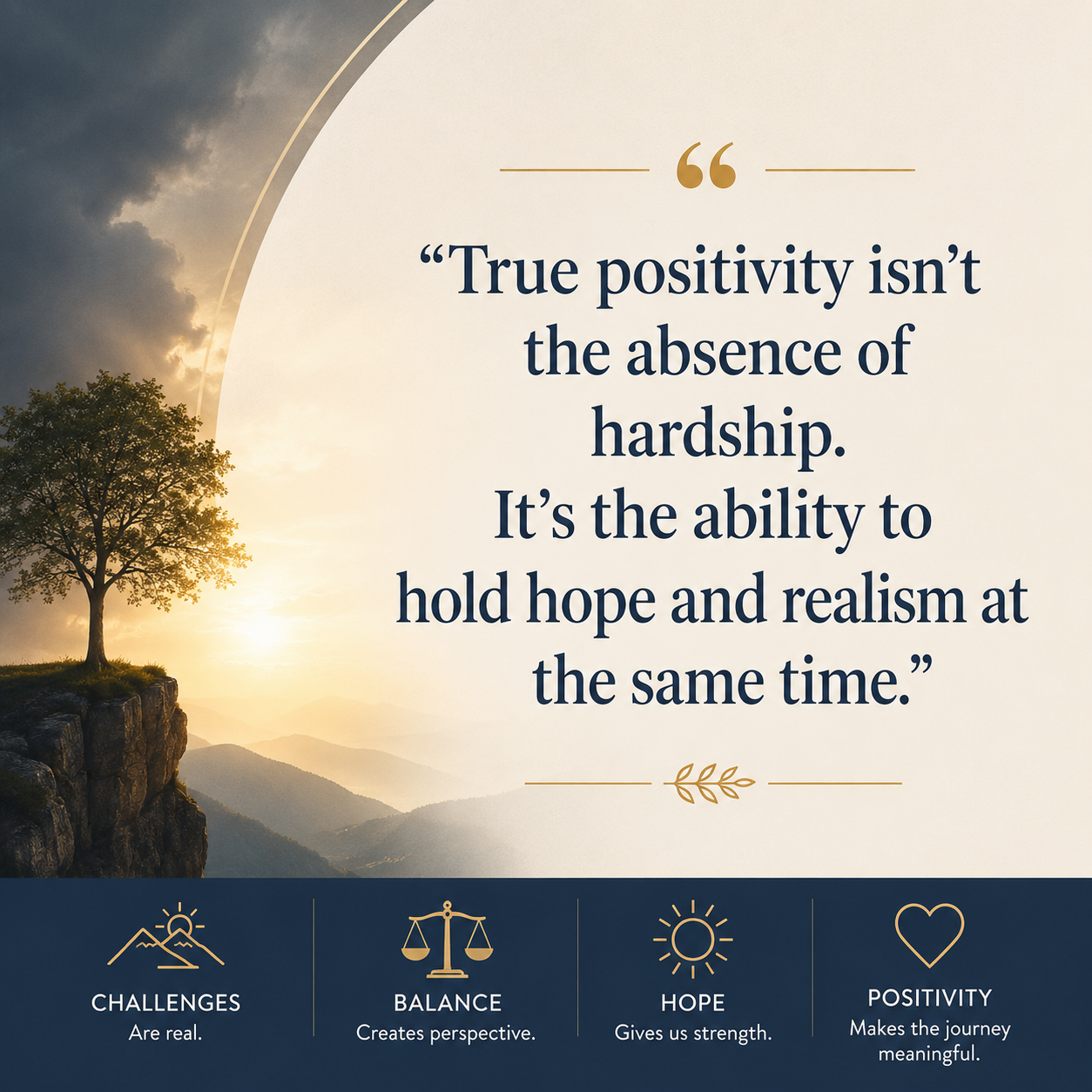
True positivity isn't the absence of hardship.
It's the ability to hold hope and realism at the same time.
Every positive experience, joy, growth, peace, success, draws meaning from the possibility of its opposite. Gratitude deepens when we've known loss. Peace feels more authentic after turbulence. Growth rarely appears without struggle pushing against it.
This doesn't mean we dwell on the negative.
It means we understand its purpose.
Positivity isn't about pretending the shadow isn't there. It's about recognizing that light becomes meaningful because shadow exists. The two are not enemies. Together, they give life its depth and contrast.
In that sense, positive thoughts aren't fragile ideas that must be protected from reality. They are resilient perspectives shaped by it. They don't eliminate uncertainty.
They coexist with it.
Perhaps positivity isn't something we maintain through constant effort or discipline. Perhaps it's something that emerges naturally when we allow balance to exist.
In daily life, this balanced perspective often appears in small, ordinary moments. It's the ability to acknowledge a difficult day without letting it define the whole story. To hold disappointment without surrendering hope. To recognize progress even when the path feels uneven.
Positivity, lived honestly, isn't about forcing optimism.
It's about remaining open to meaning as it moves, shifts, and quietly reappears in the middle of real experience.
Perhaps that is why balance matters so much.
Without contrast, even light loses its brilliance.
The relationship between balance, perspective, and authentic human growth is one of the central ideas explored throughout The Human Factor. If these reflections resonate with you, you may enjoy continuing the conversation there.
Learn more about The Human Factor.
Positive Thinking is a Soft Skill →

Soft skills involve interacting with colleagues, solving problems, and managing work. In contrast, emotional intelligence is the ability to understand and be aware of one's and others' emotions.
When you first consider the term “positive thinking,” it seems to be an attitude rather than a skill. A skill is an ability to do something well, suggesting expertise is part of it. Soft skills combine personal and social skills, character traits, and attitudes.
Positive Thinking is usually listed as a Soft Skill or People Skill needed to work effectively with others and succeed in the workplace.
An employer would be wise to look for Positive Thinkers in the interview process and value that skill as very important because those people tend to concentrate on solving issues rather than creating or worrying about them. When they face stress, they are more likely to deal with it positively and effectively.
Positive Thinking comes naturally to some, but skills can be learned and polished. This positive process can start by learning to analyze your thoughts and then taking deliberate action to make those thoughts effective.
Concentrating and trying to improve things, working effectively with others: Employers will value that skill, and having a positive attitude will help you reach your career goals. Because people are only sometimes taught to be positive, exhibiting this quality may give you an edge over the competition.
Soft Skills Still Matter
They matter because they are relevant, transferable, and keep an individual highly employable. Employers want people who already have soft skills because your employer doesn't have to train you on them, and the truth is they won’t do that good of a job on it anyway.
Soft skills are, in many ways, more important than hard skills. These skills enable people to collaborate better on projects, brainstorm and negotiate, gather support, and encourage others to participate.
Some personality traits can simplify one's ability to learn soft skills. Extroverts, for example, find it easier to learn communication and leadership skills.
Introverts often have many people skills that come naturally to them. For example, they may be good listeners, empathetic, and able to read others. They may also be more open to listening, resulting in solid connections.
Social skills can be taught. It is never too soon to start showing kids how to get along with others. Social skills can help students set goals for themselves and build positive relationships with peers.
Knowledge Becomes Wisdom with Some Work. →

Quote about Knowledge and Wisdom by Brent M. Jones
It is often assumed that knowledge is good and even the essence of wisdom. That is not the case. Whether the ability leads to good or evil depends on how it is used.
Lessons prepare us to understand how to use it either way. We must evaluate our experiences to determine how knowledge could have helped or hurt us.
Wisdom leads to being able to make sound judgments about a subject, while knowledge is simply knowing. Anyone can learn about a topic by reading, researching, and memorizing facts. It takes a healthy dose of perspective and the ability to come through experience to use knowledge correctly.
What happens to us when our music runs out? →

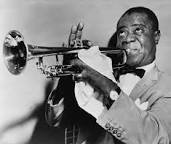
What happens when our music runs out? Do musicians retire when that happens? Louis Armstrong said that musicians don't retire, they only stop when there is no more music left in them.
Music is a connection between our physical self and our very souls. We feel the music. It reflects our heart. Music with scriptures are hymns. We worship through hymns. The feelings of our heart are conveyed in verbal prayer. Our bodies and faces reflect the images of happiness and sadness, with music opening those feelings. Singing makes us better. Sometimes we sing for what we long for. We use music to help us get by without things wanted.
Louis Armstrong also said that “What we play is life”. What is that music that is our life? How did that music get to be inside us, the musician? Is it a song yearning for something, or is it a song celebrating something?
Did the music ever leave Louis Armstrong? Did it ever run out? He never retired, so that answers that, doesn’t it? What about us? What do we long for? What do we have a passion for? Love and kindness are passions that can focuses and drive us. We lose ourselves in those feelings. They fill our minds, and we have little place for worrying about ourselves.
In the play, Cats, the cats all audition for the opportunity to go back and have another life and tell us why in the song "Memory" telling us “They had the experience but missed the meaning”. They had lived once, their music had run out, and wanted another chance.
Is there any chance that Louis Armstrong would want to come back and have another life, feeling he had missed the meaning? Of course not. That one is so easy to answer. He knew his passion and told us that “what we play is our life”.
His playing moved us. We felt it. For him the music was Jazz. For us, what we play can be just whatever it is that we love. It can be anything we chose, but then we need to feel passionate about it. If your lucky enough to love knowledge and learning, then your indeed blessed. That, like the music for Louis, just never stops being an option.
If your passion is your family then be an example to them. Show your love and concern.
If your passion is for art, poetry, music, knowledge, reading, or nature then seek more.
Find the good in your life.
What about Louis? Do you think he had a perfect personal life? Do you think he spent his time worrying about missing the meaning in his life? He dropped out of school at 11 and had rough years ahead of him. His mother didn’t have an inspiring occupation. Later he said of himself, that he hardly looked back at his youth as the worst of times, but drew inspiration from those times instead. He said that "Every time I close my eyes blowing that trumpet of mine—I look right in the heart of good old New Orleans... It has given me something to live for.”
What we have a passion for matters. Yes. musicians don’t retire, as long as they have music in them. Find the music.

What A Wonderful World - The Beauty of the World is Still in Place →
What A Wonderful World
Lyric’s by Louis Armstong
I see trees of green
Red roses too
I see them bloom
For me and you
And I think to myself
What a wonderful world
I see skies of blue
And clouds of white
The bright blessed day
The dark sacred night
And I think to myself
What a wonderful world
The colors of the rainbow
So pretty in the sky
Are also on the faces
Of people going by
I see friends shaking hands
Saying, "How do you do?"
They're really saying
"I love you"
I hear babies cry
I watch them grow
They'll learn much more
Than I'll never know
And I think to myself
What a wonderful world
Yes, I think to myself
What a wonderful world
Oh yeah












The beauty of the world is still in place. The seasons pass and then come again all bringing their own wonder. Grief comes but it also eventually goes and we continue to ‘wonder” at the majesty of the earth.
Was Ayn Rand right: Is self interest always rational? →

Recently, in a casual conversation, someone mentioned enjoying the books of Ayn Rand and quoted her statement:
“The rational pursuit of selfish gain on the part of each individual must give rise to the ideal form of society.”
This idea has strong appeal. It promises that if individuals simply pursue their own interests rationally, society as a whole will flourish. But the weakness in this claim lies in the word “rational.” What does it really mean?
Rand championed the pursuit of self-interest within a free market. In such a system, she believed success would naturally reward merit and effort. If some did not succeed, that was unfortunate — but presumably deserved. Yet this raises an important question: who determines what is deserved? Is market success always a reliable measure of rational effort or moral worth?
It is also questionable whether markets are ever truly “free.” Power accumulates. Successful individuals and corporations can shape the rules, limit competition, and block paths for others. Under such conditions, outcomes may reflect advantage as much as merit.
Rand famously wrote:
“The moral purpose of a man’s life is the achievement of his happiness.”
There is truth in the idea that individuals should pursue their own happiness and think for themselves. However, equating self-interest with selfishness creates a problem. When actions disregard the well-being of others and focus solely on personal gain or pleasure, they can undermine the very social and economic systems that make prosperity possible.
True rational self-interest requires foresight, cooperation, and respect for others’ rights. Without those elements, self-interest becomes narrow selfishness — and that is neither rational nor socially sustainable.
In this sense, Ayn Rand may be partly right: individuals should act rationally in pursuit of their own flourishing. But she is too optimistic in assuming that self-interest alone will reliably produce an ideal society.
Is Now Better Than Then? →

Of course, if you do it now, it is done. If you do it then, you must wait. “Now” feels proactive, and a do-it-now attitude is generally seen as a positive trait.
But perhaps the deeper difference between “now” and “then” is not about urgency. Perhaps it is about awareness.
I used to want to be somebody.
Now I want to remember who I am.
I used to love positive thinking books.
Now I see how enjoyable people are when they are simply not harmful.
I used to wonder how I would ever pick one favorite color.
Now I see the sky, the mountains, and all that grows — and that is enough.
I used to look for who was right and wrong during elections.
Now I hope to see who is willing to ask what is right and wrong.
I used to think accomplishments were necessary to validate my efforts.
Now I hope those I care for will, through their actions, seek what is right and positive.
I used to hope for more blessings.
Now I cannot count all that I have had.
I used to try to say more when more needed to be said.
Now I hope I can say less.
I used to hope to know and learn more.
Now I hope to remember what I already know.
Other Suggested Posts

What else do we do know, now that were here? →

The good news is that perhaps because of the sign, you know you’re not lost. The even better news is that you know where you are because wherever you are, you can truthfully and confidently say that ”you are here.”
Even more important is that you are also reading this right now. Now is always the best time to focus your attention.
“Today is all you have. Don't worry about tomorrow. Just do the best you can right now.”
Maybe you are still there but only feel lost. What does feeling lost mean? It could mean that you are just unsure of yourself. The feelings could be confirmed physically, socially, or emotionally.
Feeling lost could be a good thing. You have realized that where you have been and what you have been doing is not what you want because you have started to change how you think- a sign of growth. Just permitting yourself to question what you want today can be good but also open you up to feeling lost with what you must leave behind.
“Today is all you have. Don't worry about tomorrow. Just do the best you can right now.”
For more about Now, see the post
Fear itself is suffering but what you fear may never happen. →

PHOTO BY VADIM BOGULOV UNSPLASH
Sometimes, suffering fear is more challenging than facing trouble. This brings another quote to mind by Napoleon Bonaparte:
“He who fears being conquered is sure of defeat.”
As an example of fear compared to suffering, consider the person afraid of drowning. The person might have that fear come to mind whenever water is near. Perhaps just seeking a lake on TV or reading about people on a lake brings the fear of drowning to mind, and the person suffers that same fear. To drown in a lake would be terrible, but then it would be over and would end. The person who suffers from anxiety may never find an end to their torment.
Another example of where fear may be worse than the subject of fear happens to job seekers and those who need to change a career. They fear the informational interviews necessary to learn what is required, and they fear the hiring interviews and not being hired when they have a discussion. The fear prevents them from starting a process, and even when it is created, the anxiety can result in doing less than was needed.
Why positive and inspiring quotes often feature mountains? →

Mountains have provided refuge to truth-seekers, hermits, and even ordinary men. Their beauty, mystery, and transcendence can help lift our lives above the grime and dirt associated with the plains below.
Climbing a mountain or a hill is an adventure everyone should experience. It also symbolizes the ups and downs of our life. It's a journey to the top, a race of motivation, patience, and strength. But ultimately, the best feeling is the part when you reach the top of a hill or a mountain.
Mountains remind us that the world is not entirely artificial, controlled, and predictable. They call to our attention that we must be strong and prepared. Mountains command humility with their vertical angles and beautiful faces.
Over every mountain, there is a path, although it may not be seen from the valley. - Theodore Roethke
Note: Mount Timpanogos is one of Utah’s most recognizable mountains and perhaps Utah’s most famous mountain hiking destination. At 11,749 feet, it is the second-highest summit of the Wasatch Mountains. It is one hr., 31 min (46.7 mi) via I-15 S and UT-92 E - South of Salt Lake City, Utah.
Choose Those You Associate With Wisely →

Getting through life requires help. None of us travels very far alone. The challenge is choosing wisely who walks beside us.
An African proverb says, “If you want to go fast, go alone. If you want to go far, go together.” There is wisdom in that. Long journeys require support, encouragement, and shared strength.
But there is another truth we must not ignore: the longer the journey, the more costly poor companionship becomes. Not everyone who walks with you is moving in the same direction. Some will slow you down. Others may quietly lead you off course.
We cannot control everyone we meet, but we can choose whose influence we allow to shape us.
Choose dependable, honest people you are proud to know. Seek out those whose values, goals, and motivations align with — or even elevate — your own. Surround yourself with people who challenge you to grow, not people who tempt you to settle.
Going far together is powerful. Just be careful who “together” includes.
Is it Good Enough, Excellent, Perfection or is it Pride? →
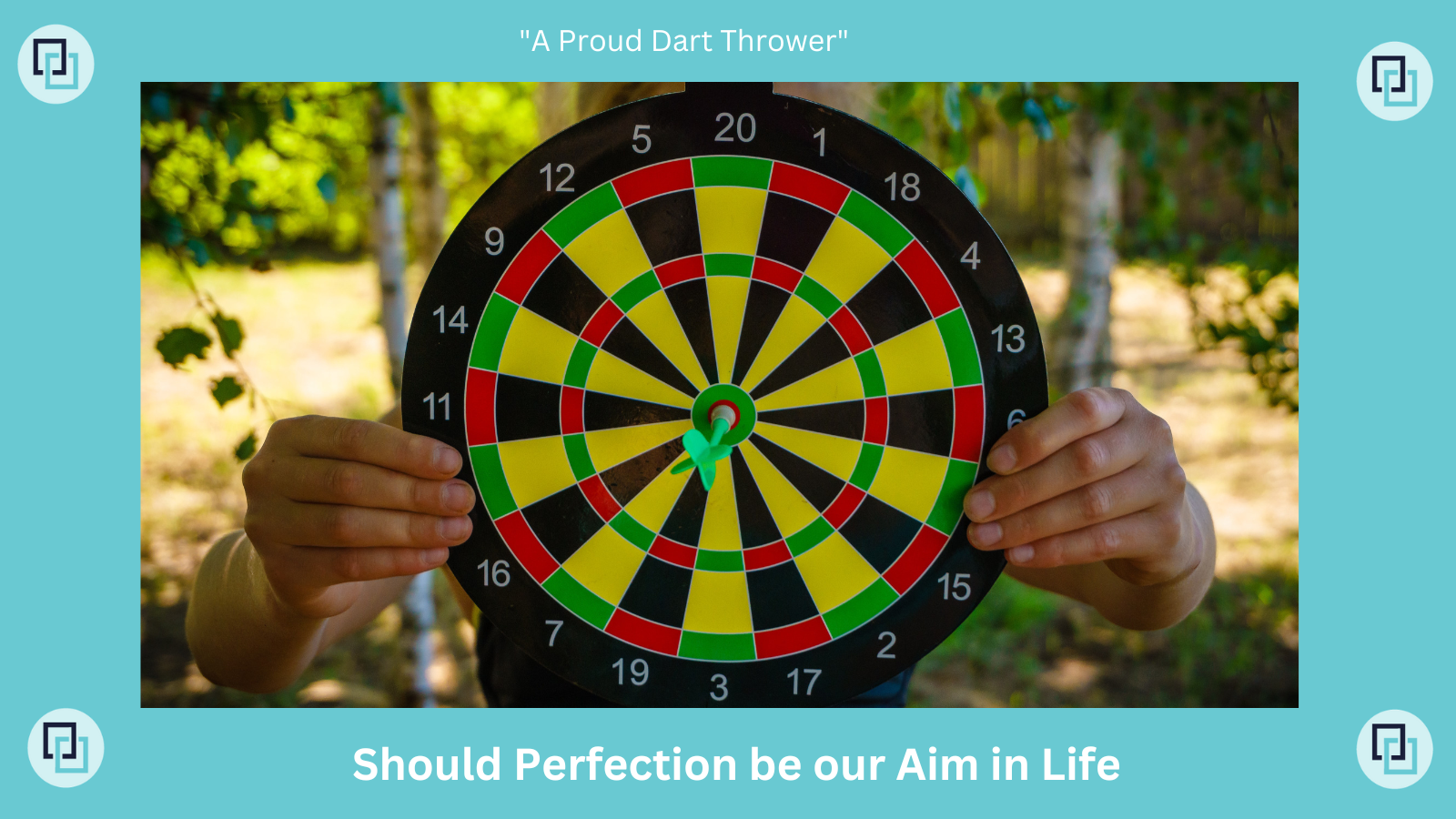
When your contribution is "good enough," you can see that it is part of a larger goal and supports the plan and the others working for the same purpose.
When it is “excellent,” you recognize that it will be judged for what it is and any larger goal it might support.
When it is “perfect,” you likely have spent too much time on it and short-changed others working with you. The perfection of one contributor can reduce the impact of the others and may seem like an overreach. Some of the others who supported the same effort may have had to wait for your excellent work to be completed flawlessly.
“Perfection is the enemy of progress”
- Winston Churchill
Why would that be the case? One reason would be the fear of failure that comes with a goal of perfection. Obsession with perfection is likely motivated, at least in part, if not totally, by pride.
“Too often, people mistake progress for perfection.
They spend more time staring at the weeds than assessing the forest. They need to catch up on the details instead of asking whether their work is moving them in the right direction. And most of all, they are confused about the meaning of “done.” (quote from Forbes 2017 Why Perfection Is The Enemy Of Done)
C.S. Lewis said, "Pride gets no pleasure out of having something, only out of having more of it than the next man.”
Why do we strive to EXCEL? Is it for our "self-image"- Pride, or is it to give thanks for our abilities and to help others through our contribution to a goal?
Do the comparisons of your results make you proud? Is it the pleasure of being above the rest? Once the element of competition is gone, pride is gone.” If you continually tackle each project with the goal of perfection and can not stop until you have achieved it, you may often miss the point of the project and your role in it.
If a project points to you and your part in what it is, then you may rightfully feel perfection is needed. That would be something to be very proud of, wouldn't it? If the project points to the efforts of many, then your results should lift everyone rather than diminish their contribution.
Why telling your personal life story is effective self reflection

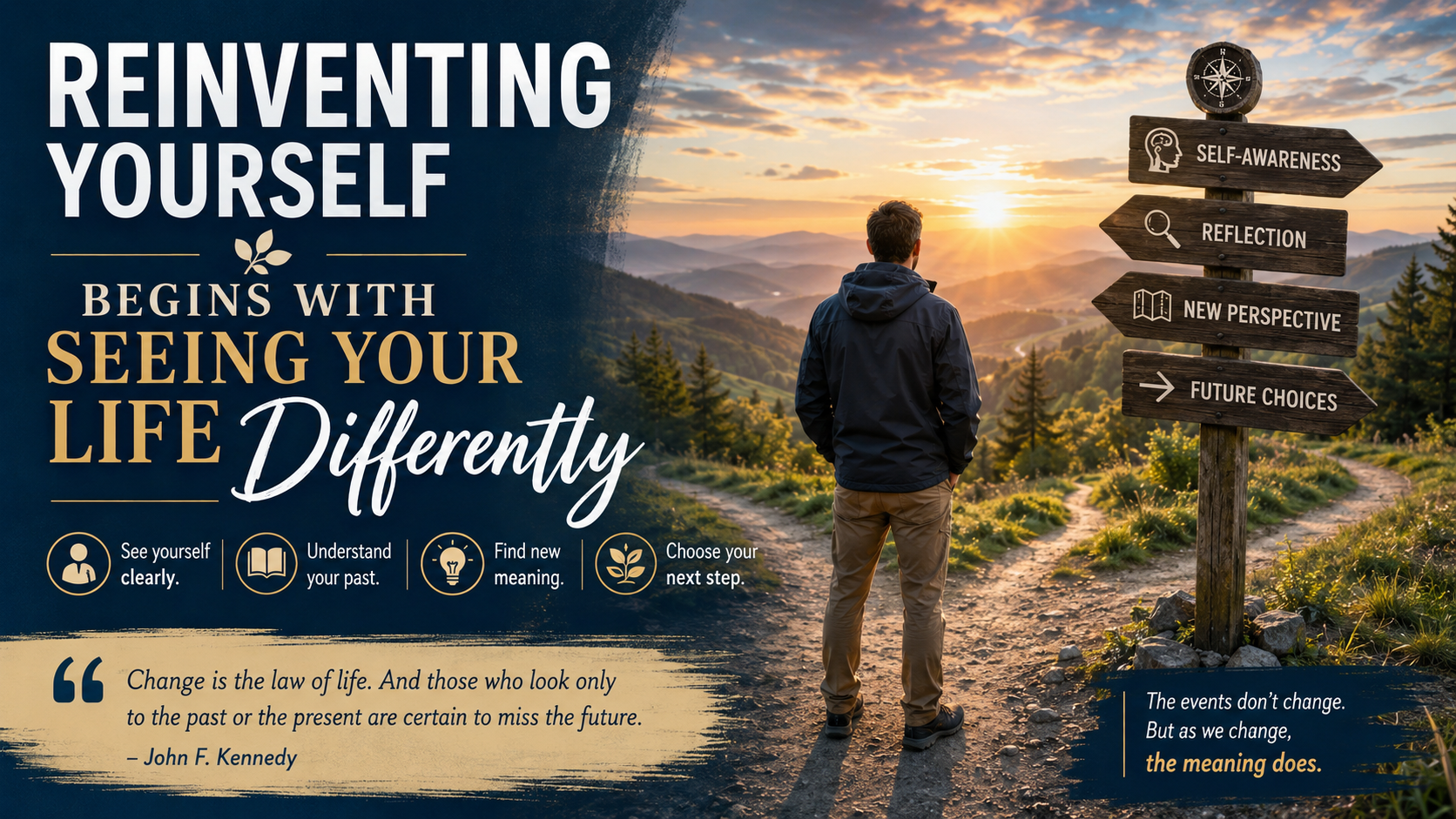
There is no one whose story I am as familiar with as much as my own and the same is true for you. This seems so obvious, but then what surprises me a little is how I see my own story differently almost every time I tell it.
“The most powerful words in the English language are tell me a story.” -Pat Conroy
Connections that seemed so important the first time that I told my own story seemed less important over time. Coincidences and perspective have become clearer over time. When I see those changes the story changes as I retell it and I find that it changes me. I become different because of how I see the story differently. It seems like we continually create who we are but use the same events to shape our own conclusions.
Victor Yocco, in his article Dwelling On The Past: The Importance Of Self Reflection, said `personal reflection enables us to process and make meaning of our experiences. Everyone stands to gain from engaging in some type of reflection.
I have witnessed how other people seem to change their own conclusions about themselves using the same facts from participating in an event at my local church.
Over a period of about 35 years a men's group I participated in met once a month and each time one person would take about 45 minutes and tell the group their life story.
The initial purpose in doing this was to help us get to know each other. We believed that men didn't bond all that easy and they normally were a little shy in a setting like this. We felt it was important to gain an appreciation and even a love for each other.
People moved in and moved away over this time but somehow we were able to keep this going. After a few years it lead to recycling some of us by repeating our story and we would hear the life stories again. I do have some memory issues, but I usually can remember the details of these type of stories clearly. What was interesting is that sometimes the events of a story heard before clearly was viewed differently by the presenter when re told. I had my own occasions of retelling my life experiences that I felt important and it was clear to me that the same events looked different in retelling. There were times when I wondered if a person who seemed to see the same event differently when retold, was doing so because having told the story he then found different new connections to the events. I also wondered if the changes and different emphasis was on purpose just reshaping an image?
People do come and go in our lives and it takes some time to see reasons. When a new person comes we take the influence and new perspective for granted as coincidence. When we look back and see the full impact of the people and new events in our lives we see our own experiences differently and as a result the past looks different and our expected destiny feels changed by the events.
Julie Beck, Senior Editor at the Atlantic wrote a story for the Atlantic in 2016 titled “Coincidences and the Meaning of Life“. A quote used in the article, “A coincidence is in the eye of the beholder.” Her article studies the impact of coincidence suggesting such things as Carl Jung’s theory of “synchronicity”* as potential reasons for these event in our life but it seems clear that when we consider our own life stories that our own experiences and even those coincidences that caused us to consider a different viewpoint do change us and we became a new persons reinvented by our own introspection.

Links to Julie Beck, Senior Editor at the Atlantic wrote a story for the Atlantic in 2016 titled “Coincidences and the Meaning of Life“.
Link to Victor Yocco’s article, Dwelling On The Past: The Importance Of Self Reflection, in Smashing Magazine 2018
Synchronicity is a concept first introduced by analytical psychologist Carl G. Jung "to describe circumstances that appear meaningfully related yet lack a causal connection."
Reading changes our view of our own path through life

Reading is an activity that refuels and rewires the brain. Reading fiction books teaches you to live in a world of characters and travel to new places. Reading a non-fiction book opens your mind to new insights from individual wells of knowledge that can make your life better.
Reading expands the mind and gives you more ideas because you draw from various experiences. It keeps your minds young, healthy, and sharp, with studies showing that reading can help prevent Alzheimer's disease. Reading every day may reduce dementia risk, according to a study published in JAMA Psychiatry in July 2018.
Gaining more exposure to vocabulary through reading leads to higher scores on reading tests and general intelligence tests for children.
Through reading, we meet new people and go to new places, leading to our reinventing ourselves. Some benefits of reading are:
improves brain connectivity.
increases your vocabulary and comprehension.
empowers you to empathize with other people.
aids in sleep readiness.
reduces stress.
lowers blood pressure and heart rate.
fights depression symptoms.
prevents cognitive decline as you age.
Anna Quindlen's book, How Reading Changed My Life, values the comforting premise that readers are never alone. "There was waking, and there was sleeping. And then there were books," she writes, "a kind of parallel universe in which anything might happen and frequently did, a universe in which I might be a newcomer but never really a stranger.
What is clear is that reading changes us and changes our life.
Links to Ann Quindlen’s book: How Reading Changed My Life
Links to Being Patient Reading Improves Memory and Helps Prevent Dementia
What we have in us can drive us to be something far better. →

We don’t know if a caterpillar can feel or sense surprise and awe at what it becomes, turning into a butterfly. We know that we humans think the surprise and wonder when a little crawling bug becomes a beautiful butterfly.
The butterfly can remember what it learned as a caterpillar. According to studies by scientists, caterpillars can learn and remember things when they are caterpillars, and adult butterflies can do the same when they are butterflies. One example is avoiding an awful smell experienced as a caterpillar carries over into the moth stage.
A good lesson for humans, remember what you learned when you were starting.
Facts about Butterflies
Butterfly wings are transparent.
There are almost 20,000 butterfly species.
Butterflies use their feet to taste.
Butterflies only live for a few weeks.
The most common butterfly in the US is the Cabbage White.
Some butterfly species migrate from the cold.
Studies reveal that butterflies can remember what they learned as caterpillars
Dream Big but bring your own Sunshine →

Don’t expect others to take your dreams and bring the bright light of day to shine on them. Take your dreams and add enough light so that they can seem natural to those that you need to help you
To add light to your dreams requires planning, study, research, and networking.
The quote “Make your own sunshine” is often used, but the sunshine is always there. It comes up every morning. The real secret is to bring your dreams into the light of the day.
