Exploring the unexpected connections that shape our lives
Book Reviews, Comments & Stories, Quotes, & Poetry & More
"Connections and Why They Matter"
Most of what happens in our life will spark a connection. Life connects with what has been found in books. Books connect with what happens in life. Use the connections to help you see more clearly. A love of reading and writing is what motivated the creation of this blog. Thank you for coming to the blog.
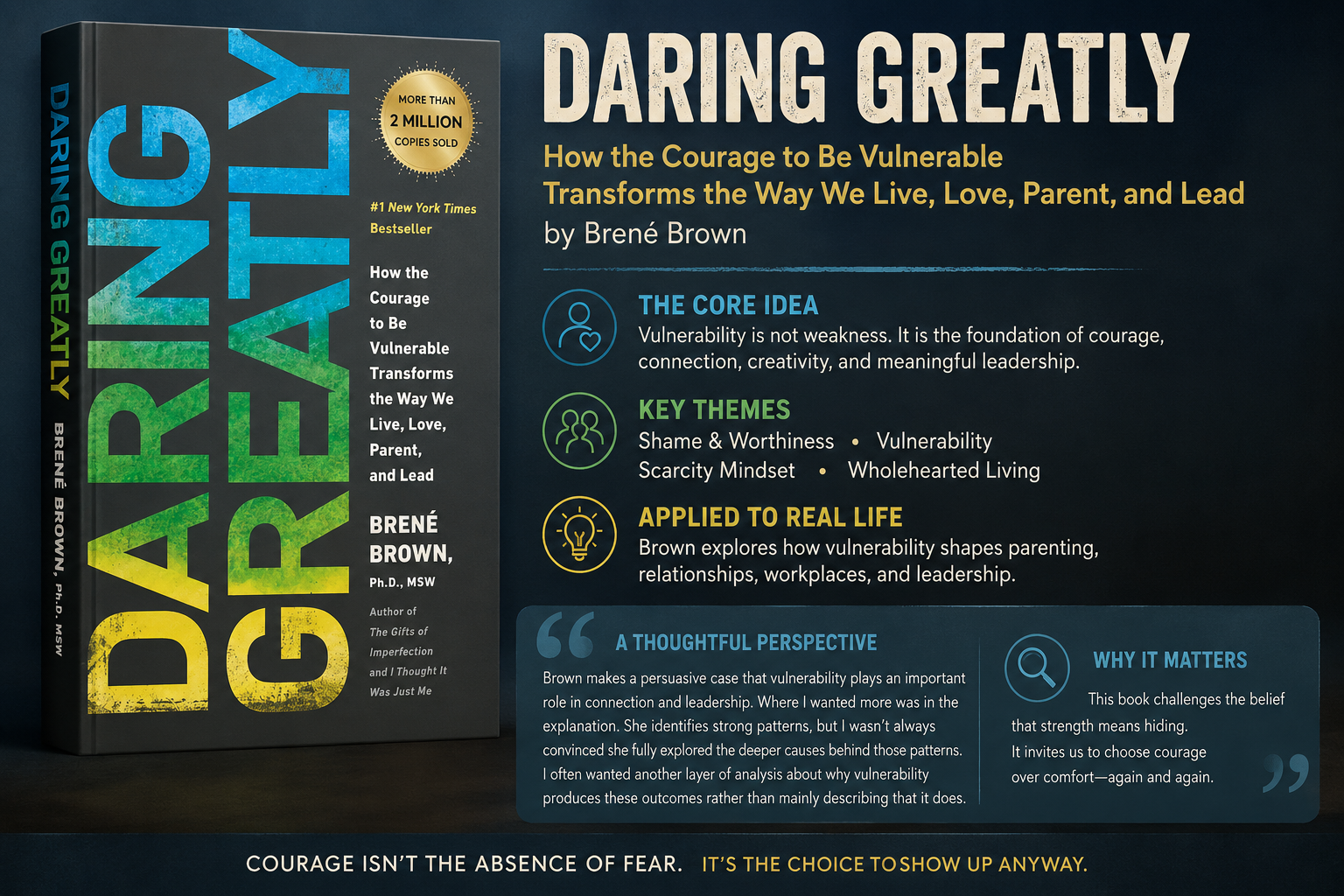
Daring Greatly challenges the common belief that vulnerability is a weakness, arguing instead that it is the foundation of courage, authentic relationships, creativity, and effective leadership. Through research, personal stories, and practical examples, Brené Brown encourages readers to embrace uncertainty rather than hide behind perfectionism or fear. The book has resonated with millions because it offers an accessible and hopeful perspective on living more openly and authentically.
While the book presents an important and worthwhile message, I found myself wanting a deeper exploration of the ideas behind it. Brown identifies compelling patterns and associations, but I was not always convinced she sufficiently examined the underlying causes that produce those outcomes. At times, the discussion feels more descriptive than analytical. Even so, Daring Greatly succeeds in starting meaningful conversations about shame, courage, and human connection, making it a valuable read for those interested in personal growth and relationships.
In a noisy world, what truly sets you apart is how honestly you connect.
The Power of Authentic Communication is a thoughtful and practical guide to speaking with clarity, listening with intention, and showing up as your true self in every conversation.
Whether you're navigating personal relationships, leading a team, or building your professional presence, author Brent M. Jones draws on decades of coaching, leadership, and life experience to show how authentic communication can transform the way you relate to others—and to yourself.
Inside, you'll learn how to:
Recognize and remove common barriers to real communication
Speak with purpose—without jargon or pretense
Adapt your message while staying rooted in your values
Build trust, resolve conflict, and inspire meaningful change
Strengthen emotional intelligence and self-awareness through intentional dialogue
This isn’t a book about saying the “right” thing. It’s about learning to be real—with yourself and with others. If you're seeking deeper connections, stronger leadership presence, or a more grounded way to express who you are, this book is an ideal place to start.
Because in a world full of noise, authenticity isn’t just powerful—it’s essential.
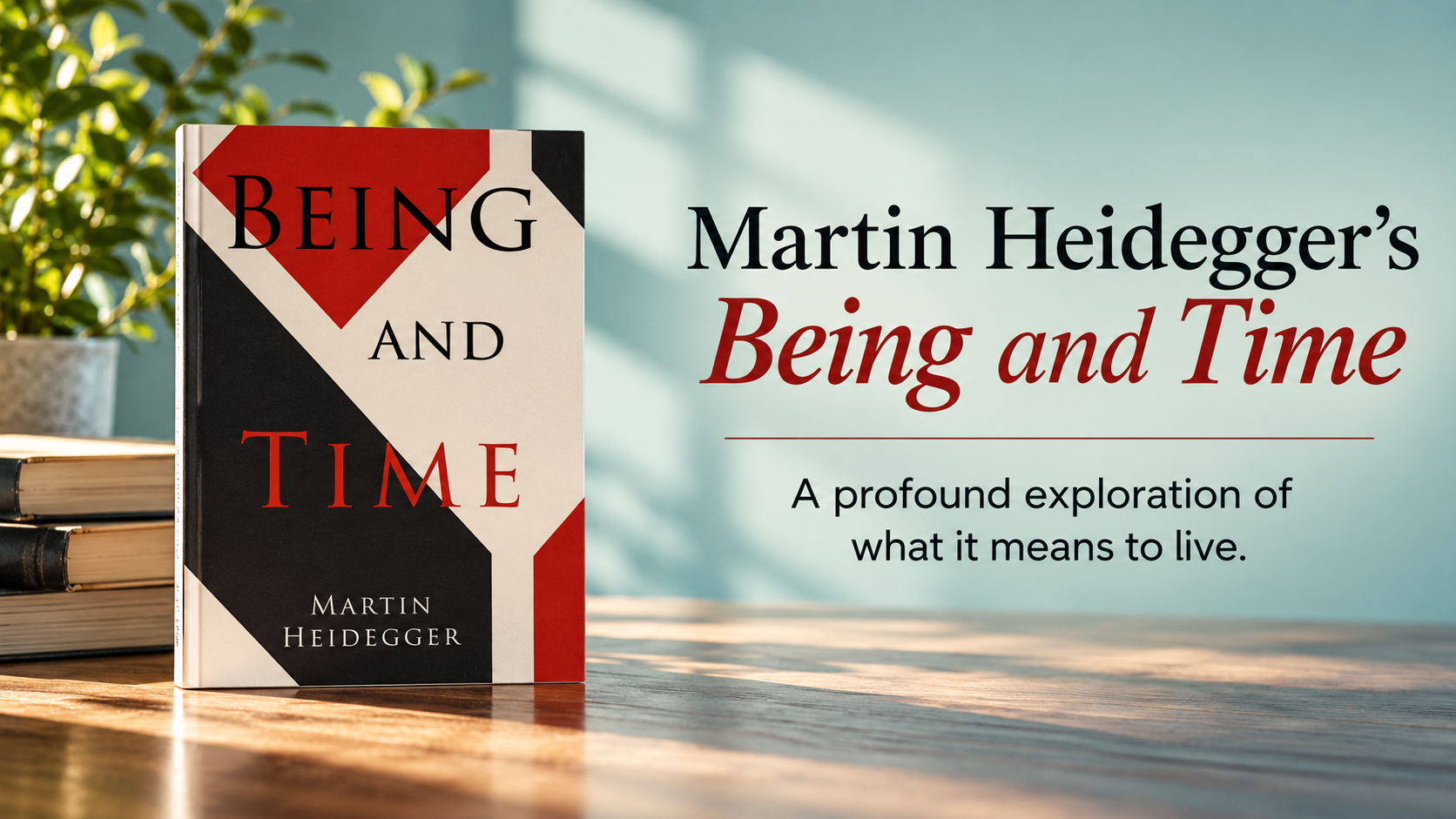
Martin Heidegger’s Being and Time, first published in 1927, is one of the most influential works of twentieth-century philosophy. It is also one of the most difficult books I have read.
At the center of the book is a question that sounds simple: What does it mean to be?
Heidegger believed that philosophy had spent centuries discussing the things that exist while giving too little attention to the meaning of existence itself. His approach begins not with an abstract definition of being, but with the particular kind of being that can ask questions about its own existence.
He calls this Dasein, often translated literally as “being-there.”
We Don't Simply Exist
One of the ideas I found most interesting is that human existence is not simply a matter of occupying space in the world.
We find ourselves already in a world filled with relationships, responsibilities, expectations, possibilities, and a past we did not entirely choose. We make decisions within that world, and those decisions help determine who we become.
But we can also lose ourselves in it.
It is easy to live according to what other people expect, what society considers normal, or what Heidegger describes as the anonymous influence of “the they.” We can go through life doing what one is supposed to do without asking whether those choices genuinely belong to us.
That is where Heidegger's discussion of authenticity becomes especially interesting.
Authenticity does not mean withdrawing from other people or simply “being yourself” in the way we commonly use that phrase. It involves recognizing that our lives are our own to live and that our choices cannot ultimately be made for us.
Time Changes the Question
The second half of the title matters just as much as the first.
For Heidegger, being and time cannot really be separated.
Human life is finite. We live with a past that has already shaped us, a present in which we must act, and a future filled with possibilities that will eventually come to an end.
Our awareness of mortality changes the meaning of our choices.
If our time were unlimited, choosing one possibility over another would carry far less weight. But it isn't unlimited. Every choice opens some possibilities and closes others.
This is one reason Heidegger's discussion of being-toward-death is so important. He is not simply asking us to think about dying. He is examining what awareness of our mortality means for the way we live.
What I Took From the Book
What stayed with me most was the connection between time, choice, self-awareness, and authenticity.
We inherit much of the world in which we live. We don't choose where our lives begin, many of the circumstances that shape us, or all the things that happen along the way.
But within those circumstances, we still confront possibilities and make choices.
And because our time is finite, those choices matter.
That makes Being and Time more than an abstract philosophical exercise for me. It raises a very personal question:
How much of the life I am living reflects choices I have consciously made, and how much simply reflects the life I fell into?
That is a question worth considering even if you never make it through all of Heidegger's book.
A note on reading it:Being and Time is challenging. Heidegger develops his own terminology, revisits ideas from different directions, and can take long philosophical detours. At times, I found some of his discussion reminiscent of religious questions about conscience, mortality, and how one ought to live, although his philosophical project is not based on belief in a deity
Related:Now Is Full of Then Our experience of the present is never entirely separate from what came before. What happens to “now” when our connection to “then” begins to change?