


Stories of Your Life and Others by Ted Chiang & The Movie
Which was better, the book or the movie?
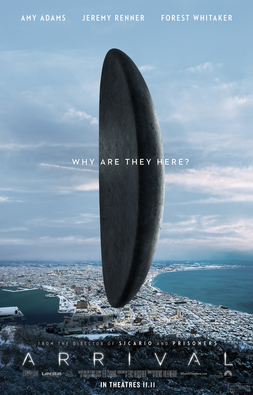
The book “Stories of Your Life and Others” by Ted Chiang was a different reading experience for me. This is because I went to the show and saw the movie when I finished the book. “Arrival” is based on one of the nine chapters in this book. I went to the front the same day I finished the book.
This proved to be very revealing. Usually, a book is the better option between movies and books, and there are many good reasons for that.
The plot usually is better in a book. You can see into the character’s minds and thoughts. You know more about the characters. You know their history. You may be exposed to a lot of side stories. When they do something, it can be clearer why they are doing it with more depth of knowledge.
You have more freedom to imagine the surroundings in your way. When you read, you can use all of your own experiences to add to the descriptions and things that happen.
In a movie, sometimes the actors do a poor job or are poorly cast for their roles. They can be such beautiful, or maybe ugly people, that their presence distracts from the plot. You can be influenced by sound or poor acting to the extent that you lose track of the plot's intent.
This movie and this book were significant exceptions to what usually is the case.
The first problem was the plot. The plot in the book seemed to be the central theme of aliens landing in several places on the earth and efforts made in trying to communicate with them. What seemed like a subplot in the book were the memories of the linguist, Dr. Louise Banks. She kept remembering her daughter’s death and many specific events in her short life. Those memories popped up in paragraphs that just seemed at times as a sidebar thought and not the main story. That more important story of the alien’s arrival appeared to be the main storyline in the book. The purpose of those memories wasn’t clear or understood until the end of the story in the book.
We were left too much room to project our thoughts about why the memories were occurring and didn’t see the connections.
In the movie, those memories turned out to be as necessary or more important than the alien’s visit. The movie seemed to have more control over the memories plot. It could emphasize some of those very relevant memories to the overall event. The power was in the advantage of being able to imply connections to things by flashbacks. The repetition was itself a statement. Seeing the facial expressions as the mother remembered things was a real advantage.
The relationship that evolved between the two key actors was detected much sooner in the movie, again because you could see their faces by just watching them together. This is another area where it wasn’t clear in the book how they felt about each other until the end.
This movie was better than the book.
The movie “Arrival” left me in awe at the plot. Not just the arrival but all that happened. The book “Stories of Your Life” left me unclear about what brought about the event.
Books often precede good movies. They are usually so much better that it is assumed that you’re better off with the book. It isn't unusual to walk out of the theater and hear someone saying to a friend, "O, the book was so much better.”
Both books and movies are influences of importance. Both can teach you and help you understand yourself better. Through both, you can have experiences you wouldn’t have otherwise been able to. Don’t discount movies as being literary influences.
Making a Literary Life, Advice for Writers and other Dreamers by Carolyn See

Carolyn See wrote the book “Making A Literary Life: Advice for Writers and Other Dreamers.” It is one worth reading a few times. Of course, if you want to be a writer, it is a great book, but understanding the role of "characters in any plot,” even our own life story, can be better understood by this book.
We see our own life from the characters we connect with over the years. The narrative for our own story is what we think the plot was. When we look back and rethink it, we often see the characters differently, and the narrative changes.

Carolyn discusses how she uses characters to build a plot but that makes us think and even help us if we think about our own life characters. It is easy to see how different conclusions in a story will happen just by giving more, or less, influence to some of the characters. She tells us about doing this in her novels?
Her book tells writers, dreamers, and even those trying to see their own life more clearly, how to find and identify the characters needed for the plot.
She said that obviously, the characters we will be most familiar with come to us from our own life, and that the characters needed in writing a novel can be based on them. Even if you’re a "dreamer" and your plot is just fantasy, it still has to be delivered in a plot by someone. Names can be changed if you draw on your own life, but the personality and essence of the characters can more easily be put in place and worked with if you use them.
To get started finding your own characters make up two lists. For the first list, pick the ten most important people in your life by asking these questions as a guideline: “Whom do you love? Who betrayed you? Whom did you betray? Who drives you nuts? Who is out of your reach? Who is your role model? Who is your benchmark for insanity? Also ask "who made a difference"?
On the second list, she suggests listing the other type of people you know. “The ones that gave you the willies. Those who creep you out and you don’t know why?”. I would also suggest "those that hurt you"
Once you have your two lists you have the major characters for your stories and your writings. They will work fine for fiction.
Now if the lists are just your own real life characters and all you want to do is rethink your life that’s fine but think about what you just did. You made a choice as to which list each person was put on. What if your choice was different?
Weaving the plot into narrative from the "interaction of the characters" is what a novelist does. We likely will also see a plot and narrative in how we recall the connections to our own life characters and events.
Often you find that great writers talk about how they just "listened to their characters" and just sit back and listen to what happens and then wrote it all down. We can do the same thing with our own life’s characters as we reweave, update, and make sense out of our lives. Our perception of what happened changes, Over time some characters drop out of the story and others take on a different role.
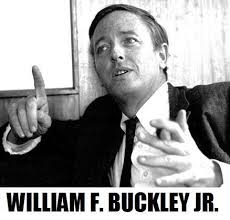
What if you add a new character to your own life story? What if you knew Aristotle, William Buckley, Gandhi, or even Jesus Christ well enough to put them into the dialog? That approach is in part what is called a "Master Mind Alliance". How would the new character respond to what was being said? How would the input of others change, with the new person’s involvement? Would you have turned out different? It becomes a mental approach but it might open some new thoughts, directions, or conclusions for you.
The novelists, Carolyn teaches us, picks characters that they understand. They listen closely to them. You can decide to listen differently to your characters than maybe you already did.
A Torch Kept Lit, Great Lives in the Twentieth Century by William F. Buckley

William F. Buckley Jr. died in 2008, but a new book has been released, "A Torch Kept Lit,” by James Rosen, his editor, over many years.
It has 50 eulogies that Buckley wrote. They are presented in 3 main categories. Close friends and family, successful people in general, and then those he didn't like.
I found it particularly interesting to read some of those from the "not liked" group.”
His lifelong support for his Catholic Faith never changed and is impressive. He often expressed his love for religion. So many intellectuals quickly tell you that they are not "believers.” It seems to be a badge of honor for them.
The eulogy on Ayn Rand was reprinted in his new book and is one from his not liked category. He said that the first time he met Ayn Rand, she approached him at a party and asked him why someone as intelligent as he was believed in God.
That put him off, but then he mentioned that she also said of herself that "she was the 2nd most influential philosopher next to Aristotle".
She is known for a couple of books which I will mention, Atlas Shrugged & The Fountainhead.
In my opinion, Buckley mentioned a couple of her quotes, and they seem like good ones to go on her tombstone.
She said: "Greed is Good, Compassion is Bad.” She added: "Capitalism rewards the rich (good) and punishes the poor (even better, cause they deserve it).”
(Wow, her books won't be on my recommended reading list)
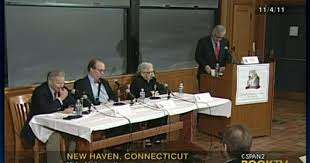
God & Man at Yale, by William F. Buckley

Bill Buckley had just graduated from Yale. His first book pointed out how Yale has failed its undergraduates, specifically in their religious teaching and overall focus. According to Buckley, he said by some as an effrontery or even a protofascist thought.
His point was that since Yale was a religiously affiliated university, it ought to support a belief in God. Still, instead, they went out of their way to teach that Government was the answer to everything, and their focus included collectivism, atheism, and agnosticism. Yale accomplished this focus by choice of classes, textbook use, and instructor bias.
The book was a bold statement accompanied by the names of instructors and examples. It was his first book and significantly influenced Buckley, becoming well known for his religious views and as a spokesman for conservative views.

Past Book Reviews - Click on Book










2018 Reviews June- Dec. Click on Book


2017 Books Read


2018 Reviews Jan.-June Click on Book




2016 Reviews & Before


Screwtape Letters, by C.S. Lewis →
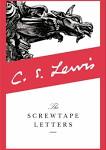
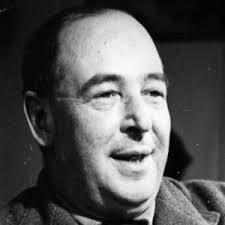
C.S. Lewis's "Screwtape Letters" is a masterpiece of satire. It is a serious look at an average man that can easily be any of us. The ordinary day-to-day life of this man is the focus of the story. He is seen from the vantage point of Screwtape, a senior tempter in the service of "Our Father Below."
Screwtape is working for Satan. Wormwood is a new demon given the assignment to ensure that the ordinary man he is to tempt will gain damnation. We assume that Wormwood doesn't want to fail this assignment to avoid his final damnation. His efforts have many humorous sides, but we see ourselves in this ordinary man.
I have always loved T.S. Eliot’s quote": We shall not cease from exploration, and the end of all our exploring will be to arrive where we started and know the place for the first time” This book is an effective and exciting way of "seeing ourselves with “other eyes.” by looking at this average man and what happens.
A must-read book.
Mere Christianity, by C.S. Lewis

The BBC asked C.S. Lewis during World War II to do some radio programs about the fundamentals of Christianity. He started these 15 minutes broadcasts in 1941, and they came together in part as the book "Mere Christianity,” published in 1952. It is a timeless classic as influential today as when Lewis originally wrote it.
The book takes us from when Lewis was an Atheist through his ultimate conversion to Christianity. The book looks closely at what it calls moral law and says that understanding it is essential. His sense of humanity's failure to keep the moral law is key to how he sees Christ's work in overcoming the effect of Satan's rebellion.
It gives a comparison to other views of what God is. He states that Christ either was God or was not or just thought he was, and then based on Christ's character, he concludes that he was. The book looks at how Christian beliefs result in creditable ethics.
An introductory look at Christianity serves as a fundamental touchstone for Christian discourse.