Exploring the unexpected connections that shape our lives
Book Reviews, Comments & Stories, Quotes, & Poetry & More
"Connections and Why They Matter"
Most of what happens in our life will spark a connection. Life connects with what has been found in books. Books connect with what happens in life. Use the connections to help you see more clearly. A love of reading and writing is what motivated the creation of this blog. Thank you for coming to the blog.
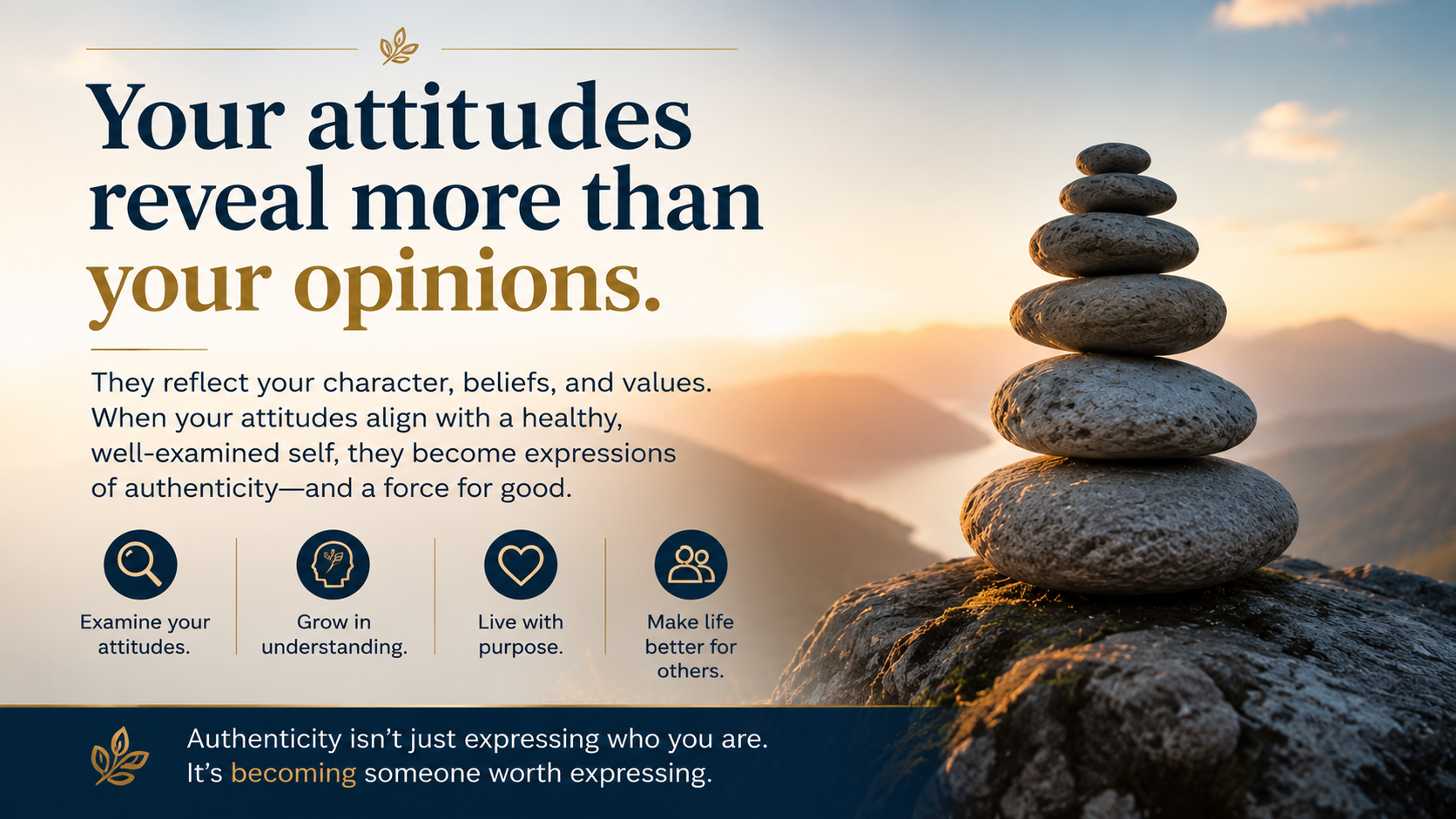
Our attitudes often reveal something important about who we are. They are learned tendencies to respond positively or negatively to people, ideas, and experiences, shaped by our beliefs, values, emotions, and life experiences. Because of this, our attitudes provide a window into our inner world.
But authenticity is more than simply expressing whatever we happen to feel or believe.
A person's attitudes may genuinely reflect their inner self, yet that inner self may also be shaped by fear, prejudice, insecurity, misinformation, or unresolved pain. Authenticity alone does not guarantee wisdom or goodness. Being true to yourself is valuable only if the self you are expressing has been shaped through honest reflection, growth, and an increasing commitment to truth.
A healthy core self naturally gives rise to healthy attitudes. Qualities such as humility, curiosity, compassion, gratitude, responsibility, honesty, and respect are not attitudes we force ourselves to display. They tend to emerge as our understanding of ourselves, other people, and the world becomes more accurate and mature.
This is why examining our attitudes is so important. They often reveal the condition of the person beneath them. They can expose strengths worth nurturing as well as assumptions, fears, and biases that deserve closer examination. Instead of asking only, "Am I being authentic?" we might ask a more important question: "What kind of person is my authenticity expressing?"
At times our attitudes conflict with our deepest values. We may believe kindness matters while responding impatiently to others. We may value honesty while becoming defensive when challenged. These moments create internal tension, not because authenticity has failed, but because our attitudes no longer reflect the person we aspire to become. Rather than simply accepting those attitudes as part of our identity, they invite us to examine them, learn from them, and grow.
For example, someone who genuinely values environmental responsibility will often develop positive attitudes toward conservation and sustainability because those attitudes flow naturally from deeply held convictions. Likewise, someone who has thoughtfully concluded that excessive social media use undermines meaningful relationships may develop a cautious or negative attitude toward those platforms. In both cases, the attitudes are not arbitrary reactions. They express beliefs that have been intentionally examined.
Social pressures also influence our attitudes. Family, culture, education, and personal experiences all shape how we interpret the world. That influence is unavoidable. The challenge is not to eliminate outside influence but to continually evaluate whether our attitudes reflect careful thought, sound judgment, and the values we consciously choose to live by.
Ultimately, authenticity is not merely the freedom to express ourselves. It is the ongoing process of becoming someone worth expressing. As our character matures and our understanding deepens, our attitudes become increasingly aligned with truth, compassion, and wisdom. In that sense, our attitudes do more than reveal who we are today. They also reveal who we are becoming.
If you're interested in exploring that process more deeply, my book Finding the Best Version of Ourselves looks at how self-awareness, reflection, and intentional change help shape the person we become.