

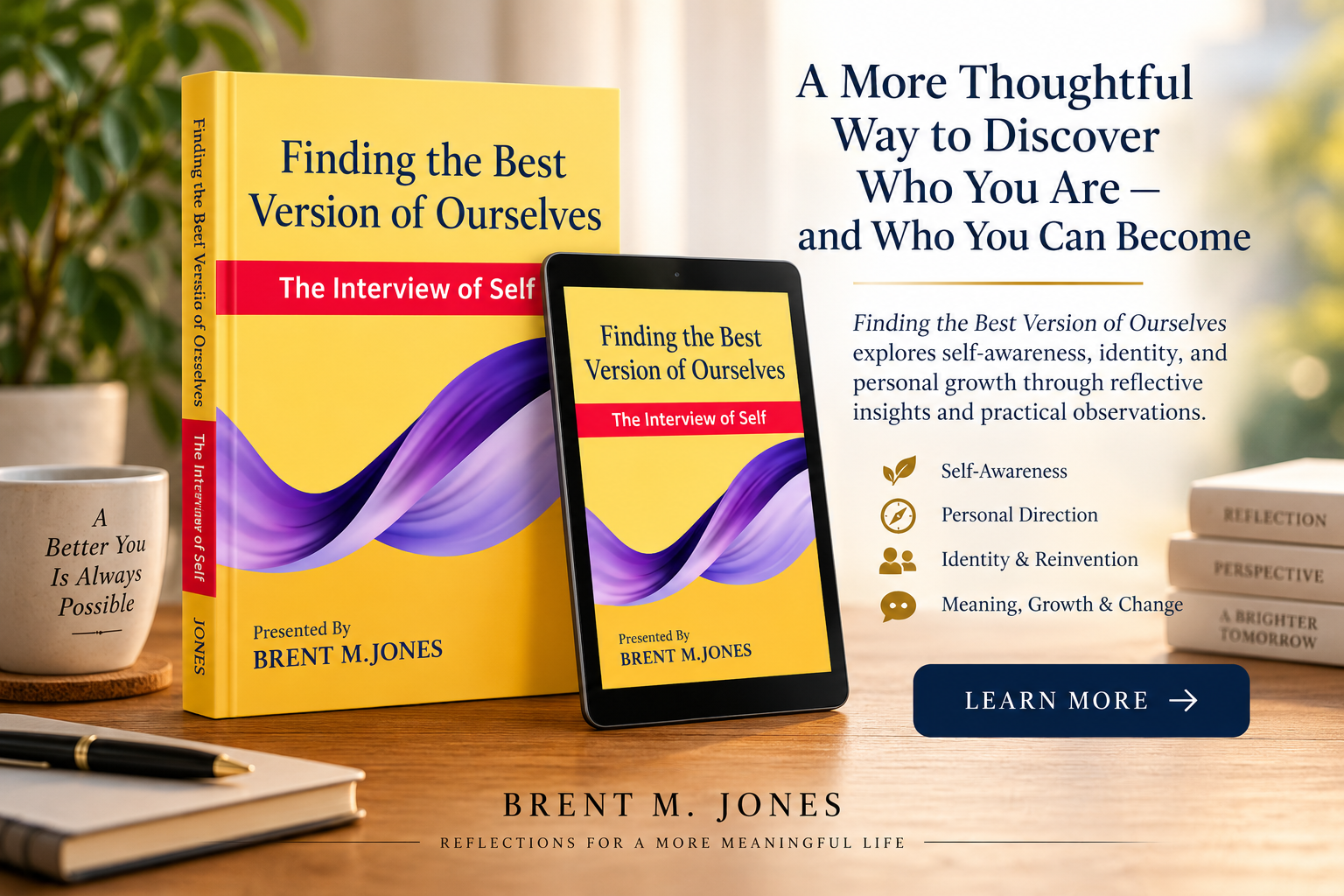
Finding the Best Version of Ourselves explores a question that follows many of us through life: Who are we becoming?
We often think of personal growth as a deliberate process. We set goals, make plans, change habits, and try to improve ourselves. But much of who we become develops more quietly. Our experiences change us. Relationships influence us. Successes and disappointments alter our perspective. Even the stories we tell ourselves about what has happened can change what those experiences mean.
The book explores how identity, perspective, and personal growth evolve over time. Rather than offering a formula for self-improvement or a fixed definition of success, it looks at the more complicated process of understanding ourselves and deciding what deserves to change.
Growth Often Begins With Attention
At the center of the book is a simple idea: meaningful personal growth rarely begins with dramatic transformation. More often, it begins by paying attention.
What patterns keep appearing in our lives? What do our choices reveal about what we value? Which beliefs are genuinely ours, and which have we simply carried with us for years? Are we becoming more like the person we want to be, or merely becoming more comfortable with the person we already are?
Self-awareness does not provide every answer. It does, however, give us a better place from which to ask the questions.
Through reflective insights and practical observations, Finding the Best Version of Ourselves explores:
self-awareness and personal direction
the stories we tell ourselves
identity and reinvention
attitudes, values, and authenticity
meaning, growth, and change
understanding ourselves through experience
how relationships and circumstances influence who we become
the difference between accepting ourselves and refusing to grow
Authenticity Is Only Part of the Story
We often hear that we should simply “be ourselves.” But that raises another question: Which version of ourselves?
Our attitudes, habits, assumptions, and reactions may authentically reflect who we are today. That does not necessarily mean they represent who we want to remain.
This is one reason reflection matters. We can recognize ourselves honestly without assuming that everything we discover should be preserved. Growth sometimes means strengthening qualities already present. At other times, it means questioning beliefs, changing habits, reconsidering assumptions, or admitting that an old version of ourselves no longer fits.
I explore this idea further in Do Your Attitudes Reflect Your Authentic Self?, which asks whether authenticity by itself is enough, or whether the person being expressed also needs to be examined.
We Are Not Finished Products
One of the traps of thinking about the “best version” of ourselves is imagining that such a person exists somewhere in the future, waiting to be reached.
I don't think life works that way.
We continue to encounter new experiences. Our understanding changes. Priorities shift. What seemed important at 30 may look very different at 50, 70, or 80. Growth therefore isn't a destination at which we finally announce that we've become our best selves.
It is an ongoing relationship with ourselves.
The better question may not be “Have I become the best version of myself?”
It may be:
“Am I becoming a better version of myself?”
That small change matters. It moves the emphasis away from perfection and toward direction.
The Experiences That Shape Us
The book also considers how inspiration, interpretation, relationships, and ordinary moments influence the way we see ourselves and others. Some chapters are reflective, while others approach personal growth from a practical perspective.
The common thread is attention.
When we look carefully at our experiences, we begin to recognize connections that are easy to miss while we're living through them. A disappointment may eventually change our direction. A conversation may alter an assumption. A mistake may expose something about ourselves that success never could.
Not every experience contains a lesson. But experience gives us material from which understanding can grow, if we are willing to examine it.
Becoming More Deliberate About Who We Are
Finding the Best Version of Ourselves is not about becoming someone else.