

Gratitude proceeds happiness and it is required if we want to achieve it →
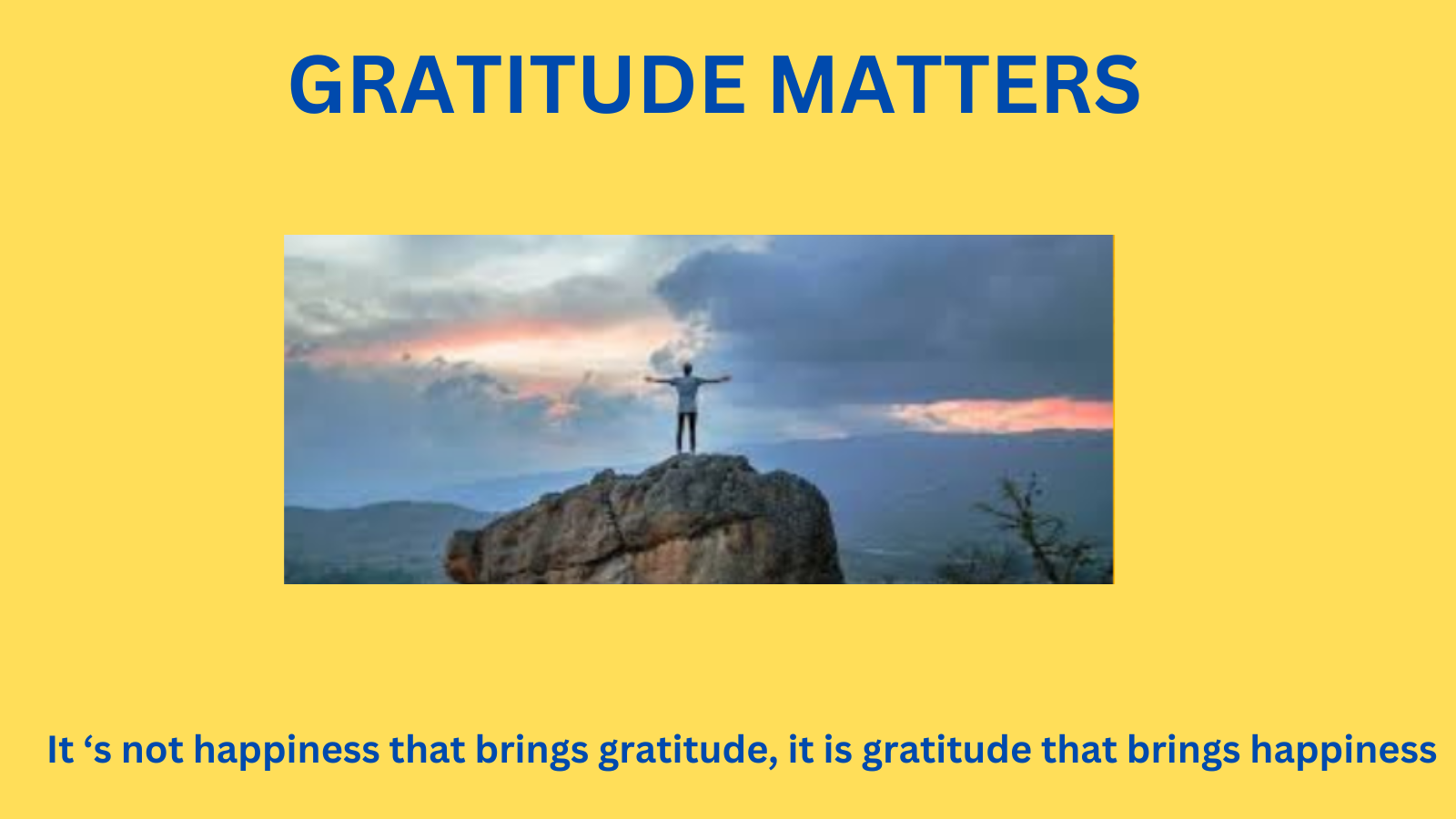
Gratitude is the quality of being thankful. It results in being willing and ready to show appreciation for and to return kindness. It brings a warm feeling of thankfulness towards the world or specific individuals. The person who feels gratitude is thankful for what they have received and does not constantly seek more.
Gratitude helps people feel more positive emotions, feel more alive, express more compassion, relish good experiences, improve their health, deal with adversity, and build strong relationships.
We will still have negative thoughts, but gratitude will help balance them out. “Gratitude is an emotion that grounds us and is a great way to balance out the negative mindset that uncertainty engenders,” said Dr. Guy Winch, author of the book Emotional First Aid.
The process of feeling grateful compels us to reflect on our relationships. It makes us feel closer and more connected to others, which helps motivate and sustain our efforts at self-improvement. We won’t be able to maintain our efforts for self-improvement without the help of others, and we will fail when we have the wrong motivation. When we're motivated by negative emotions, it is nearly impossible to sustain efforts to change. Is gratitude a soft skill?
Ask a person who is not grateful for the good things in their life, and you will find an unhappy person, but if you teach yourself or that person to understand and learn gratitude, it will become a life-changing soft skill.
“Gratitude turns what we have into enough.” – Anonymous.
The duties of the Coxswain are to provide leadership →
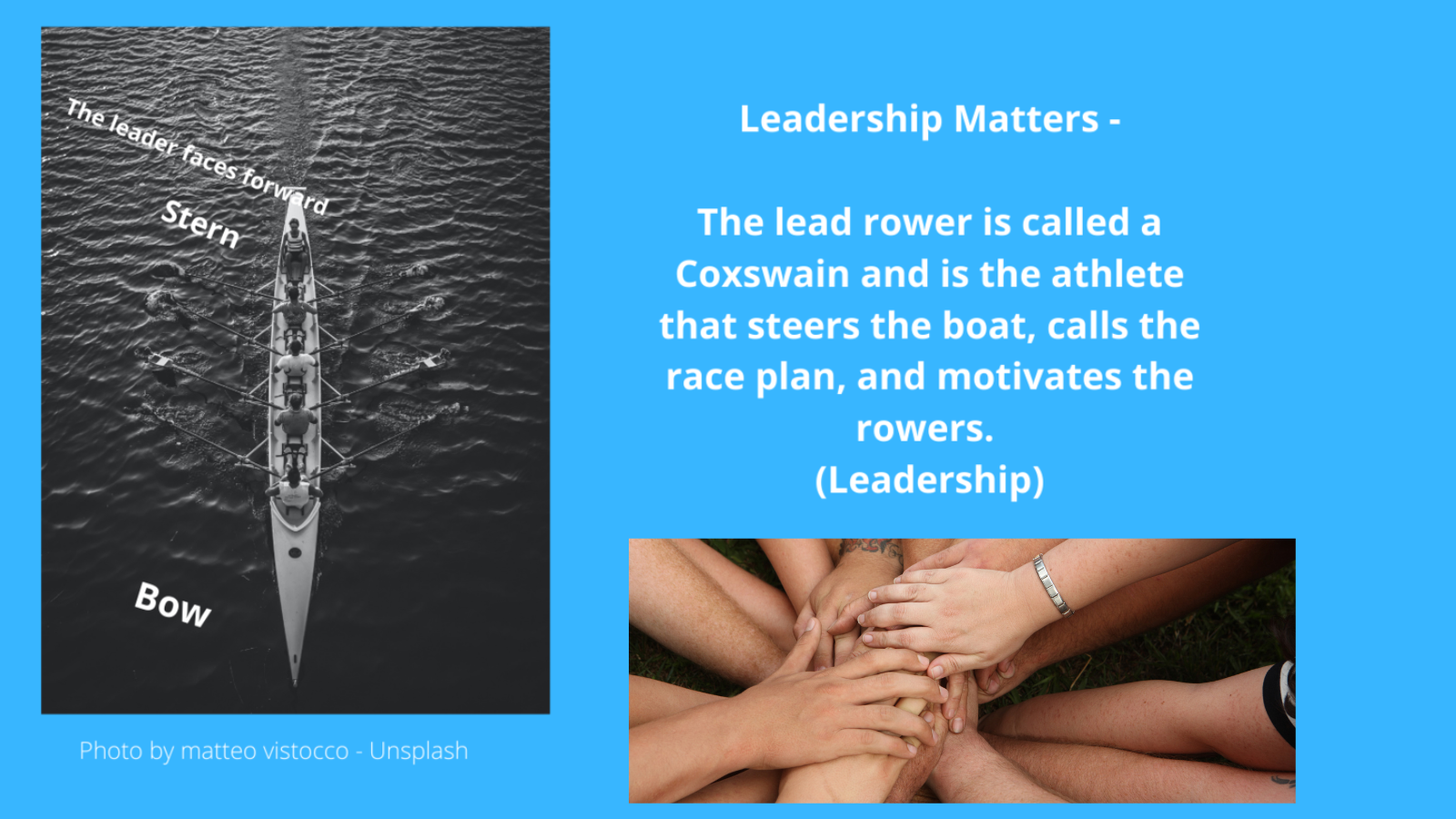
The end of the boat closest to the start line is called the “stern,” and the opposite end pointing toward the finish line is called the “bow.” Coincidentally, the rower closest to the boat’s bow is called the “bow seat.” The seats are numbered from bow to stern, and the bow seat is called the “1 seat.
The leader sits in the stern and is called a Coxswain and is the athlete that steers the boat, calls the race plan, and motivates the rowers. Driving the vessel is done by making minor corrections in the rudder’s direction and ensuring all rowers are equally engaged.
Each rower is numbered by boat position in ascending order from the bow to the stern (except single sculls).
The stroke seat is the most important of the eight rowers. That individual can get everyone behind them and the engine room in a solid rhythm and get them to use their power efficiently. They also have a significant impact on the mentality of the boat.
In an eight-rower boat, each person has one oar—four on port and four on starboard. If one side pulls harder with their oars in the water than the other, the boat turns and tips. The boat tips if one side's oars are raised higher than the other. Every paddler has to drop into the water at the same time.
Self Improvement individually is likely not the key to success for a team; instead, team leadership has more potential value. If one person surprises the others, thinking they are only indulging in self-improvement, they can hurt the team, but the leader can direct coordinated improvement.
Being overwhelmed with stress is a message to find out why you are stressed? →
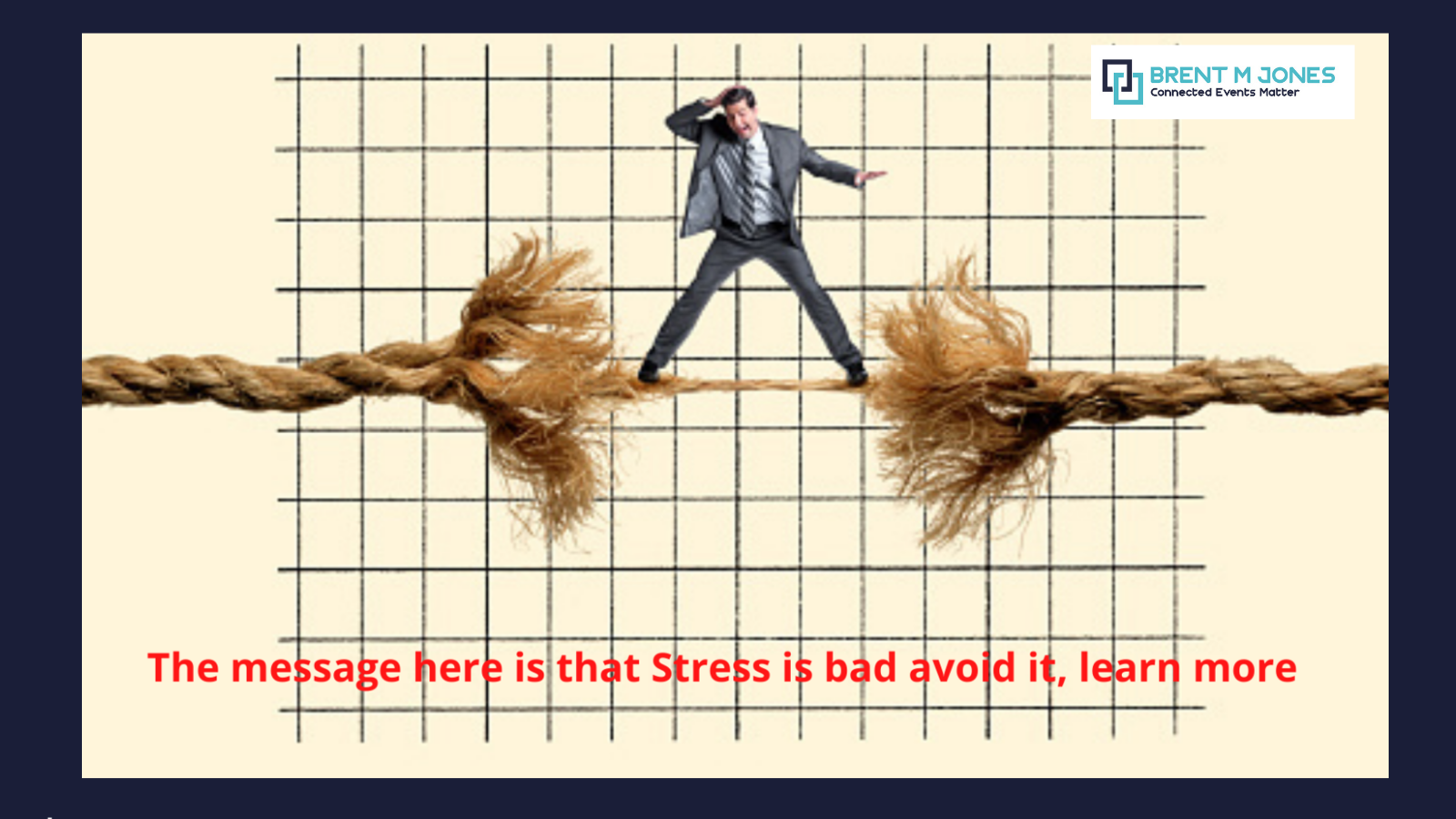
When you feel pressure, your body will send you a message and let you know. The message is referred to as stress. The pressure comes in a variety of ways. Feeling overwhelmed and unable to cope with life events is felt emotionally or even in your physical responses. You will think you can’t cope with what you are facing, and mental health suffers.
Many different situations or life events can cause stress. It can be triggered when we experience somethingnew unexpectede, threatens our sense of self, o feel we have little control over a situation.
Feelings of Stress Include:
afraid
angry
aggressive
sad
Anxious
defensive
irritable
frustrated
depressed.
Recognizing that stress is being caused by pressure is a first step in working through it, but sometimes you will need help to get past it.
Don’t be a Pig (selfish): Pigs get Eaten →

It can send a terrible message if you only feel satisfied if you get everything available in a relationship. Be careful not to send a message to those around you that you’re selfish. This is a trap everyone can fall into.
A salesperson with a perfect relationship with a buyer sometimes will ask for business he doesn’t have, with no apparent benefit offered. It can appear to suggest it is just expected because of the relationship. In a similiar situation, I recall a buyer who told this type of salesman:
“Don’t be a pig: pigs get eaten.”
Our selfishness can mean we hurt others as we ruthlessly strive to satisfy our needs. Self-centeredness can damage our reputation and lead to loneliness. It destroys families. Desire may make it easier for us to fall into traps like an addiction.
Solitude can lead to relaxation and reduced stress →
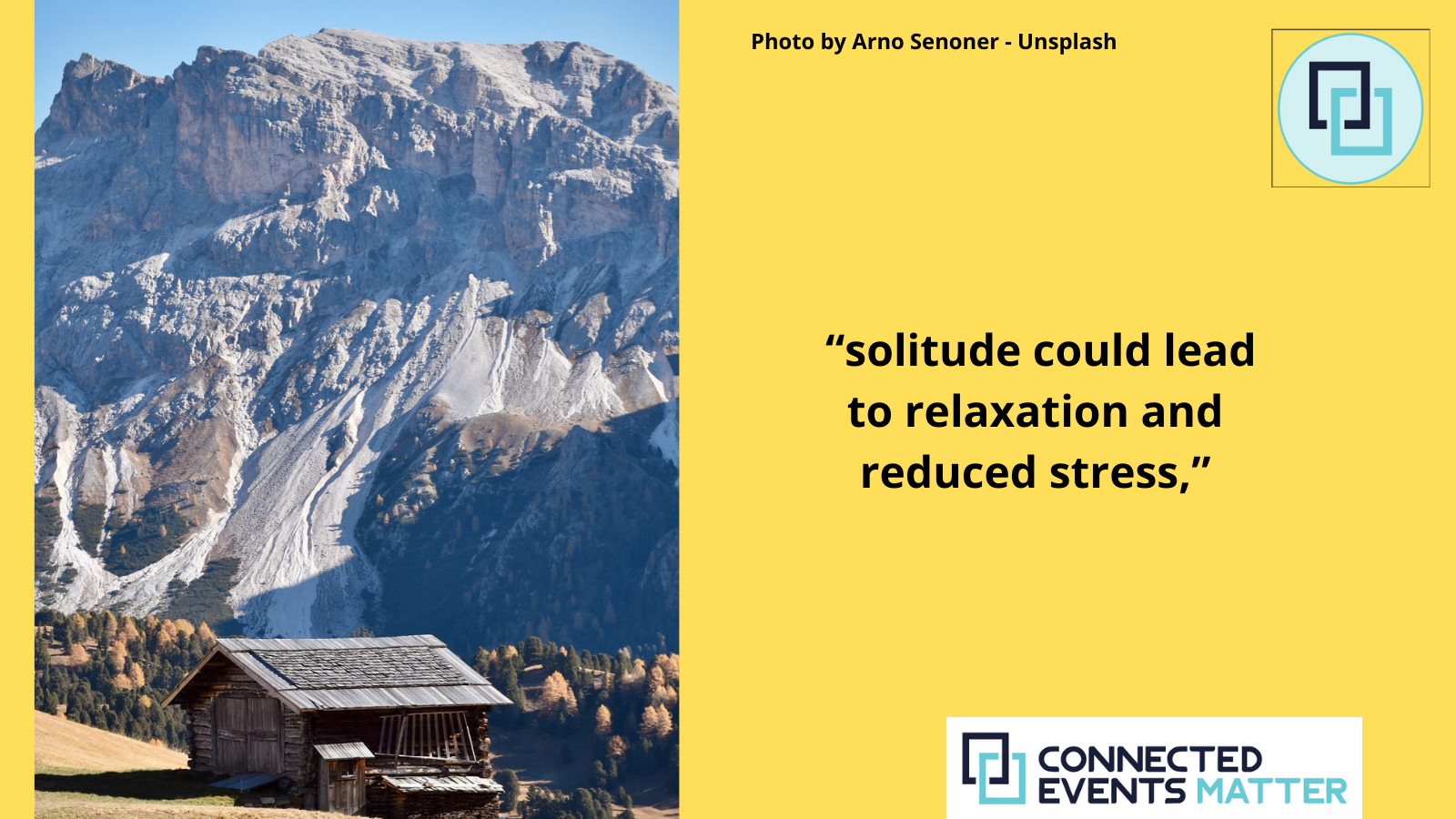
Solitude can lead to relaxation and reduced stress if people choose to be alone. Solitude is the state of being alone without being lonely. Ten minutes a day might be enough to help stress. Living alone in a cabin at the foot of a remote mountain might be too much? ,
“Solitude could lead to relaxation and reduced stress,” a study found, and people who practiced solitude every day for a week experienced a “spillover effect” of having less intense feelings the following week.
Jim Carrey said: “Solitude is dangerous. It's very addictive. It becomes a habit after you realize how calm and peaceful it is. You don’t want to deal with people anymore because they drain your energy.

Nature offers some of the best stress reducing experiences →

Spending time around trees and looking at trees reduces stress, lowers blood pressure, and improves mood. Numerous studies show that exercising in forests and simply sitting looking at trees reduces blood pressure and the stress-related hormones cortisol and adrenaline.
In general, the outdoors has a calming effect on us, and it has to do with the fresh air we're inhaling. Breathing is linked to the production of stress hormones. When breathing rapidly, our sympathetic nervous system is activated, and the body is energized for a "fight or flight" response.
What you are seeing, hearing, and experiencing at any moment changes your mood and how your nervous, endocrine, and immune systems are working.

How do you learn good work ethics and how do you convey that you have them? →

Work ethic is a moral principle based on the idea that hard work is fundamentally valuable and worth pursuing. You likely possess other positive traits such as dependability, respectfulness, productivity, and collaboration if you have a strong work ethic.
Work ethics is one of the most critical factors for any professional's success and is a highly positive soft skill. Learning to have a positive work ethic by having good examples and leaders is the primary way it is developed, even though there is some evidence that it may be partially past on by genetics.
Work ethic is an essential Soft Skill based on hard work and diligence. In other words, work ethic is, for the most part, not something we are born with; it’s a learned behavior that becomes part of an individual's values. Like a company's corporate values, they must be taught and modeled daily.
Saying that your father had a good work ethic could mean that you had it passed on to you genetically, but it probably means that by example, at least, your father taught you about work ethics. Of course, talking about your genetic possibility of having a solid work ethic isn’t a good approach in a job interview.
If you find the occasion to talk about your work ethic, a good approach would be to describe yourself as reliable and consistent. You could add that you enjoy your work, and I find it easy to stay motivated and productive. You have also noticed that you feel better at the end of the day when you have had a great, productive day, and you find that I am that rewarding.

,
What you do today changes who you are tomorrow. →

Deciding to “Be Somebody” will require introspection to discover who you are. Just taking inventory and doing some severe pondering is a good starting point to find out what you are good at and not good at. Don’t confuse your point of view and conclusions with other people's expectations. Finding out who we are means asking ourselves what our values are, what truly matters to us, and then following the principles we believe in.
Build a list and add the things you are passionate about and the things you love to do. Ask someone you trust and respect for feedback on what you have put down. These are the first steps in knowing who you are, and learning what you want from life is itself part of what real success in life is. Knowing yourself will give you purpose, direction, and a true sense of well-being; that knowledge will change some of the things you do today.
Change anything about today, and you will change tomorrow and your life.
Change who you associate with. Surround yourself with people who will tell you the truth.
7 Ways to Increase Self Esteem and Self Confidence →

Having the confidence to proceed in life requires more than just preparation. Of course, that is very important, but you must believe in yourself to value your practice and take the necessary steps.
7 Ways to Increase Self-Esteem and Self Confidence
1. Volunteering your time, money, or energy to help others doesn’t just improve the world but also makes you better. Studies indicate that the very act of giving back to the community boosts your happiness, health, and sense of well-being
2. Avoid dwelling on past negative experiences
3. Express your needs
4. Feel confident
5. Have a positive outlook on life
6. Say "no" when you want to say no.
7. See overall strengths and weaknesses and accept them

2 Most Important Skills for Success →

These skills can be called “Soft Skills,” but they are the most important and often neglected. A person can have many other skills, but these are important.
#1 is showing up!
#2 is showing up on time


