Exploring the unexpected connections that shape our lives
Book Reviews, Comments & Stories, Quotes, & Poetry & More
"Connections and Why They Matter"
Most of what happens in our life will spark a connection. Life connects with what has been found in books. Books connect with what happens in life. Use the connections to help you see more clearly. A love of reading and writing is what motivated the creation of this blog. Thank you for coming to the blog.
Leadership isn’t a job title or a personality type. It’s the quiet ability to influence, guide, and elevate the people you encounter, coworkers, friends, teams, or communities. Real leadership strengthens connection, clarifies direction, and creates momentum.
Strong plans attract people who genuinely want to help, but leadership is never a solo pursuit. It’s the art of inspiring others so that shared goals feel possible and meaningful.
This sub-section under the Life Development tag explores leadership from a human-centered perspective, less about command and control, and more about awareness, empathy, and growth.”
Core Leadership Characteristics
Integrity — Doing what’s right, even when it’s inconvenient. Delegation — Trusting others with responsibility and room to grow. Communication — Speaking clearly, listening fully, and creating understanding. Self-Awareness — Knowing your strengths, limits, patterns, and impact. Gratitude — Recognizing contributions and reinforcing what matters. Learning Agility — Adapting, improving, and staying open to new ideas. Influence — Guiding others through credibility and example, not pressure. Empathy — Seeing the human side of every decision.
Leadership is the steady act of helping others see what’s possible and walking toward it with them.
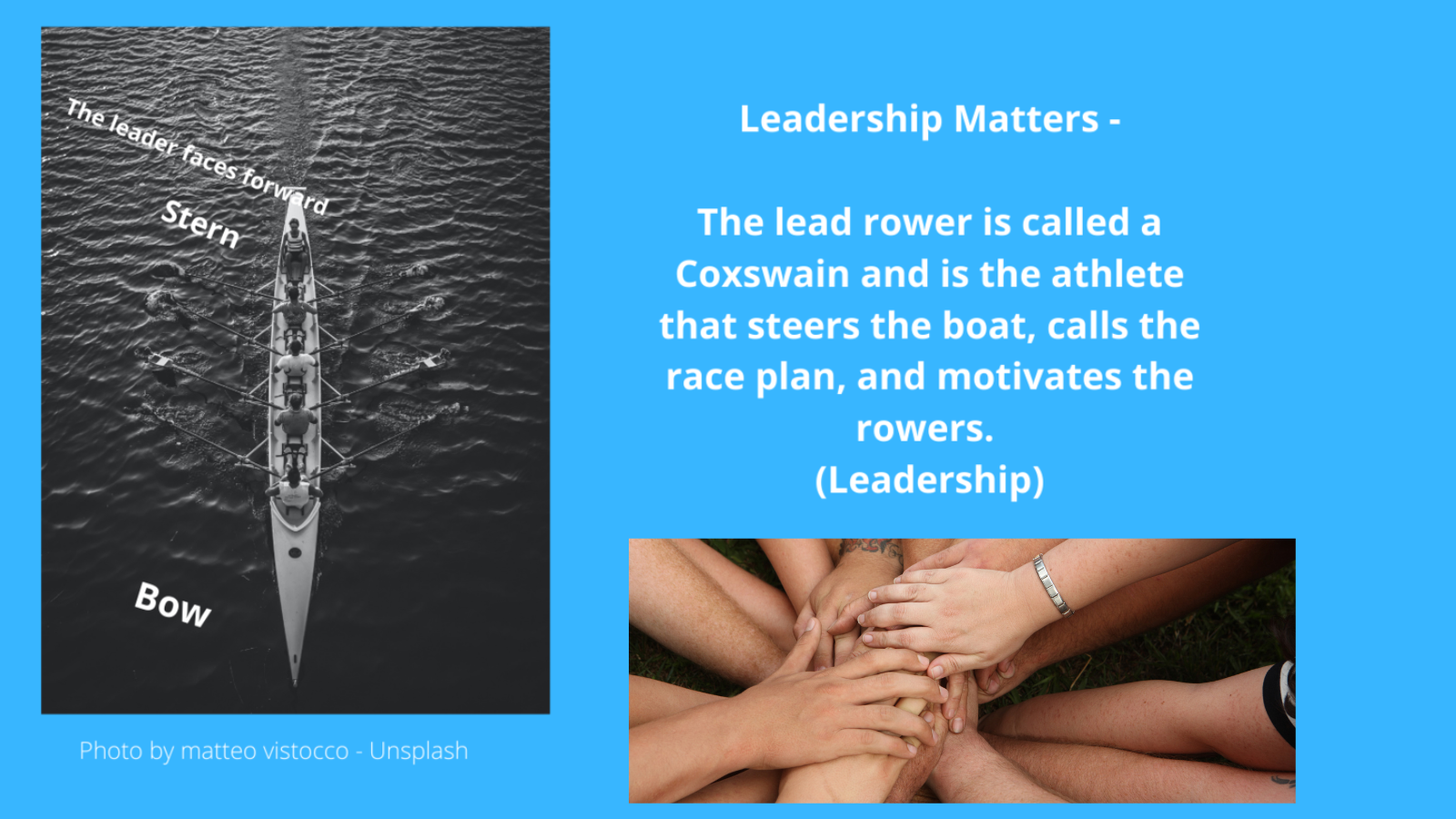
The end of the boat closest to the start line is called the “stern,” and the opposite end pointing toward the finish line is called the “bow.” Coincidentally, the rower closest to the boat’s bow is called the “bow seat.” The seats are numbered from bow to stern, and the bow seat is called the “1 seat.
The leader sits in the stern and is called a Coxswain and is the athlete that steers the boat, calls the race plan, and motivates the rowers. Driving the vessel is done by making minor corrections in the rudder’s direction and ensuring all rowers are equally engaged.
Each rower is numbered by boat position in ascending order from the bow to the stern (except single sculls).
The stroke seat is the most important of the eight rowers. That individual can get everyone behind them and the engine room in a solid rhythm and get them to use their power efficiently. They also have a significant impact on the mentality of the boat.
In an eight-rower boat, each person has one oar—four on port and four on starboard. If one side pulls harder with their oars in the water than the other, the boat turns and tips. The boat tips if one side's oars are raised higher than the other. Every paddler has to drop into the water at the same time.
Self Improvement individually is likely not the key to success for a team; instead, team leadership has more potential value. If one person surprises the others, thinking they are only indulging in self-improvement, they can hurt the team, but the leader can direct coordinated improvement.