Originally published November 11, 2025 | Updated November 2026
Some experiences seem ordinary when they happen. Years later, we may recognize that they changed how we think, what we value, or even who we became.
A conversation we barely remember having. A relationship that influenced our choices. A familiar place that suddenly brings back memories of another time in our lives.
Reflective nonfiction explores these experiences, not simply to remember them, but to understand what they mean.
Unlike writing that focuses primarily on telling readers what happened, reflective nonfiction asks a deeper question: Why did it matter?
What Is Reflective Nonfiction?
Reflective nonfiction is writing based on real experiences, events, or observations, but shaped by introspection, insight, and meaning-making. It’s not just about what happened; it’s about what it meant.
Writers in this genre use reflection to examine:
How personal identity changes over time
The influence of memories, relationships, and experiences
Questions about meaning, purpose, and fulfillment
The connection between past experiences and present understanding
How ordinary moments reveal larger truths about being human
Reflective nonfiction is more than autobiography or personal storytelling. It is a conversation between experience and understanding, often between who we once were and who we have become.
The writer may begin with a personal memory, but the purpose is not simply to describe it. The purpose is to discover something that might also help readers understand their own lives.
Why Reflective Nonfiction Matters
We often think of our lives as a series of important decisions, accomplishments, disappointments, and turning points.
Yet much of what shapes us happens gradually.
Our beliefs change through conversations. Our priorities shift through relationships. Experiences that once seemed insignificant acquire meaning as we grow older.
Sometimes we change without fully recognizing how much we have changed.
Reflective nonfiction gives us an opportunity to examine that process.
It encourages us to ask:
What experiences have influenced the person I am today?
Have my priorities changed without my recognizing it?
Why do certain memories remain meaningful while others disappear?
Do the goals I once pursued still reflect what matters to me?
How have my relationships influenced my understanding of life?
These questions do not always lead to clear answers. Sometimes their value comes from helping us recognize possibilities we had not previously considered.
Reflective Nonfiction and the Meaning of Ordinary Moments
One of the most compelling qualities of reflective nonfiction is its ability to discover significance in everyday experiences.
A childhood memory of a river may become a reflection on time, belonging, and the distance between our younger and older selves.
An ordinary conversation may reveal something about the importance of listening.
A small act of kindness may remain in our memory long after more dramatic events have faded.
The event itself may not have changed. What changes is our understanding of it.
Perhaps the meaning of our experiences is not always found in the moment we live them, but in what we eventually come to understand about them.
This is one reason reflective writing can become more meaningful as we age. We have more experiences to draw upon, but we also have new perspectives from which to examine them.
Examples of Reflective Nonfiction Books
Some of the most memorable nonfiction books combine personal experience with larger questions about life and human nature.
The Book of Delights by Ross Gay
Through a collection of short essays, Gay explores the unexpected significance of ordinary experiences.
His writing demonstrates how paying attention to everyday life can reveal meaning, connection, and gratitude.
The Anthropocene Reviewed by John Green
Green examines familiar subjects and experiences, connecting them to memory, relationships, vulnerability, and the human condition.
The essays demonstrate how seemingly unrelated experiences can lead to deeper reflections about what it means to be alive.
Being Mortal by Atul Gawande
Gawande explores aging, independence, dignity, and the meaning of a good life.
Drawing on professional experience and personal observation, he raises questions about what matters most when our circumstances and abilities change.
The Year of Magical Thinking by Joan Didion
Didion examines grief, memory, marriage, and the sudden disruption of a familiar life.
Her personal experience becomes a broader exploration of how we understand loss and attempt to make sense of circumstances beyond our control.
Four Thousand Weeks by Oliver Burkeman
Burkeman challenges conventional ideas about productivity and time management.
His reflections encourage readers to reconsider what deserves their limited time and attention, and why accepting life's limitations can help clarify what matters.
Although these books differ in subject and approach, they share a central quality: They invite readers to examine their own experiences rather than simply absorb someone else's conclusions.
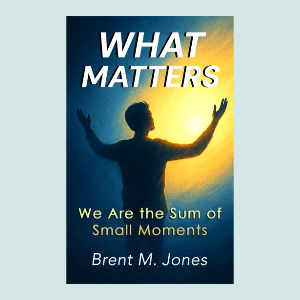
What Matters: We Are the Sum of Small Moments
My book, What Matters: We Are the Sum of Small Moments, explores many of these same questions.
Our lives are shaped by experiences, relationships, choices, and circumstances. Some influence us immediately. Others become meaningful only when we look back.
As time passes, our understanding of ourselves can change. The person we believe ourselves to be may no longer fully reflect the person we have become.
That raises a question worth considering:
Have you changed more than the life you're living?
Sometimes our goals and actions continue to reflect an earlier understanding of who we are, even as our experiences have changed our priorities and perspectives.
What Matters invites readers to reflect on the experiences that have shaped their identities, the relationships that have given their lives meaning, and the small moments that may have mattered more than they realized.
This book does not promise simple answers to life's complicated questions. It invites you to look more carefully at the life you have lived and consider what deserves your attention now.
Reflective Nonfiction Is Also About the Present
Reflection is often associated with looking backward, but its value extends beyond understanding the past.
Recognizing how our experiences have shaped us can influence how we live today.
We may discover that something we once considered important no longer carries the same meaning. We may recognize the lasting influence of a relationship, a choice, or an experience we previously overlooked.
We may even discover that the questions we ask about life have changed.
Understanding our past does not require us to remain attached to it.
Sometimes reflection helps us recognize what deserves more of our attention in the present.
Explore More Reflections on Life, Identity, and Meaning
These related essays explore questions at the heart of reflective nonfiction:
Why Life Stories Change: Are We a Result of Choice or Circumstance? How do our experiences and decisions influence the stories we tell about ourselves?
When Making a Difference Becomes Harder to See: How do we recognize meaning and contribution when our circumstances change?
When Listening Has an Agenda: What happens to understanding when we listen primarily to confirm what we already believe?