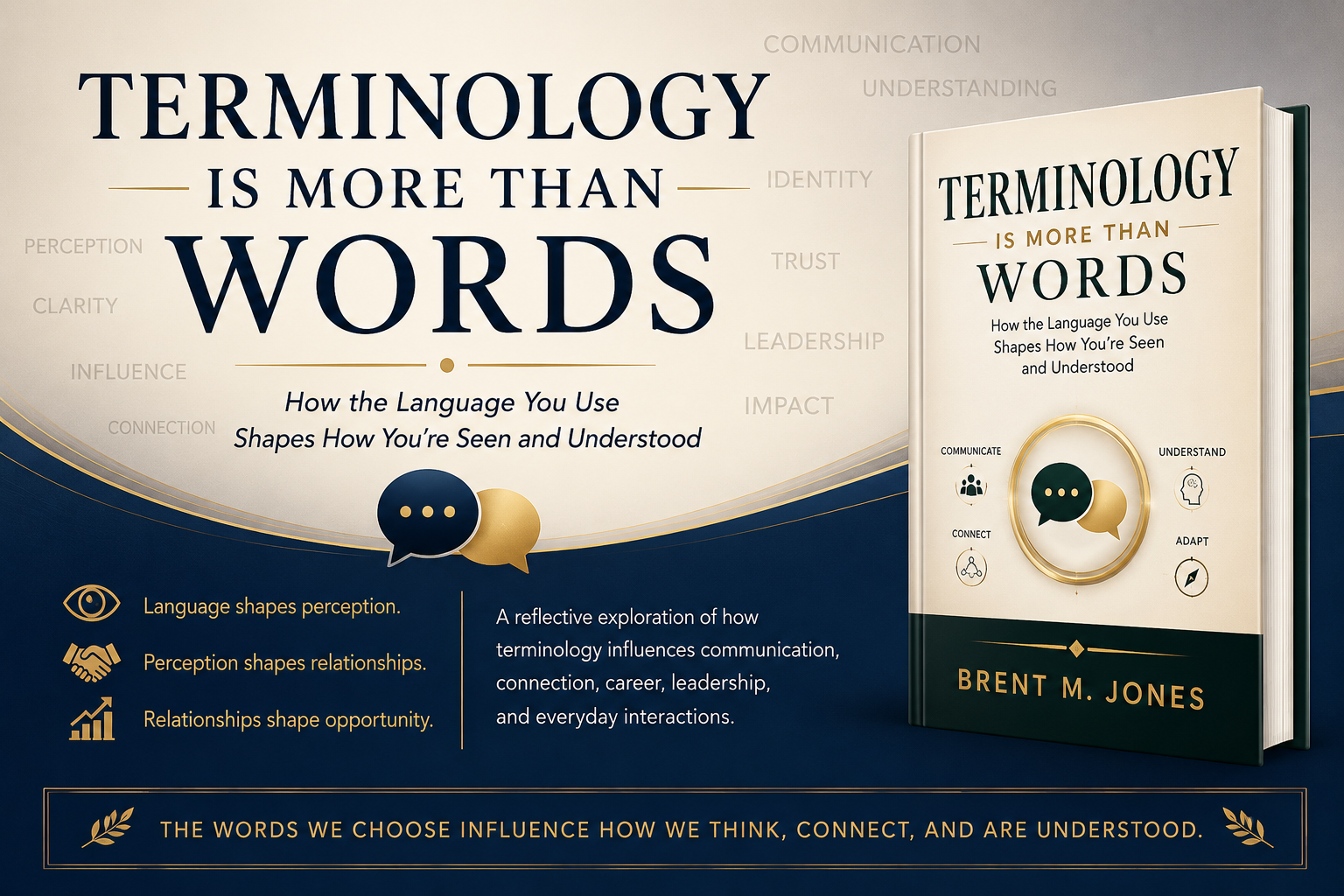
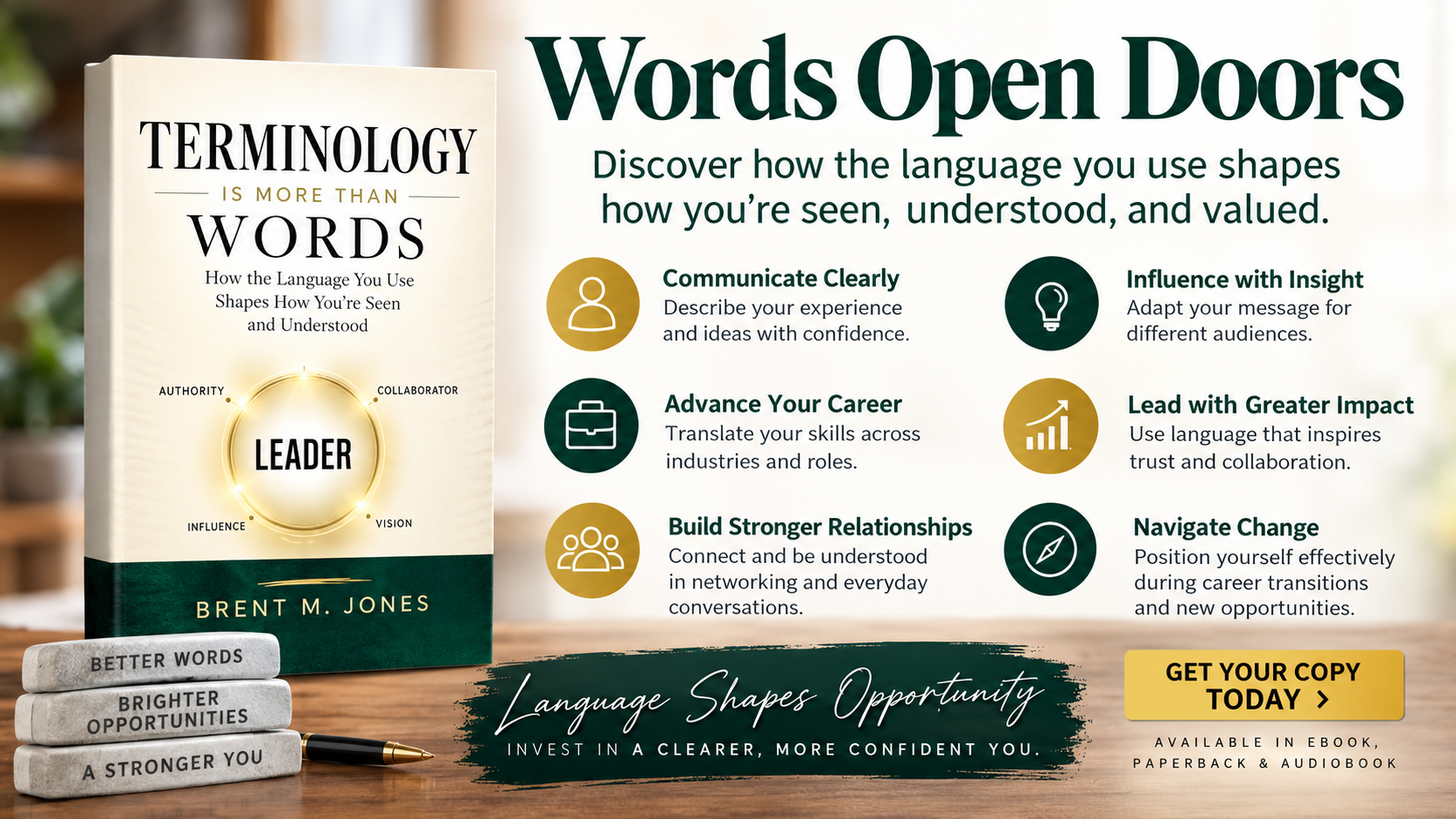
Some books continue to evolve long after they are first written.
When I originally wrote Terminology Is More Than Words, much of my focus centered on communication in professional settings—networking, careers, workplace interaction, and the language that shapes opportunity.
Those ideas still matter.
But over time, I realized the deeper subject was never simply professional terminology.
It was perception.
The words we choose affect how people understand us, respond to us, trust us, and connect with us. Language influences leadership, identity, relationships, confidence, and even the stories we tell ourselves about who we are.
Communication is rarely just about transferring information.
It is also about interpretation.
Two people may hear the same words and walk away with entirely different understandings because terminology carries assumptions, emotions, experiences, and personal meaning beneath the surface.
As my own writing evolved through books like The Power of Authentic Communication and What Matters, I began seeing this book differently as well.
The newer edition reflects that broader perspective.
Rather than focusing only on networking or career language, this version explores communication more reflectively:
how language shapes perception,
how perception shapes connection,
and how small differences in wording can quietly influence relationships and understanding over time.
In many ways, the book became less about terminology itself and more about awareness.
Because words are never only words.
They shape how we are seen,
how we are understood,
and sometimes even how we understand ourselves.