
Why I Revisited Terminology Is More Than Words
Some books continue to evolve long after they are first written.
When I originally wrote Terminology Is More Than Words, much of my focus centered on communication in professional settings—networking, careers, workplace interaction, and the language that shapes opportunity.
Those ideas still matter.
But over time, I realized the deeper subject was never simply professional terminology.
It was perception.
The words we choose affect how people understand us, respond to us, trust us, and connect with us. Language influences leadership, identity, relationships, confidence, and even the stories we tell ourselves about who we are.
Communication is rarely just about transferring information.
It is also about interpretation.
Two people may hear the same words and walk away with entirely different understandings because terminology carries assumptions, emotions, experiences, and personal meaning beneath the surface.
As my own writing evolved through books like The Power of Authentic Communication and What Matters, I began seeing this book differently as well.
The newer edition reflects that broader perspective.
Rather than focusing only on networking or career language, this version explores communication more reflectively:
how language shapes perception,
how perception shapes connection,
and how small differences in wording can quietly influence relationships and understanding over time.
In many ways, the book became less about terminology itself and more about awareness.
Because words are never only words.
They shape how we are seen,
how we are understood,
and sometimes even how we understand ourselves.
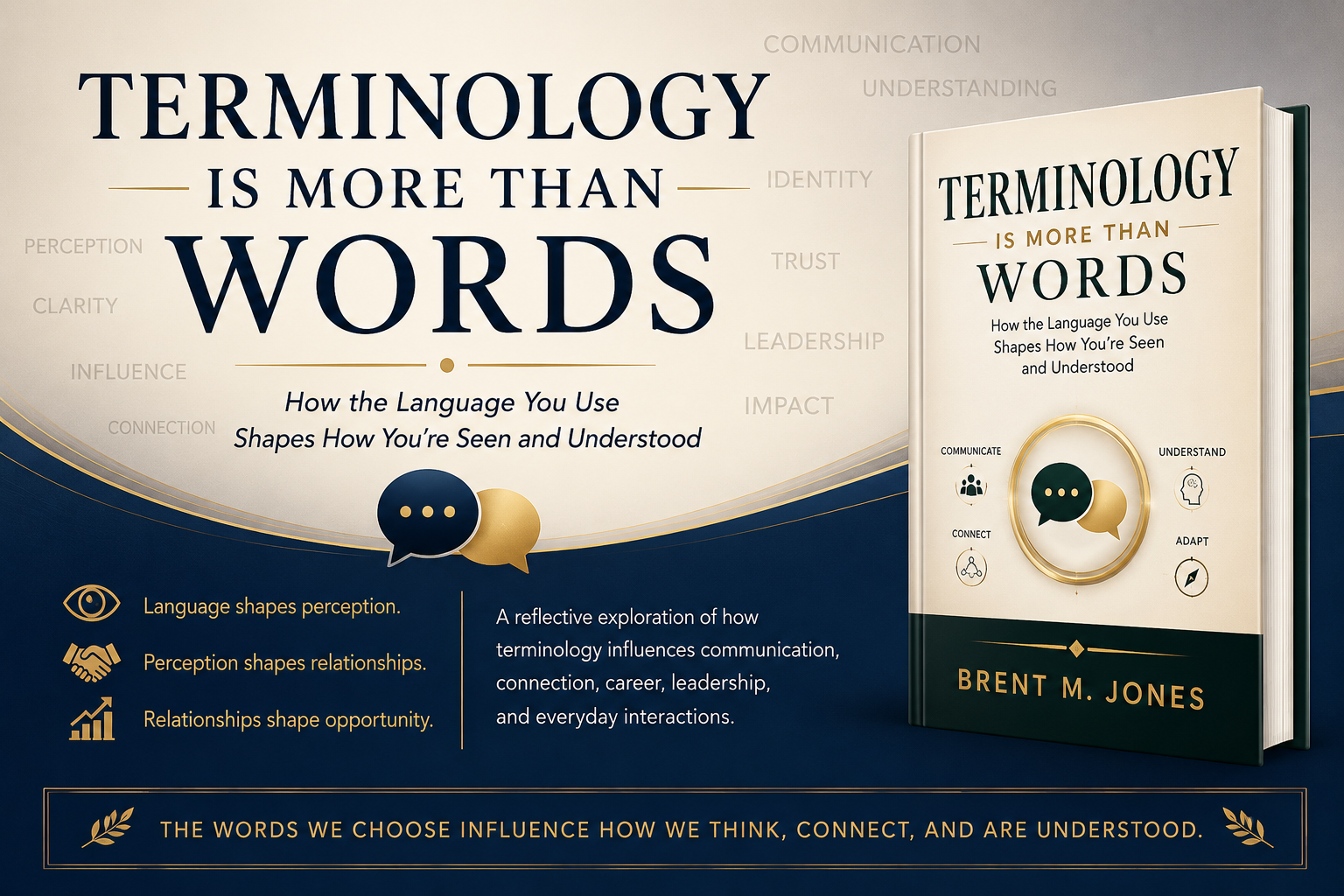
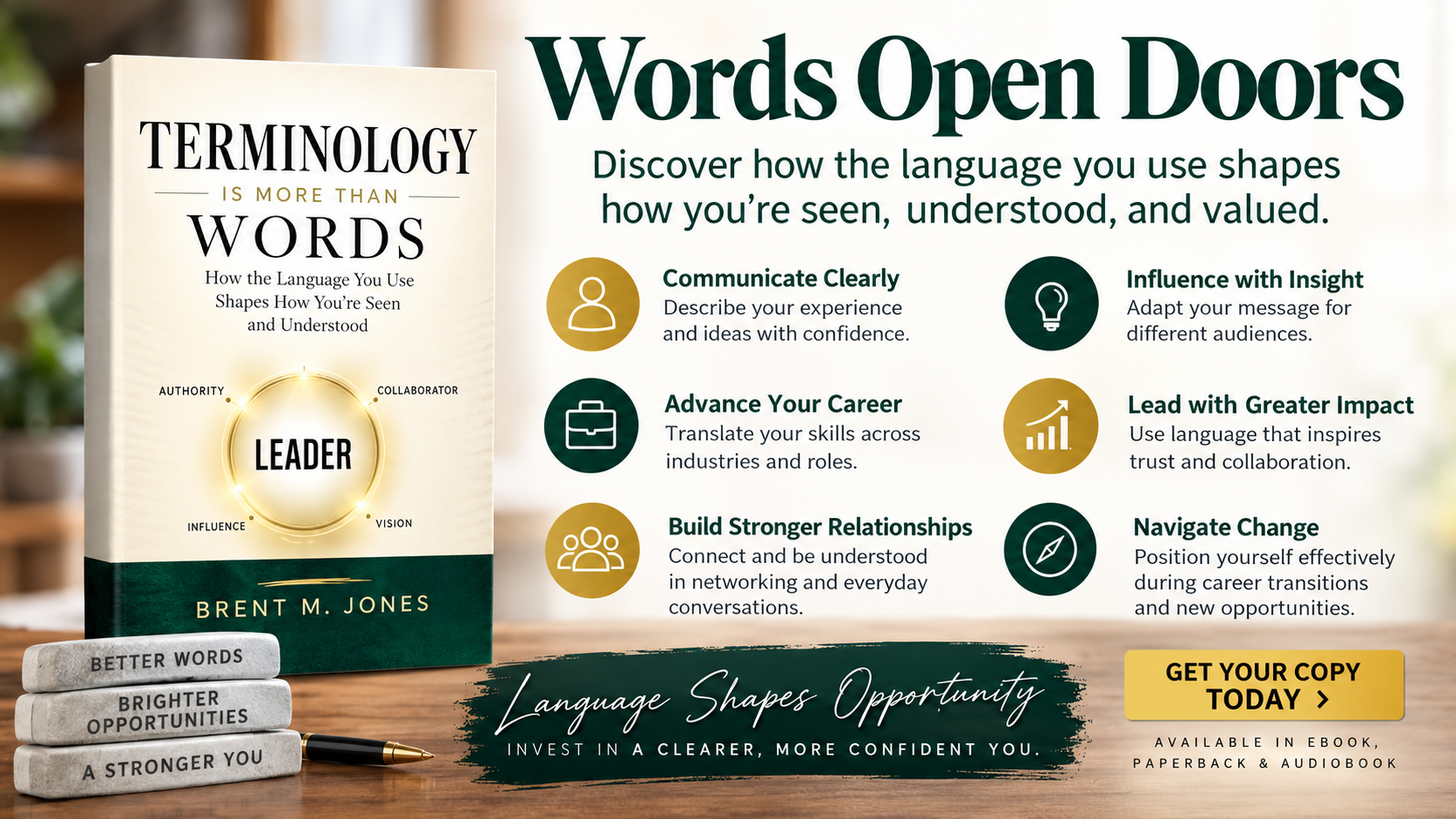
Terminology Is More Than Words: How Terminology Shapes Our Network, Career, and More

Language does more than carry information. It shapes how we are understood, how we connect with others, and how we move through our work and relationships.
In Terminology Is More Than Words, I explore how the words we choose quietly influence perception, trust, and opportunity. Terminology doesn’t simply describe ideas. It reflects how we think, what we value, and how clearly we understand the situations we’re part of.
Rather than offering scripts or communication shortcuts, this book looks beneath the surface of language. Small differences in terminology can change how conversations unfold, how professional relationships develop, and how messages are interpreted over time.
By paying closer attention to the words we use, we begin to see how language shapes alignment—often in subtle ways we don’t immediately notice.
What This Book Explores
How terminology shapes perception and credibility
Why word choice matters in careers, networking, and relationships
How misalignment often begins with misunderstood language
The connection between clarity of language and clarity of thought
Who This Book Is For
This book is for readers who want to communicate with greater awareness—professionals, networkers, and anyone interested in how language influences understanding, connection, and opportunity
The Power Behind the Words We Choose →

A reflection on intention, communication, and the meaning behind terminology
Before we ever choose a title, define a role, or explain an idea, we choose a word. And that word shapes everything that follows.
Terminology is More Than Words, and it isn’t just a book about language; it’s a guide to understanding how the words we use influence how we’re understood, remembered, and connected to others. Whether in professional settings or personal conversations, the terminology we choose reveals our priorities and frames how others respond to us.
But this isn’t just about communication strategy—it’s about intention.
From the opening section of the book:
“The words we choose do more than convey meaning—they shape how we’re understood, remembered, and connected to others.”
“This book isn’t just about language. It’s about intention. It’s about the small choices we make in how we communicate—choices that ripple into our relationships, careers, and sense of identity.” Even in nonfiction—where facts and clarity are prized—no two people read the same sentence the same way. Every interpretation is shaped by a reader’s experience, mood, emotion, and perspective.
That isn’t a failure of communication—it’s the human side of it.
It’s what allows words to move us, challenge us, or connect us in ways that go beyond logic. And that’s the heart of what this book is about: choosing our words not just to inform, but to connect.
In our careers, the right term can open a door or establish credibility. In our relationships, it can build trust—or unknowingly cause distance. In networking, professional branding, and personal growth, the ability to speak with clarity and purpose is a skill that shapes outcomes more than most realize.
You don’t have to agree with every example or phrase in the book. But if it helps you pause—just for a moment—and think more intentionally about how you communicate with others and with yourself, then its purpose has been fulfilled.
Explore the book:
📘 Terminology Is More Than Words: How Terminology Shapes Our Network, Career, and More
By Brent M. Jones
Terminology is More than Words - Back Cover →

"Terminology is More than Words" highlights the profound impact of choosing the right words in daily interactions. It emphasizes the importance of words in painting a vivid picture, making the information relevant to the audience, and embodying essential qualities such as clarity, correctness, completeness, conciseness, and compassion.
The book guides readers on the path to effective communication, stressing the significance of empathy and understanding in word choices. It is a practical and insightful resource for improving personal and professional relationships through the power of words.
Writing My Book About LinkedIn Influenced My Book on Terminology

Terminology is more than just words
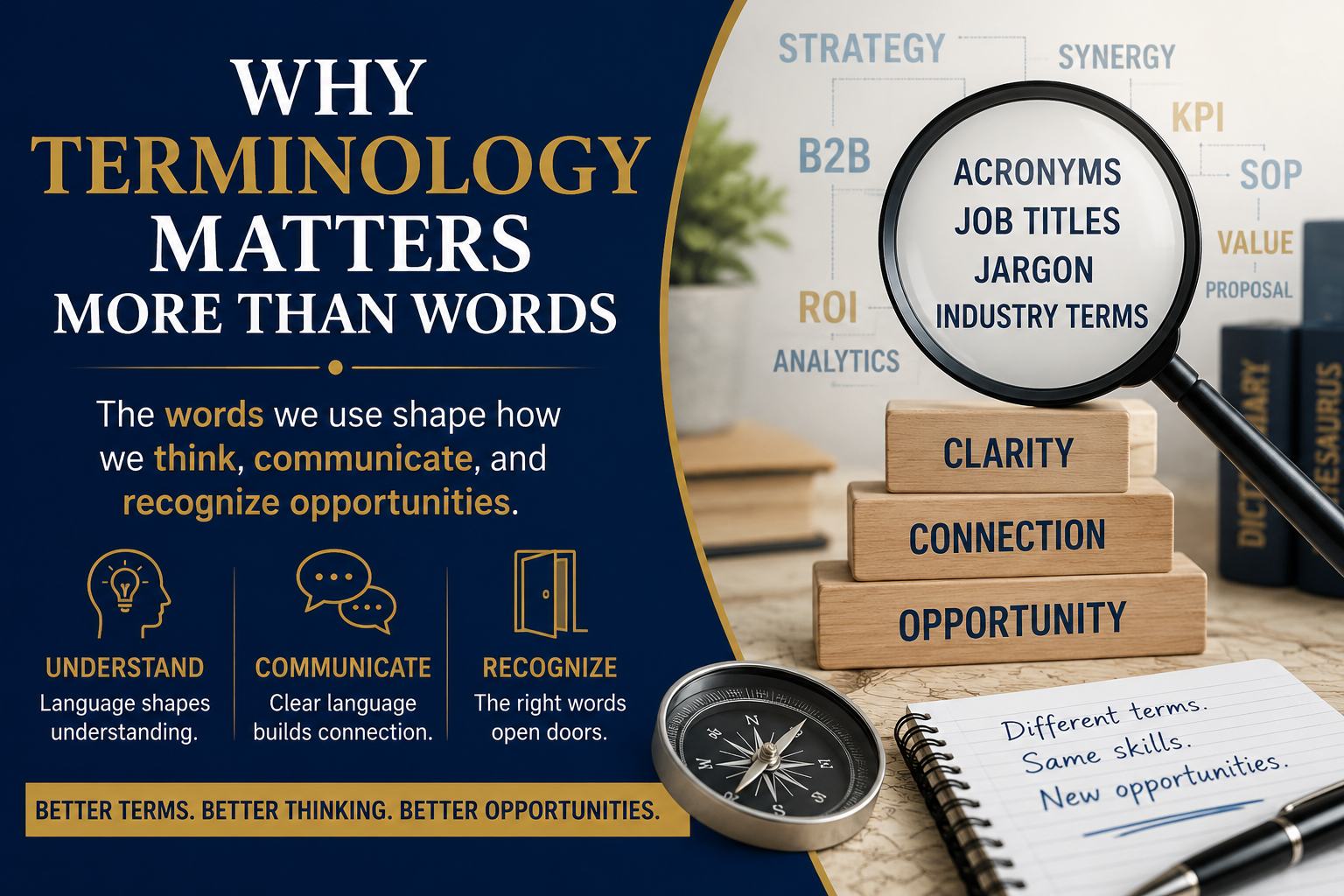
When I wrote the book “Terminology is More than Just Words”, I was influenced by my experiences working one-on-one with individuals looking for help finding a job and making a career change. I worked with over 1000 individuals to help them bring their LinkedIn profiles together in the best way to show who they were and what they had accomplished in their careers. This also led to working with them to learn how to use the profile to create a resume that would best match a job posting they were interested in.
This often meant reviewing the posting for keywords that defined what was wanted. For example, if a job posting for a marketing manager role emphasizes 'digital marketing' and 'SEO ', these are the keywords the candidate should focus on. Ensuring that the resume uses the right words for the posting is crucial, as it increases the chances of the resume being noticed by the recruiter.
When a candidate worked at the same company for several years, the titles used for their job often needed to be updated, especially in their overall industry segment. Even the duties and responsibilities required for a specific job frequently use different terminology to define the areas of duties and responsibilities…
The power of clear thinking cannot be overstated. It's not just about using the right words-it's about shaping your thought process. When you can think logically and organize your ideas, you're not just communicating effectively-you're demonstrating your ability to break down complex concepts, identify cause-and-effect relationships, and make informed decisions. This is the kind of thinking that can transform your career.
Thinking Clearly & Being Understood Requires Correct Terminology and Words →

Language is more than just a communication tool – it determines our perception of reality and influences our behavior. This view of language is known as the “Sapir-Whorf-theory” and “Linguistic Relativity.”
The idea of linguistic relativity, also known as the Sapir–Whorf hypothesis, is a principle suggesting that the structure of a language influences its speakers' worldview or cognition. Thus, individuals' languages determine or shape their perceptions of the world.
Linguistic Determinism says that language determines thought and that linguistic categories limit and restrict cognitive categories.

Words are potent weapons