By Brent M. Jones
Some writers’ books we enjoy; others change the way we think about writing itself. For me, Stephen King belongs in the second category.
I've read enough of his books to admit that his storytelling can be addictive. But what keeps me returning isn't simply the suspense, the unexpected twists, or the sometimes disturbing subjects he explores. It's his remarkable ability to make readers care about people in extraordinary circumstances.
King is often identified primarily as a horror writer. That description has always seemed too narrow to me. His stories explore fear, certainly, but they also examine friendship, childhood, memory, grief, morality, and the choices people make when they cannot control their circumstances.
The supernatural may set the scene, but human nature usually sits at the center of the story.
What Stephen King Understands About Storytelling
One of King's greatest strengths is making the unbelievable feel believable.
He accomplishes this not simply through plot, but through the ordinary details of human experience. His characters have recognizable weaknesses, familiar concerns, and complicated relationships. They worry about their families, their work, past mistakes, and what others think.
Then something unexpected happens.
The resulting story becomes more than an account of frightening events. It becomes an exploration of how people respond when the world they thought they understood changes suddenly.
I've always found that particularly interesting because real life often works in much the same way.
We move through familiar routines, making plans and believing we have some understanding of where life is taking us. Then an unexpected event changes our circumstances, sometimes permanently.
King builds extraordinary stories around that familiar human experience.
Reading Stephen King Is an Education in Writing
I have learned a great deal about writing simply by reading King's books.
His plots can be complicated, but his writing often feels conversational and accessible. He knows how to establish a scene, develop a character, and create the curiosity that makes a reader want to continue.
He also understands that readers need reasons to care about what happens next.
Suspense alone is rarely enough. We must become invested in the people experiencing it.
That lesson applies well beyond fiction. Whether someone is writing a novel, a personal reflection, or a book about human relationships, the reader needs a connection to the subject.
Good writing doesn't merely communicate information. It creates an experience that encourages the reader to think and feel.
The Importance of On Writing
Of all King's books, On Writing: A Memoir of the Craft has particular significance for me.
It is part memoir and part examination of what it means to be a writer. Rather than presenting writing as something mysterious, King describes it as a craft that requires attention, discipline, imagination, and considerable reading.
One of his memorable observations is:
"You must not come lightly to the blank page."
I appreciate the seriousness behind that statement.
Writing may begin with an idea, but turning that idea into something meaningful requires work. It also requires a willingness to discover that what we initially intended to say may not be quite what eventually appears on the page.
I have experienced that in my own writing.
Sometimes I begin with a particular observation or question, only to find that the process of writing leads me somewhere I hadn't anticipated.
The act of writing becomes part of the thinking.
That may be one of the most valuable lessons I've taken from King. Writing isn't always the expression of something we already understand. Sometimes it is how we come to understand it.
Does Popular Fiction Have Literary Merit?
King's extraordinary commercial success has sometimes been accompanied by arguments about the literary value of his work.
I've never found the distinction between popular fiction and serious literature particularly convincing.
A book doesn't become less meaningful simply because millions of people enjoy reading it. Nor does a difficult book automatically become more valuable because fewer people understand it.
Literature can challenge us in many ways.
It can introduce unfamiliar ideas, reveal something about human behavior, or cause us to reconsider assumptions we've carried for years.
Sometimes it accomplishes those things through philosophical reflection. Sometimes it does so through a frightening story about an ordinary person facing an impossible situation.
King's work frequently asks readers to consider what fear, loss, loyalty, and moral choices reveal about human character.
That seems to me a worthwhile literary accomplishment.
Memory, Experience, and the Stories We Carry
Another aspect of King's writing that interests me is his use of memory.
His stories frequently return to childhood experiences, old friendships, personal wounds, and events that continue influencing people long after they occurred.
King has written memorably about the relationship between writers and the emotional scars they carry.
That idea connects with something I've explored repeatedly in my own essays and books: our past experiences don't simply disappear. They continue shaping how we understand ourselves and the world around us.
Memory is selective. We remember some experiences vividly while others fade. And as we grow older, even the meaning of what we remember can change.
A writer has the opportunity to examine those memories, reconsider their significance, and sometimes discover connections that weren't apparent when the events originally occurred.
King does this through fiction. Much of my own writing approaches similar questions through personal reflection and nonfiction.
The methods are different, but the underlying interest in human experience is not.
A Writer Who Refuses to Be Confined by Genre
Although King is best known for horror, his writing extends into fantasy, suspense, crime, science fiction, and stories that resist easy classification.
That range is another reason I admire his work.
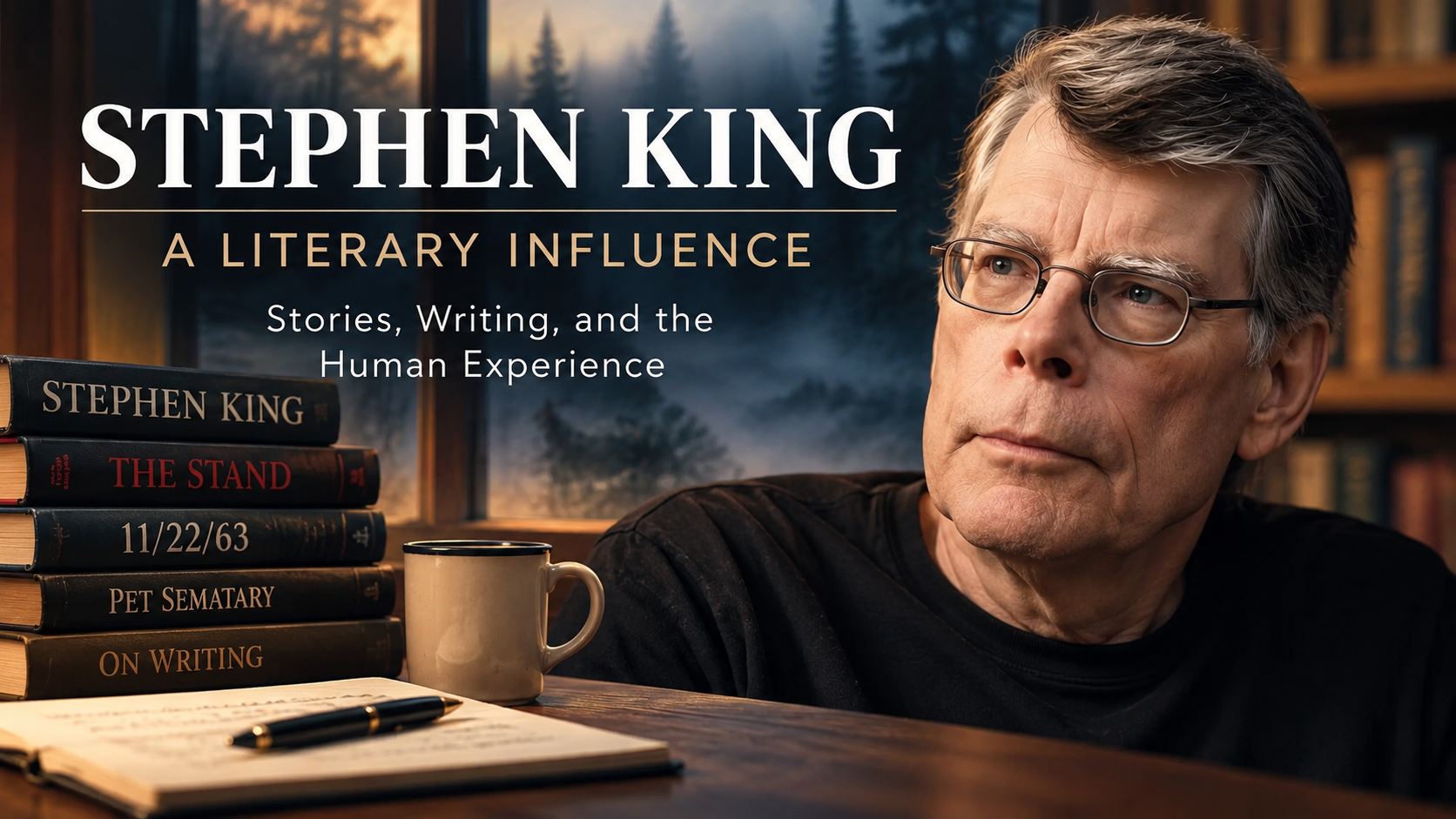
Consider the differences between The Stand, 11/22/63, The Green Mile, and Pet Sematary. Their settings, subjects, and emotional experiences vary considerably, yet each reflects King's interest in how people respond to extraordinary circumstances.
His short fiction offers another perspective on his versatility.
In The Bazaar of Bad Dreams, he demonstrates how a relatively brief story can introduce a disturbing possibility, develop a compelling situation, and leave the reader thinking long after the final page.
The lesson for writers is that the subject or genre need not define the limits of what we can explore.
What matters is whether the story communicates something meaningful.
Why Stephen King Remains a Literary Influence
I don't write horror novels, and my own books are very different from King's.
Yet I recognize several qualities in his work that I value in writing generally: curiosity about human behavior, attention to seemingly ordinary experiences, and an understanding that the events of our lives often have consequences far beyond the moment in which they occur.
Most of all, King reminds me that writing should engage the reader.
It should invite curiosity, create connections, and occasionally challenge the way we understand something familiar.
I began reading Stephen King because I enjoyed his stories.
I continue to appreciate his work because it has helped me think more carefully about storytelling itself.
And perhaps that is one of the best things we can say about a writer: we come for the story, but we leave with something more to think about.
Related Reading