Exploring the unexpected connections that shape our lives
Book Reviews, Comments & Stories, Quotes, & Poetry & More
"Connections and Why They Matter"
Most of what happens in our life will spark a connection. Life connects with what has been found in books. Books connect with what happens in life. Use the connections to help you see more clearly. A love of reading and writing is what motivated the creation of this blog. Thank you for coming to the blog.
Understanding the difference between importance and relevance is a key step in understanding communication itself.
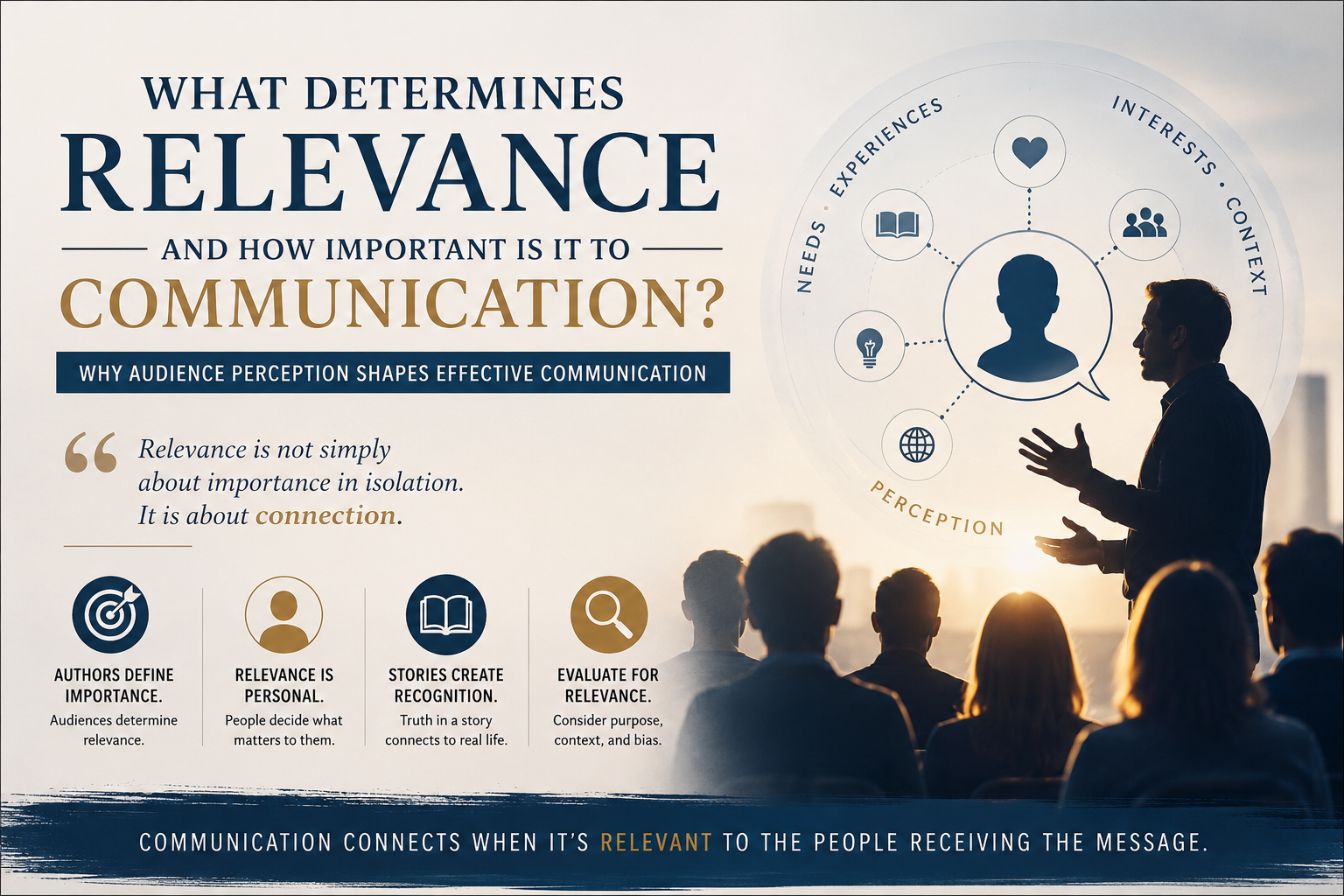
Importance is often defined by the author, speaker, or creator. Relevance, however, is assigned by the audience. Readers determine what matters to them based on their needs, experiences, interests, and circumstances.
This distinction suggests that one of the first responsibilities of a writer is to consider whether their ideas are meaningful to the intended audience. In many ways, relevance validates the familiar expression that “the customer is always right,” because it is ultimately the reader, listener, or customer who decides what connects, resonates, and matters.
When something is relevant, its significance becomes clear in relation to the situation at hand. Relevance is not simply about importance in isolation. It is about connection. Artists, writers, businesses, and politicians often worry about maintaining relevance because relevance determines whether people continue to pay attention.
So what makes a book relevant?
In literature, relevance often appears when a truth within the story connects to something larger than the story itself. A novel becomes relevant when readers suddenly recognize themselves, their relationships, or the world around them within its pages. Sometimes relevance arrives quietly. Other times, it feels immediate—a sudden realization that something fictional reflects something deeply real.
This is part of the enduring power of communication. Relevance creates recognition.
In research and communication alike, relevance also requires evaluation. Information must be considered in relation to purpose, context, perspective, and bias. Determining relevance means asking not only whether something is important, but important to whom, under what circumstances, and for what purpose.
Communication becomes more effective when relevance is understood—not only from the communicator's perspective but also from the audience's.
I explore many of these ideas further in The Power of Authentic Communication — a reflection on listening, relevance, trust, and the human side of communication