Book Review by Brent M. Jones
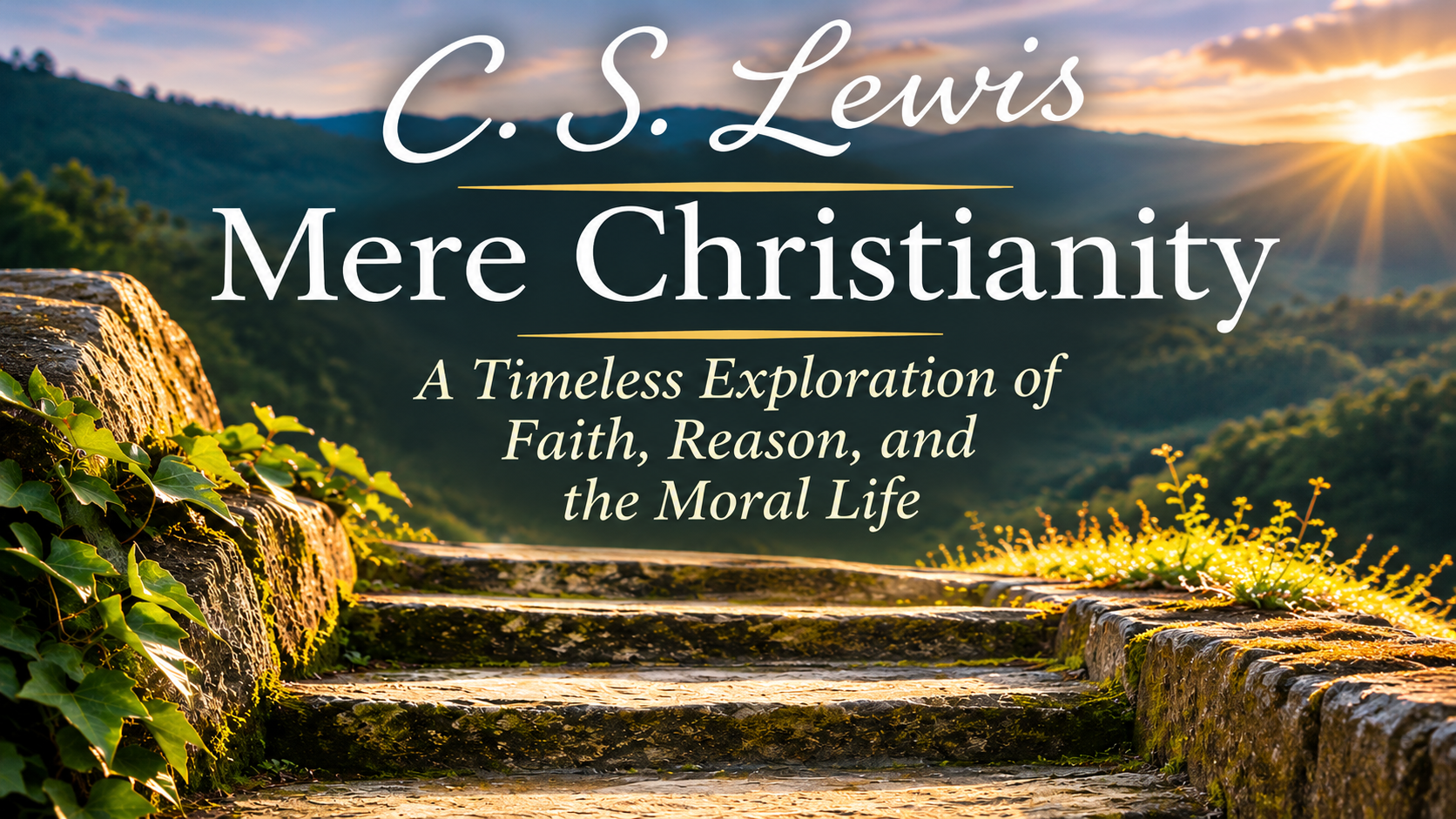
What makes Christianity believable, and how can faith be understood through reason rather than simply accepted through tradition? These are among the central questions C.S. Lewis explores in Mere Christianity, one of the most influential works of Christian thought in the twentieth century.
During World War II, the BBC invited Lewis to deliver a series of radio broadcasts explaining Christianity’s fundamental beliefs. Beginning in 1941, these talks reached listeners living through uncertainty, suffering, and profound questions about human nature. The broadcasts later became Mere Christianity, published in 1952.
Lewis brings an interesting perspective because he was once an atheist. His eventual conversion to Christianity grew out of years of questioning, philosophical reflection, and an effort to reconcile reason with religious belief. Rather than simply asking readers to accept Christianity, he explains why he came to believe it.
One of the book's central arguments concerns what Lewis calls the Moral Law, the idea that human beings possess an underlying awareness of right and wrong. Although people often disagree about moral questions and fail to live by their own standards, Lewis argues that this shared sense of moral obligation points to something beyond individual preference or social convention.
From this foundation, Lewis examines humanity's relationship with God, the nature of good and evil, and the Christian understanding of redemption. He considers the significance of Jesus Christ and presents his well-known argument that Jesus cannot reasonably be regarded merely as a great moral teacher if one takes his claims about his divine identity seriously.
The book also explores how Christian beliefs should influence everyday behavior. Lewis discusses virtues, forgiveness, pride, charity, and the challenge of becoming a better person. His emphasis is not simply on understanding religious doctrine but on recognizing how belief should shape character and conduct.
What makes Mere Christianity particularly interesting is Lewis's effort to connect faith with the broader human experience. His arguments invite readers to examine their own assumptions about morality, purpose, and the meaning of a good life.
Readers do not have to agree with every conclusion to appreciate the questions he raises. His reasoning offers opportunities for reflection, whether one approaches the book as a committed Christian, someone questioning religious beliefs, or simply a reader interested in philosophy and human nature.
My Assessment
Mere Christianity remains a valuable introduction to Christian thought because it encourages readers to consider not only what they believe, but why they believe it and how those beliefs influence the way they live.
Its lasting contribution may be its insistence that faith, reason, morality, and personal conduct are connected. More than a defense of Christianity, it is an invitation to examine the principles by which we understand ourselves and choose to live.
For readers interested in the relationship between belief, reason, and personal responsibility, Mere Christianity continues to offer much worth considering.