Exploring the unexpected connections that shape our lives
Book Reviews, Comments & Stories, Quotes, & Poetry & More
"Connections and Why They Matter"
Most of what happens in our life will spark a connection. Life connects with what has been found in books. Books connect with what happens in life. Use the connections to help you see more clearly. A love of reading and writing is what motivated the creation of this blog. Thank you for coming to the blog.
Understanding our emotions and choosing how we express them can transform the quality of our conversations, relationships, and connections.
Originally published May 1, 2025 | Updated November 28, 2026
By Brent M. Jones
We often think effective communication begins with choosing the right words. But what happens within us before we speak may matter as much as the words themselves.
Emotion influences how we interpret what others say, how carefully we listen, and how thoughtfully we respond. Whether we are engaged in a personal conversation, a professional exchange, or a moment of disagreement, our emotional state can shape the entire interaction.
Authentic communication requires more than expressing what we think and feel. It requires understanding why we feel the way we do and recognizing how our expression of those feelings affects others.
The Role of Emotional Intelligence in Communication
Emotional intelligence is not about suppressing our feelings or pretending to be calm when we are not. It is about recognizing our emotions, understanding their origins, and choosing how to express them constructively.
Think about a time when frustration crept into your voice despite your intention to remain composed. Or when genuine enthusiasm helped you connect with someone immediately.
Our emotions often communicate something before our words do.
Emotionally intelligent communicators are not emotionally neutral. They are emotionally aware. They understand when to speak openly, when to reconsider their assumptions, and when listening may accomplish more than responding.
They can express disagreement without hostility, acknowledge disappointment without assigning blame, and demonstrate empathy without sacrificing their own perspective.
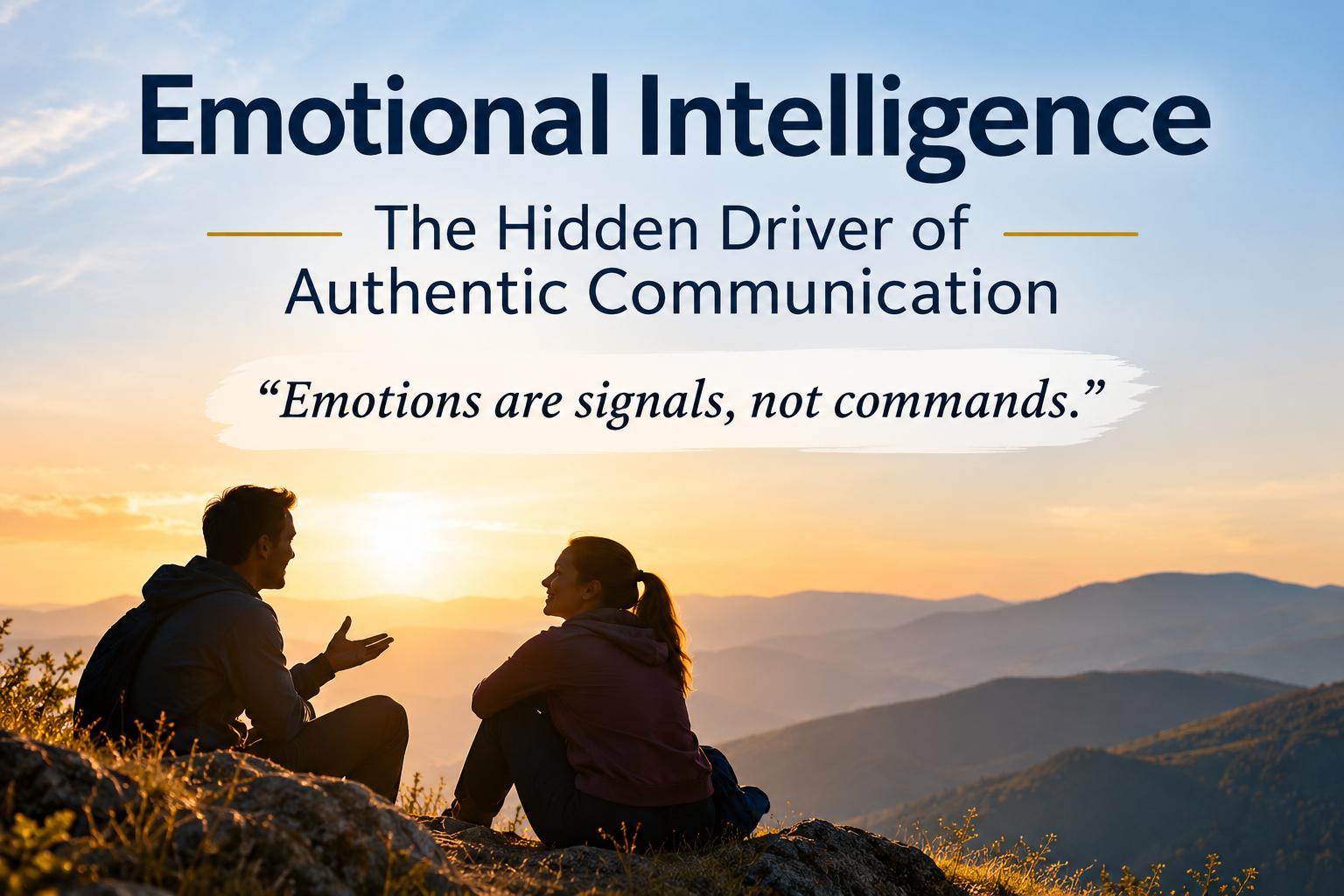
Emotions Are Signals, Not Commands
Emotions provide valuable information, but they do not always provide reliable instructions.
Anger may signal that a personal boundary has been crossed. Anxiety may reflect how deeply we care about an outcome. Frustration may reveal an unmet expectation rather than a problem with another person's intentions.
Even pleasant emotions can distort our judgment. Enthusiasm can cause us to overlook legitimate concerns, while optimism can lead us to underestimate difficulties.
The challenge is not to eliminate these emotions but to understand what they are telling us before deciding how to respond.
There is an important difference between experiencing an emotion and allowing that emotion to determine our behavior.
Authenticity Does Not Mean Saying Everything We Feel
Authenticity is sometimes confused with unfiltered self-expression. But saying everything we feel at the moment we feel it is not necessarily honest, helpful, or constructive.
Our immediate emotional reactions may reflect past experiences, insecurities, assumptions, or misunderstandings rather than the reality of the present situation.
Taking time to understand those reactions can make our communication more authentic, not less.
We become better communicators when our words reflect not only what we feel in the moment but also who we are and what we value.
How to Communicate With Greater Emotional Awareness
Before responding during an emotionally charged conversation, consider asking yourself:
What am I feeling, and why?
Am I responding to what was actually said or to my interpretation of it?
Could my tone communicate something different from my intended message?
Have I considered what the other person might be experiencing?
Will my response strengthen understanding or create unnecessary distance?
These questions create space between emotion and action. Within that space, we have an opportunity to choose a response that better reflects our intentions and values.
Emotional Awareness Strengthens Human Connection
As we become more aware of our own emotions, we may also become more attentive to the emotional experiences of others.
We begin to notice hesitations, changes in tone, facial expressions, and concerns that may not have been expressed directly. Rather than assuming we know what these signals mean, we become more willing to ask questions and listen.
People are often more willing to communicate openly when they feel understood rather than judged.
One of the greatest gifts we can offer another person is the opportunity to express what they genuinely feel without immediately having to defend it.
Becoming a More Authentic Communicator
Emotional maturity is not measured by how rarely we experience difficult emotions. It is reflected in how thoughtfully we respond to them.
Authentic communication begins with self-understanding, grows through empathy, and becomes meaningful through our willingness to listen.
Perhaps the most important communication skill is not learning how to express ourselves more effectively, but learning to understand ourselves well enough that what we express reflects the person we genuinely want to be.
Our emotions influence what we say. Our self-awareness influences what we choose to communicate.
Further Reading
Explore these ideas in my book, The Power of Authentic Communication, which examines how self-awareness, empathy, and meaningful human connection can help us become more effective and authentic communicators.