

Our Memory Lane is Modified by Frequent Trips →

As your life unfolds, the power of experience reshapes your memory lane, allowing you to craft a new narrative. Each time you retell your life story, you are not just recounting but reinventing yourself.
Our past, often envisioned as a metaphorical' memory lane,' is not fixed. It is subject to change, influenced by our present perspective and experiences. Each time we revisit a memory, our brain has the potential to reinterpret or edit it, offering us a fresh understanding.
Professor Elizabeth Phelps, a professor of psychology and neuroscience at NY University, presented this thought. Senior Editor Mark Fischetti quoted her in a 2017 Scientific American article, “Why Do Our Memories Change? "
Professor Phelps said, “Our memories can change because they become vulnerable each time we revisit them. When we first lay down a memory, it takes the brain a little while to solidly store the information—consolidation. And every time we subsequently recall that memory, it has to go through a new storage process—another slight delay for another consolidation.”
The book Why Life Stories Change: As You Look At Your Own Life Story, You See Yourself Differently states that who we are is the total of the events in our lives, especially those we connect with. We choose the circumstances we connect with each time we tell our life stories. We do just that by putting together the narrative of who we are in our life stories.
As we retell the story, we can pick which events we connect with and what we conclude about them, weaving and reweaving the narrative about them into our story.
As my story changes with the retelling, it changes me. I become different because of how I see the story.
A person’s connections include those who have come into their lives, but even events we experience through fiction and fantasy can contribute to our conclusions about life. For example, George R.R. Martin presents this idea in a quote: " A reader lives a thousand lives before he dies,” and all those lives influence us.
A poem by an unknown author suggests it focuses on the influence of those people in our lives.
"Some people come into our lives for a reason, some for a season, and some for a lifetime.”
Some believe God sends the people needed into your life, and others may bring challenges and darkness.
Each time we go down Memory Lane, it is different, but we become different with time and look back through the filter of new experiences.
Both books below show the value of using the past and learning from it to re-invent ourselves.
Why Life Stories Change: As You Look At Your Own Life Story, You See Yourself Differently
This book states that who we are is the total of the events in our lives, especially those we connect with. We choose the events that connect each time we tell our life stories. We do just that, putting together the narrative of who we are in our life stories.
&
Embrace Life’s Randomness: Breathe in the Amazing
Our journeys through life follow unexpected paths. Sometimes, looking back offers clarity and understanding, while other times, you find yourself at an unforeseen junction, and it takes your breath away.
How is Existence Subjective, and Is It For Everyone? →


Existence is subjective, a unique experience for each individual. What one person experiences is always different from another's, making it always particular and individual—always my existence, your existence, her existence.
This uniqueness is encapsulated in Martin Heidegger's phrase, Dasein, “there being,” which defines humans by the fact that they exist or are in the world and inhabit it. Dasein, a key concept in Heidegger's philosophy, refers to human existence’s unique mode of being, characterized by its temporal nature and its relation to the world. This understanding of existence requires investigating the meaning of “Being.” *
Many problems arise because people believe that their subjective experience of the world is objectively actual for everyone.
Existentialism is a philosophical theory that empowers individuals as free agents who control their choices and actions. This belief in personal agency is a cornerstone of existentialism, emphasizing the importance of taking responsibility for one's life and decisions, fostering a sense of accountability and engagement.
Existentialists believe that society's restrictions should not hinder an individual's life or actions. These limitations not only inhibit free will but also stifle the development of a person’s potential. However, the belief in existentialism offers a beacon of hope, suggesting that it is crucial to break free from such constraints to fully realize one's potential, fostering a sense of optimism and hope for the future.
*Being and Time by Martin Heidegger - This book tries to answer the question of what it is to live.

Because he asks these questions, he exists as a being.
Humble People spend more time thinking about others more than themselves →

Humble people care about others and don’t spend most of their time thinking about themselves. Their concern for others is selfless; they don’t measure what they do by what they can gain.
They acknowledge they don't have it all together.
They know the difference between self-confidence and pride.
They seek to add value to others.
They take responsibility for their actions.
They are filled with gratitude for what they have.
Life is a humbling experience. It tests you along the trip. Humble people appreciate the value of all things, including and especially other people. They are open to new ideas and continue to learn throughout their lives. The final analysis takes humility to make sense of the world around us and our role in it.
What is True Happiness in Life? →

Gratitude comes before happiness, and lasting happiness grows when we express that gratitude through kindness and service to others.
Ralph Waldo Emerson said, “The purpose of life is not to be happy: It is to be useful, to be honorable, to be compassionate, to have it make some difference that you have lived and lived well.”
Happiness, in the ancient noble sense, means self-fulfillment, bringing a different focus to the word happiness.
Thomas Carlyle doubted that Emerson was accurately quoted and added these thoughts:
… “It was only cheap, easy happiness that Carlyle railed against. He taught that there was higher happiness, namely, blessedness — the spiritual fruition that comes through renunciation of self, the happiness of heroes that comes from putting thoughts of happiness out of sight, and that the direct and persistent wooing of fortune for her good gifts was selfish and unmanly, — a timely lesson at all seasons.”
"Poverty exists not because we cannot feed the poor, but because we cannot satisfy the rich.”
The reason that the rich can’t be satisfied may offer some confirmation as to what the true nature of happiness is, suggesting that for true happiness, one needs to be helpful, to be honorable, to be compassionate, to have it make some difference that you have lived and lived well”.
Fiction brings experiences that the reader would have never expected to have. →
by Brent M. Jones

Fiction enables us to step into a new reality where all our beliefs can be set aside, and we can meet new people who inspire or even terrify us when we read.
Will fictional characters and experiences influence our self-identity? I think they will. Do they play a role in the narrative of how you see your life story? Again, I think they do. Does fiction have any redeeming value? Will its influence raise or lower our intelligence? There is plenty of evidence that it increases it.
Numerous suggestions exist on how to increase intelligence, but one common one is hanging around with intelligent, educated people. You can talk to them about a wide range of subjects and new ideas, and you can gain different perspectives. It sounds a lot like opening a book of fiction.
The journal Science published an extraordinary study showing that reading literary fiction can improve people's theory of mind (ToM) – their ability to understand others' mental states.
"Fluid intelligence" is the ability to solve problems, understand things and detect meaningful patterns. In today's world, fluid intelligence and reading go hand in hand.
The first time I read William Faulkner’s fictional story, As I Lay Dying, it took me by surprise. I expected to enter a unique storyline and learn about the people in Faulkner’s fictional Yoknapatawpha County, Mississippi, during the 1920s. Yet the conversation's language, tone, and sound were a surprise. The way the characters spoke to each other was different than anything I would ever have expected, and I knew I was in a different place. The way the characters interacted and sounded contributed to letting me see life differently.
I read Lia Genova’s book, Still Alice, because I wanted to learn more about what it was like to have Alzheimer’s disease. I hoped to never experience this for myself and saw this story as a way to understand the condition further. The story did much more than I expected, as I learned but also felt the impact of the disease. When Alice, a linguistics expert, began to lose her words and thoughts, I felt how hard it was for her.
Einstein suggested, “If you want your children to be intelligent, read them fairy tales. If you want them to be more intelligent, read them more fairy tales.”
Neil Gaiman is a writer of fantasy and fiction, and in his book The View from the Cheap Seats, he wrote about attending a meeting for fiction writers in China. In previous years, China didn’t allow fairy tales and fiction in their schools, so he was surprised to learn of this invitation. He asked an official what had changed and was told, off the record, that they had toured all the big companies they did outsourcing work for in the United States and asked those they met what they read. The resounding answer was science fiction. The officials then began to understand the connection of invention with creativity. (I guess it took a random event for them to figure this out.)
Einstein also said that creative imagination is the essential element in the intellectual equipment of the true scientist and that fairy tales are the childhood stimuli to this quality. I guess the Chinese officials didn’t read that before their trip.
There are good and bad guys in fiction, fairy tales, and horror stories. For some, the “Force” in Star Wars might represent the goodness in the universe, but what about that goodness? Will it reaffirm our beliefs while seeing them as an element of a fictional plot; does it make the fiction more believable? The bigger question is, can we really step out of our world, or are we just going always to view things through the lens of our experience?
Random events in books free me and leave me thinking I have escaped concluding my lens of experience.
As you look at your own life story your narrative changes and you see yourself differently →
by Brent M. Jones

Creating a narrative about the events of your life brings clarity and helps you understand how you became you.
As your life continues, experience changes how you see past events, and you find a new narrative. Retell your life story and reinvent yourself as you do.
Book Focus
Your Life’s Narrative, The Story you tell yourself, Your life story is your reality, Reinvent Yourself, Create your narrative as you look back, Connect the events of your life, Stories change with the retelling
Make Yourself a Rag Doll Friend →

A handmade rag doll has a lot of ways to bring you peace and comfort. It is always there for you and always listening. Its material might be former shirts, blouses, drapes, and just anything from the past with special memories. The doll becomes a collection of memories. The memories chosen are also friends.
The most significant and most lasting toys are made, not bought.
When the Music Runs Out (what if your too young to retire?) →

Normally when the music runs out it is a bad thing
This fine young man is too young to retire!
What happens when the music runs out? Do musicians retire when that happens? Louis Armstrong said musicians don't retire; they only stop when no more music is left in them. Is it possible that we may reach the point when we have no more pieces left in us? Joan Baez will retire at the end of 2018. Will "her" ability to make music be gone? Of course not, but maybe the sound changes?
Music is a connection between our physical self and our very souls. We feel the music. It reflects our hearts and deepest feelings.
Music with scriptures is hymns. We worship through hymns. The feelings of our heart are conveyed in verbal prayer, so perhaps prayer is a form of music?
Our bodies and faces reflect images of happiness and sadness, and music opens those feelings. Singing makes us better. Sometimes we sing for what we long for. We use music to help us get by without things we want.
When the music is gone, maybe we have left and gone somewhere with it, hopefully, to find the piece.
Thoughts about Intuition: listen to your broccoli example →

Author Anne Lamott is known for saying, “Listen to your broccoli, and it will tell you what to do.” She inspired this quote from one of Mel Brook’s routines in which a psychiatrist tells a patient, “Listen to your broccoli, and your broccoli will tell you how to eat it.” In her book, “Bird by Bird: Some Instructions on Writing and Life,” she explains that you listen to the object of your interest to gain intuition.
Lamott’s explanation of the quote suggests that intuition can be created by listening and reminds me of another quote I heard in a sales training meeting: “Listen to the Marketplace, and it will tell you what to do.” These quotes don’t mention what you specifically listen to but imply that you find the parts of the whole to learn about and listen to.
The quotes make me think of other writing advice explaining that character development is more important than plot development, explaining that the characters in a story interact and create the plot. According to this approach, the first step is to develop the characters, the individual parts of the property. They need to be believable with their personality, appearance, history, and mannerisms and will have their emotional baggage. Some characters may not like some of the other characters, and how they interact with each other and with events will be the result of who they are individually.
Listening to the character’s interactions with each other and knowing how they feel about the things that happen to them gives the writer intuition about the plot and outcome. Impulse is created by listening to the object of your interest and profoundly understanding the facts relating to that object.
Social Media isn’t real life portrayed: It often is just fantasy →

Social media isn’t portrayed in real life; it is often just fantasy. Research shows that people had a false sense of belonging and connection that wasn't real-world based. One big reason is that all those "assumed connections" people check in on out of habit several times a day look like they have a perfect life. What seems to be just often isn't real, and if your life isn't perfect, it can be depressing.
Social Media doesn't give you a real sense of the world around you or what other people are. People can be whoever they want to be on those sites. Whatever they do, it can be a staged situation, not a shared life. Our lives can look dull in comparison, leading to a lot of stress and anxiety. Not good things. Other people’s passions can be polarizing.
Depression, in part, is a state of not caring. The world turns "black and cold" all around us when we’re depressed. Things don't matter. Anxiety may be the other end of this same spectrum. On that side, you care "far too much about everything," and there is no way to accomplish everything you care about.
Connecting with people can help with either problem. Getting "out of ourselves" helps. People, books, art, poetry, service, ancestors, and music can all help us get out of ourselves. If people are going to pull us out, they need to pull us into the real world, not a made-up fantasy online reality show.
Having said this, I have to acknowledge the real world. I may use these social media sites to offer some very short encouragement and pull people to this site. I don't think I originated this, so I hope you don't want to hang the messenger.
Is Bob Dylan’s song "Blowin in the Wind" literature" →

This essay was posted in this site’s newsletter section and also on LinkedIn
The song “Blowin' in the Wind” by Bob Dylan raises questions. It has been described as a protest song and poses a series of rhetorical questions about peace, war, and freedom but is it literature?
Both songs and poems often bring out human emotions, and both have patterns of sounds, which bring melody to the verses. Some say poetry is more literary because it uses words better and conveys deeper feelings and emotions. Both reflect the same social concerns as literature.
Before you dismiss this post and the question it presents, don’t forget, or if you never knew, let me tell you that the Noble Prize for literature in 2016 was awarded to Bob Dylan for "having created new poetic expression within the great American song tradition.”
Another big thing, assuming you like Bob Dylan, is that Harper’s Magazine, after this award was given, said that “literary means not only what is written but what is voiced, what is expressed, what is invented, in whatever form.” More restrictively, writing is considered an art form or any report deemed to have artistic or intellectual value, often due to deploying language in ways that differ from ordinary usage.
"Blowin' in the Wind" was written and performed by Bob Dylan in 1962. The song became a symbolic song of fighting for people’s rights and equality in society and an anti-war song. It poses a series of rhetorical questions about peace, war, and freedom.
Lyrics
How many roads must a man walk down
Before you call him a man?
How many seas must a white dove sail
Before she sleeps in the sand?
Yes, 'n' how many times must the cannon balls fly
Before they're forever banned?
The answer, my friend, is blowin' in the wind
The answer is blowin' in the wind
Yes, 'n' how many years can a mountain exist
Before it is washed to the sea?
Yes, 'n' how many years can some people exist
Before they're allowed to be free?
Yes, 'n' how many times can a man turn his head
And pretend that he doesn't see?
The answer, my friend, is blowin' in the wind
The answer is blowin' in the wind
Yes, 'n' how many times must a man look up
Before he can see the sky?
Yes, 'n' how many ears must one man have
Before he can hear people cry?
Yes, 'n' how many deaths will it take 'til he knows
That too many people have died?
The answer, my friend, is blowin' in the wind
The answer is blowin' in the wind
Summers by the Portenuf River →

Summers by the Portneuf River
I lived near the Portneuf River in Pocatello, Idaho for much of my youth. Over the years, the value I place on that time has changed, and how I view those events has evolved.
I remember that the river water level was higher in the spring, with all the runoff from the snow-topped mountains flowing into it and then running through the town on the West side. My Huckleberry Finn experience with this river included fishing from rafts built from logs and branches as we floated downstream. Our home was right on the bank of the river, in the middle of the town’s residential section. I could look out of my second-story bedroom window straight to the river. The banks were thick on both sides with bushes and trees, and when we floated down the river on rafts we built, it was like being in another world.
Fishing from the raft was achieved with a traditional pole, but fishing from the shore, mostly in my backyard, was different. Many small minnows were in the shallow water near the beach, so no poles or hooks were used; instead, a pint or quart glass bottle was our fishing tool.
Masson and Ball brand glass jars with threads on their outer perimeter, so they could accept a metal ring when it was screwed down were our unique fishing tool for minnows. My mother and aunts all used these jars to bottle raspberries, peaches, cherries, and other items, by sealing them and putting them into a boiling kettle bath. Raspberries were my favorite.
An empty bottle, strong string, lid, knife, and some bread, were all needed. The string, usually six feet long, had one end tied and fasted around the top by putting it between the lid and bottle before screwing it down. Using the knife, a hole could be cut in the middle of the flat metal lid, creating a punctured X, then press the X to open so that four short sections of the cover are depressed into the bottle. At this point, a few pieces of bread would be scattered at the bottom of the bottle before the lid was replaced. The bread pieces needed to be big enough so that, when the bottle was filled with water, they wouldn’t float up through the opening in the lid.
With the filled bottle secured by the string, doubled up if needed to support its weight and pressure, it was tossed offshore into the river under overhanging branches or close to a large rock.
This type of fishing was simple. We would wait at least ten minutes, maybe even an hour, to see what treasures the river would yield. When the bottle was pulled back to shore, it almost always contained minnows that had swam in to get the bread but couldn’t figure out how to get out.
The small fish could be used as bait on a hook with a fishing pole, especially if a trip to the Snake River was coming up. Bigger fish would bite on minnows, or they could be sold for bait, like worms. Minnows were also an option for more riverbank activity.
Mud and rocks could be used to make a little pond on the bank of the river to hold them. Of course, letting the fish go was the best option, which sometimes happened, too. When a pool was created and loaded up with the minnows, the next step was to back away, hide, or even leave and return in an hour or so. Sooner or later, a snake would find this little pool and slither in to eat the fish. With good timing, the snake could then be caught.
What to do with a live snake presented more of a challenge. Several attempts to keep the snake in a cardboard box under the front porch failed, as they just disappeared. I always hoped they wouldn’t find a way into the house.
Leaving the river behind when I was about fourteen, our family moved to a new house in a traditional neighborhood on the east side of the town. A few years after we moved, something terrible happened to the river. Spring runoff was higher than it had been in years, and all along the river, the neighborhoods were flooded as it ran through the town.
The town brought the Army Corps of Engineers in to evaluate the situation, and they decided to make a cement ditch of the river for its entire length as it twisted and turned through the town. The project began in 1966 and was completed in 1968.
The Engineers replanned the river, and 6.2 miles were changed. 1.5 miles of the changes were right through the West Side of the town, where our previous home sat almost in the middle. A concrete channel was poured 40 feet wide and 10 to 16 feet tall. I don’t recall any protests or concerns that the engineers were wrong in their actions, and no one asked my opinion.
A river in a cement ditch is not a river! When they completed their plan, the banks had no trees or bushes. It was just an ugly, sterile ditch. Bureaucrats and a town happy to receive some federal funding had eliminated any path to revisiting my Huckleberry Finn days and my youth.
I had to wait a few years before returning to where I grew up, where this work was done. After that first trip back, I waited a long time before I ever went back again. For over 50 years, I have only visited the area I grew up in a few times. It is just a heartbreaking site.
John Steinbeck said, “You can’t go home again because the home has ceased to exist in the mothballs of memory.” Maybe he was right, but my memory of home is much better than today’s reality. It points to the fact that there is no sense in looking back. And so, we get up and press forward.
Maybe I can’t go home again, but I am glad I wrote down my thoughts about the river, an essential part of my childhood. That documented memory is a plot point in my life story that looks different each time I read it, demonstrating how my thoughts and conclusions about it have changed.
For example, when I first wrote the story, I didn’t even consider the government’s role in deciding to reduce the river to an ugly cement ditch.
This is a chapter in my book, “Why Life Stories Change: As You Look At Your Own Life Story, You See Yourself Differently.” See “My Books Section” Or order the book at https://www.amazon.com/Brent---M.-Jones/e/B07WTRSLC1.
1966 Revisited: What I Saw, What I Missed, and What I Now Understand
Much of what I recall from 1966 is pleasant—I was newly married and studying at Idaho State University. Yet as I look back, I see how sheltered we were from the turmoil of the Vietnam War and the civil rights struggle. Memory, experience, and hindsight don’t always align, and understanding often comes years later.
Read moreBottle Fishing on the Banks of the Portenuf River
By Brent M. Jones
As a young boy, in the the1950s, I walked barefoot in the moss and mud on the banks of the Portneuf River, a tributary of the large, better-known Snake River, in Southeastern Idaho. The river was lined on both sides, with trees and bushes overhanging the banks. Big Oaks, Maple trees, Goldenraintee, Hawthorne Birchc,h and Dogwood trees. The trees stood with willows and bushes thick at their sides. Occasional lilac bushes brought their deep blue to the natural cover.
Our family’s home sat right on the bank of the river, and with the open window, my upstairs bedroom brought the sound of the flowing water, birds, and various river sounds. Large Oak trees rose from the bank below, and the leaves from the upper branches would brush the house and window with the movement of the wind.
Winter by the River
With the leaves gone and the water lowered, everything changed. The ice layered up the banks, and, in some places, only ice could be seen. Often the branches of the willows and trees were covered with white crystal-like coverings. Some would ice skate, but this was something I was fearful of doing.
Summers by the River
The water was higher than in the winter with all the runoff from the snow-topped mountains that feed the river. My Huckleberry Finn experience included rafts built from trees and fishing as we would float downstream. Our house was in the middle of a residential section near the town of Pocatello, but going downstream on a raft, with the tree and bush-lined banks, was like being in another world.
Fishing from the raft was done with a traditional fishing pole, but fishing from the shore, mostly in my back yard, was different. Instead of a pint or quart glass bottle, no bars or hooks were used. My mother used the same Kerr brand bottles, referred to as Mason Jars, to bottle raspberries, peaches, cherries, and other items, by sealing them in a boiling kettle bath. Raspberries were my favorite.

An empty bottle, strong string, lid, knife and some bread was all that was needed. The string, usually six feet long, had one end tied and fasted around the lid. Using the knife, a hole could be pressed in the middle of the flat metal lid creating a punctured X and then pressing the X to open so that 4 sharp sections of the lid depressed into the bottle. At this point a few bread pieces would be put in the bottom of the bottle before the lid was added. The bread pieces needed to be big enough so when the bottle was filled with water that they wouldn’t float up through the opening in the lid.
With the bottle secured by the long string, doubled up strong enough to hold the bottle full of water with some pressure, the filled bottle was then just tossed off shore into the river under some overhanging branches or close to a large rock.
This type of fishing was not complicated, and we would wait at least ten minutes, maybe even an hour, but when the bottle was pulled back to shore it almost always had some small minnows in it.
The small fish could be used for bait on a hook with a fishing pole, especially if a trip to the Snake River was coming up, or they could be sold for bait just like worms could. The small fish were also an option for more riverbank activity. Mud and rocks could be used for making a little pond on the bank of the river to hold the small fish. Of course, just letting the fish go was the best option and that happened sometimes.
When a fish pool was created and loaded up with fish the next step was to move back away and hide or even leave and come back in an hour or so. Sooner or later a snake would find this little pool and go in and eat the fish. With good timing the snake could then be caught.
What to do with a live snake was a little more of a challenge. Several attempts to keep the snake in a cardboard box under the front porch failed when they just disappeared? I always hoped they wouldn’t find a way into the house if they got away.
Leaving the River behind
Our family eventually moved to a traditional neighborhood on the other side of town to live in a new house, but there was no river nearby. A couple of years after we moved something terrible happened to the River. Spring runoff was higher than it had been in years and all along the river, as it ran through the town, the neighborhoods were flooded. The town brought the Army Core of Engineers in to evaluate the situation and they decided to make a cement ditch of the river its entire length as it twisted and turned through the town.
A river in a cement ditch is not a river! The bank had no trees or bushes. It was just a sterile ugly ditch. Any path to revisiting my Huckleberry Finn days and my youth were just eliminated by bureaucrats and a town happy to take some federal money.
I went back to where I had spent much of my youth after this happened. I waited a long time before I ever went back again.
John Steinbeck said: “You can’t go home again because home has ceased to exist in the mothballs of memory. Maybe he was right, but my memory is a lot better than the reality today of where home was. It just points to the fact that there is no sense looking back. We just get up and press forward.

Find your Path Forward by Looking Back →
By Brent M. Jones

Stories of outstanding leaders, who look back at their own lives and tell of how their success came because of the trials and setbacks they had in life, are not uncommon. They didn't see the value of the problems when they occurred but only after years of rethinking the events. The self-acceptance of their challenges followed years later.
Previously I wrote an article titled “As You Look at Your Own Life Story You See Yourself Differently,” which included background research from Julie Beck's Atlantic Magazine’s 2015 article titled “Life’s Stories.” The subtitle of her article states: “How you arrange the plot points of your life into narrative shapes who you are and is a fundamental part of being human.”
Beck quoted Monisha Pasupathi, a professor of developmental psychology at the University of Utah, saying: “To have relationships, we’ve all had to tell little pieces of our story.” This means we have to know our own story; as our perspective changes, we change, and the story changes.
If the essence of accepting yourself is to know your own life story, then the question is, what is the story? Author Bill George suggests building a timeline of your life that includes the highs and lows, reflecting on it daily. A summary of your life brings you to where you are today, and a timeline points out when things happened of significant influence, representing forks in the road. The more recent events in the story often help you see the prior ones differently.
Our narrative and perspective are choices, and how we look at the events and people in our lives changes as those memories are filtered against other events and all of our memories. A lesson we learn from an event today can help us see what happened before differently. Connecting events and concluding is weaving together our life stories and defining who we are. Who we think we are is related to who we become.
A daily journal captures the events of our lives, and a summary of the journal offers some opportunities for conclusion. Reviewing a written life story yearly will show how we see our past changes because our perspective makes a great deal of difference in what we think our history was. Save your personal story, rewrite it as you see it differently, and save that too.
Think about your story each day and tell your story to your family and others, but listen to how you see things have changed and will change.
Is the Human Soul Eternal and is it transcendent of our material existence? →

If the human soul is eternal and lives on when the body dies, it must be made of different materials. If that substance is spiritual, then where does it reside within our living bodies? Is it separate or part of our living flesh? Some have referred to the soul as the seat or location of our character and emotions, but is that just a metaphorical inference?
Some religions believe the soul comes back after death and reunites with a resurrected body in some future time, but then some are unclear as to whether the soul exists without being reunited with the body.
Existence, as a unique entity, should carry within it the substance of the life and experiences learned in the body. If the soul exists without the body, then some substance must make up the separate soul without the body.
Plato, Aristotle, and many others have written about the existence of the soul. A recent well-known historian, Will Durant*, wrote about the history of man, looking deeply into the living lives of all things. He pondered and wrote about the existence of a soul, expressing little doubt that it was a part of human existence —a view shared by many intellectuals. Some, like Durant, are influenced by a belief that the universe brings about life by taking matter and evolving it into living forms, and even suggesting that that is the universe’s purpose.
This view says that all matter has a spiritual essence. Durant was fond of his unique soul but said he did not expect it to survive the complete death of his body. Durant summed up this conclusion in his last book, Fallen Leaves, saying that he felt the end of the body would likewise be the death of the soul. That conclusion seems to be at odds with his passion for life and the view that it exists within all things. We wonder what Durant may have felt if he had an idea of other dimensions.
Durant said he wanted to bring the “future into focus,” and his method was to focus on the raw experience of history. This approach is reflected in his extensive work writing the 11 volumes of "The Story of Civilization.”.
Durant believed that life flowed from what he felt was a mysterious source that moved like a river from an unknown beginning to an abrupt end with the body’s death. The sudden end of the soul is often the intellectual conclusion that seems tied to determinism: the doctrine that all events, including human action, are ultimately determined by causes external to the will.
Durant is a valuable focus for discussions about the soul because he was not a determinist and placed great value on individual experiences. He refused to accept the end was all predetermined by the beginning,
I think Durant was on the right track, but with incomplete conclusions on the nature of the soul, partly because he needed to live longer to see all the options. He defended free will, that the soul was a unique, valued individual experience, saw a universe whose purpose was to create and advance life, and loved the personal experience. He lacked options for what could happen after death to the soul.
We live in a world clearly defined by three spatial dimensions, including one size of time. Durant and others in the past concluded the soul was framed with this knowledge, but he did not have information about the 4th, 5th, and other dimensions. In 1919, mathematician Theodor Kaluza presented new ideas about the 4th dimension. This idea states that in shared space, a position is specified by three numbers, known as dimensions, that could be labeled x, y, and z. A place in spacetime is called an event and requires four numbers to be specified: the three-dimensional location in space plus the position in time.
Today, “string theorists” present more complicated thoughts, saying it's pretty easy to assume there are 10 or 11 dimensions and more. Perhaps these other dimensions include or await our participation through our spiritual soul?
Seeing life metaphorically, like a river of influences and forces, is a poetic approach that ties things together. Still, it overlooks where the river begins and assumes it has an end.
I conclude that the soul continues after death and that its life is eternal. The implications of Durant’s thoughts and what has been learned about string theory strongly influence this conclusion, but my religious teachings make a significant difference for me.
I am an active member of The Church of Jesus Christ of Latter-day Saints. I believe that Jesus Christ died on the cross, rose on the third day, and appeared again to his disciples. I believe the soul separates from the body at death and, at some point, is resurrected, gaining a physical body again.
One of the previous church Prophets and presidents, Gordon B. Hinckley, said, “Let me say that we appreciate the truth in all churches and the good which they do. So we tell the people you bring all the good you have, and then let us see if we can add to it.”
My beliefs and knowledge also suggest that truth exists in many churches and that the more knowledge we gain, the better off we will be. Much of what we become during our lifetime resides in our spiritual essence. If memory, skills learned, and even work ethic accompany us through death, then understanding them is a worthy life goal.
*William James Durant was an American writer, historian, and philosopher. He became best known for his work “The Story of Civilization, 11 volumes” written in collaboration with his wife, Ariel Durant, and published between 1935 and 1975.
What is Wisdom: Find it and gain Understanding →

How do experience, knowledge, and sound judgment bring about wisdom? Are there classes in school that explain how to apply expertise, assessment, and learning and results in having insight? Is it just the lifelong attempt to find the answers that result in wisdom: if that is true, when you finally get it, is it too late to matter?
The answer to these questions requires us to think and ponder about what wisdom is. It is not the product of only schooling, just gaining knowledge, or the attempt to acquire it. The sincere attempt to reach it may be part of what wisdom is, but that effort is never completed.
Reading, classes, and study can bring about knowledge. Wisdom comes as we use what we have learned in gaining experience and trying to use what we have learned. A well-known quote,
“Nobody cares how much you know until they know how much you care.”
implies that sincerity, when added to knowledge, is of more value. Gravity requires that we believe that the knowledge desired is of importance.
Wisdom is likely not a constant because our conclusions about our experiences change over time. Understanding is added to with changes in point of view.
When examined years later, the events of our own life can lead us to change our point of view and even reinvent ourselves. What wisdom is now likely will be different when looked back on.
The book of Proverbs has a lot to say about wisdom and knowledge. It suggests that they both come from God. This quote seems to sum it up very well:
Wisdom is the principal thing: therefore, get wisdom, and with all thy getting, get understanding. (Proverbs 4:7)

An Experience at Bosque Del Apache with Expensive Cameras to Capture a Single Moment →
by Brent M. Jones
The Bosque del Apache National Wildlife Refuge is about two hours south of Albuquerque, New Mexico. You drive to Socorro and another 11 miles to San Antonio, where an 8-mile loop road follows the Rio Grande River and the refuge.
"Woods of the Apache" means "The Bosque Del Apache.” "Bosque" is a word borrowed from Spanish, meaning the forest or woods, referring to the habitat found on both sides of the Rio Grande River.
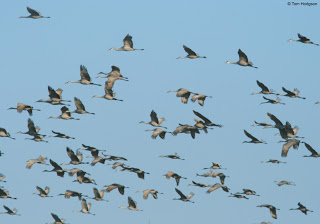
Over 350 bird species have been observed in the Bosque del Apache, where vast flocks of wintering cranes and geese are the refuge's most exciting feature.
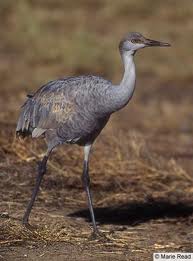
The Sand Hill Cranes are large tall birds with long legs and necks. They pair up for life and usually have one or two chicks. These birds migrate from Canada, Montana, and Utah in the winter, and they will fly a chick South for the winter to teach them the way and encourage the offspring to be independent.
November to late February is the best time to see large numbers of birds in the Bosque del Apache when typically over 10,000 Sandhill Cranes and 20,000 Ross's and Snow Geese can be seen. Sunrise and sunset is the best time to see the bird while they roost in the refuge before leaving in the morning to feed or after returning from the fields in the evening.
We spent a couple of days at this refuge a few years ago in the late fall. We had been told by a friend to watch the birds in the morning after sitting overnight roosting on the water and waiting for when the first ones take off. When the rest then all at once follow the sky fills and that is the time for the best pictures.
We were excited and hoped to see them all get up into the air at once, but it turned out that the birds flew in several groups, not just one.
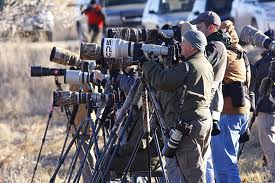
The road edge near the roosting birds was lined with people holding big cameras with huge, expensive, telescopic lenses. Plenty of tripods topped with Nikon and Canon cameras where the lens alone can cost between $2500 and $12,000, and even more line the nearby road with professional bird watchers. Some had camouflage pants and jackets.
Like birds, the people would move in groups up and down the road. One guy would break first from the group, and then it seemed like all the others would follow.
We did see some people, amateurs, and first-timers, just watching, like we were doing, so we found our way into their little groups. We folks with the smaller lens, and even just with iPhones, just didn't fit in, and some walked around alone to not be embarrassed.
It was mostly the men that had the "big" lens with extensions and tripods. It also seemed like the women appeared much later and stood in their groups.
We were one of the first on-site at "The Bosque Del Apache" that special fall day, arriving early morning before the sun rose. When the light broke, it was amazing to see how many birds were there.
The birds, the professional photographers, and all those watching were a treat.
It Just Wasn't My Time as it Turned Out →
By Brent M. Jones

I had five trips to the hospital for a heart attack between 2009 and 2016. Two trips were false alarms, but I still made it to the operating table 4 times.
The first trip was a complete surprise. I got up and started getting ready for work. The week before, I had been in a group of volunteers that worked with older people, and we were given instructions on heart attack symptoms. I had acute pain in the middle of my chest, the inside of my arm hurt, I felt nausea, and just dizzy overall. I had made it downstairs and was sitting in the kitchen and just wasn’t sure what was happening, so I said a little prayer and asked if I had a heart attack and if perhaps I could recognize another symptom. I felt a cold sweat within a few minutes, so I went upstairs, told my wife, and got into bed.
The surprise of all this started to sink in when 8 EMTs arrived in my bedroom, lifting me onto a stretcher and carrying me to the ambulance. I couldn’t stop thinking about how surprising it was that I had had a heart attack. Laying on the stretcher, I looked up at the lady EMT leaning over and taking care of me and said, “I just don’t understand why this is happening; I have run 13 marathons in my lifetime?” She looked down at me and said, “Maybe it is just your time.” I didn’t laugh at the time.
Being wheeled into an operating room is frightening. They slide you onto a cold stainless-steel table where you lay, almost naked, in the middle of the table. The room has many people, all seeming to be doing something important. The staff was young, professional, and engaged in some good-natured banter.
On my last trip to the cold steel table, the first thing that caught my attention was that the music seemed to be a little loud. By this time, I had my heart doctor, but he was not on-site, and when I met the doctor, it seemed like he was so young he could have been my grandson. Everyone was very busy, and I just lay waiting for drip anesthesia to be set up. From the comments and the volume, it seemed clear that all those young folks walking around were enjoying the music in the background, but at least they weren’t staring at my naked and cold body. A young man came over and said he would get the anesthesia set up soon, a good thing I thought, but he wondered if I had some favorite music saying he would find it and play it. Well, I still had my thoughts in place, so I suggested Leonard Cohen, figuring it was a long shot. Not one person in the room had heard of him, nor could they find any of his music even though they made an effort to see him. I thought it was funny and might have chuckled, but I was out soon after that.
My last trip to the hospital was one where they again picked me up with the ambulance. The ambulance sat in our driveway in front of the house after I had been in for a while. A fire engine crew and a support car team were on-site with us, and several paramedics regularly checked the back of the ambulance; they would greet me and ask how I was doing. One of these guys seemed to have paused for a few minutes, so I looked up at him and told him I still remembered getting help like this the first time I had a heart attack telling him about the question and the reply I got from the EMT nurse about it “being my time.” Neither of the two paramedics said a word or even changed facial expressions. They just seemed like they had kicked into gear and were about some important business. I noticed that the one paramedic left the back door ajar as he left, I saw him go over to a group standing by the fire engine where they seemed to huddle and laugh, and then he went to a different group. I figure this was a good sign. The last heat attack event had a connection to the first. It still wasn’t my time.