Exploring the unexpected connections that shape our lives
Book Reviews, Comments & Stories, Quotes, & Poetry & More
"Connections and Why They Matter"
Most of what happens in our life will spark a connection. Life connects with what has been found in books. Books connect with what happens in life. Use the connections to help you see more clearly. A love of reading and writing is what motivated the creation of this blog. Thank you for coming to the blog.
Originally published January 19, 2021. Updated November 2026.
Positive thinking is often described as an attitude, a way of looking at life with optimism and expecting favorable outcomes. But can it also be considered a skill?
I believe it can, particularly when positive thinking influences how we approach problems, respond to challenges, communicate with others, and manage difficult situations.
In the workplace, positive thinking is more than simply having a good attitude. It is the ability to approach situations constructively, recognize possibilities, and focus on what can be done rather than becoming overwhelmed by what has gone wrong.
Like other soft skills, it can be developed and strengthened through experience and deliberate practice.
What Makes Positive Thinking a Soft Skill?
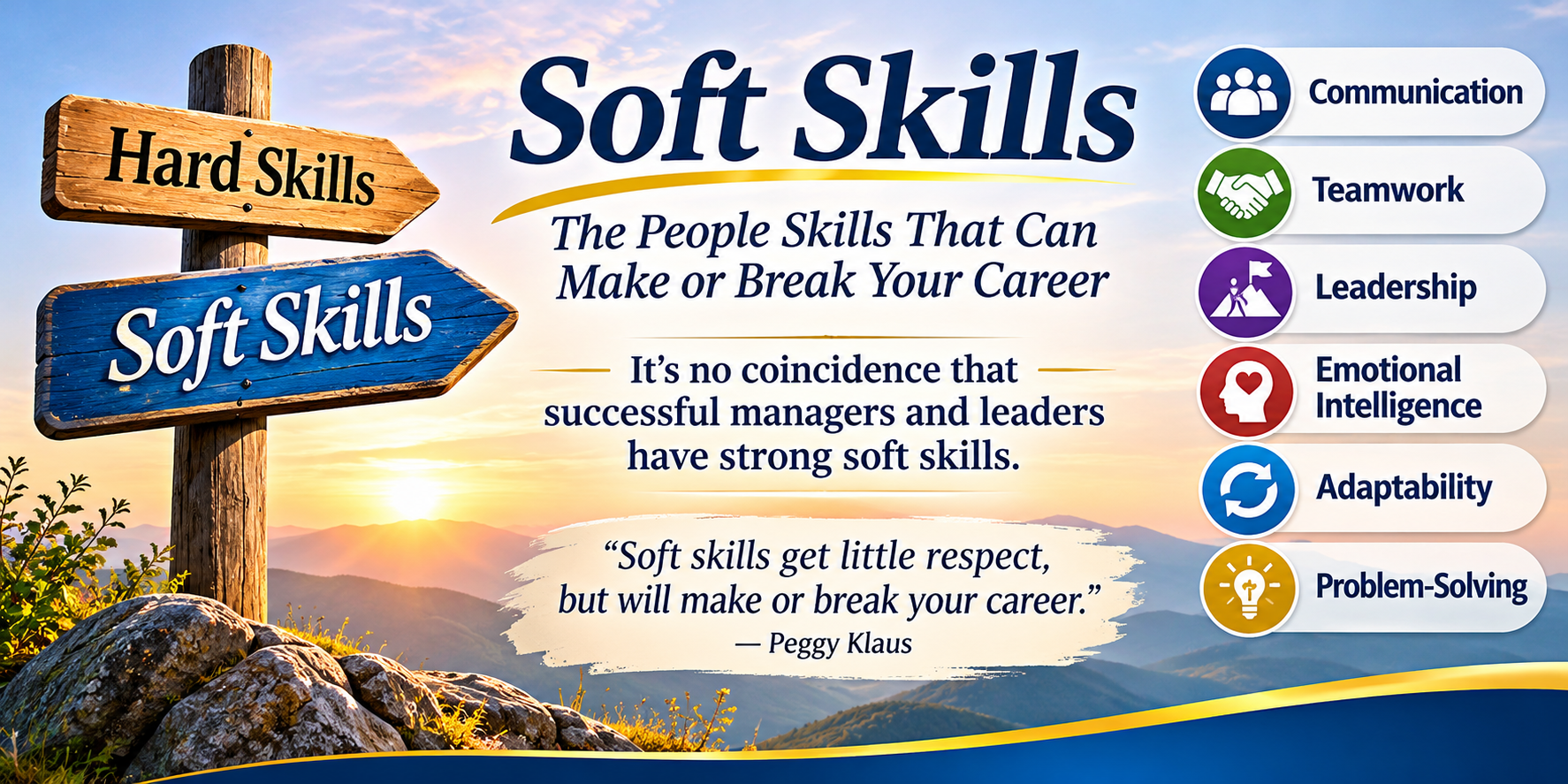
Soft skills are the interpersonal and personal abilities that help us work effectively with others. They include communication, teamwork, adaptability, emotional intelligence, problem-solving, and conflict resolution.
Unlike technical skills, which are often specific to a particular occupation, soft skills are transferable across jobs, industries, and personal relationships.
Positive thinking supports many of these abilities.
Consider two employees facing the same unexpected problem.
One immediately focuses on everything that has gone wrong, who might be responsible, and why the situation seems impossible to resolve.
The other recognizes the problem but begins asking questions: What can we do? What alternatives are available? What can we learn from this experience?
Both employees face the same circumstances, but their approaches can produce very different results.
The difference isn't necessarily intelligence or technical ability. It may be the habit of approaching difficulties with a constructive mindset.
That habit is something we can learn.
Positive Thinking and Emotional Intelligence
Positive thinking and emotional intelligence are closely related, but they are not the same thing.
Emotional intelligence involves recognizing, understanding, and managing our own emotions while being sensitive to the emotions of others.
Positive thinking involves choosing a constructive perspective, even when circumstances are difficult.
Emotional intelligence helps us recognize when frustration, disappointment, or anxiety is influencing our behavior. Positive thinking can help us decide how to respond.
For example, an employee who receives critical feedback may initially feel defensive or discouraged.
Emotional intelligence helps that person recognize those feelings. A constructive mindset allows them to consider whether the feedback contains something useful.
Instead of interpreting criticism as a personal failure, they may see it as an opportunity to improve.
This doesn't mean ignoring negative emotions. It means understanding them without allowing them to determine every response.
Why Employers Value Positive Thinkers
Employers need people who can do more than complete assigned tasks. They need employees who can adapt, solve problems, work collaboratively, and respond effectively when circumstances change.
A constructive attitude can contribute to all these abilities.
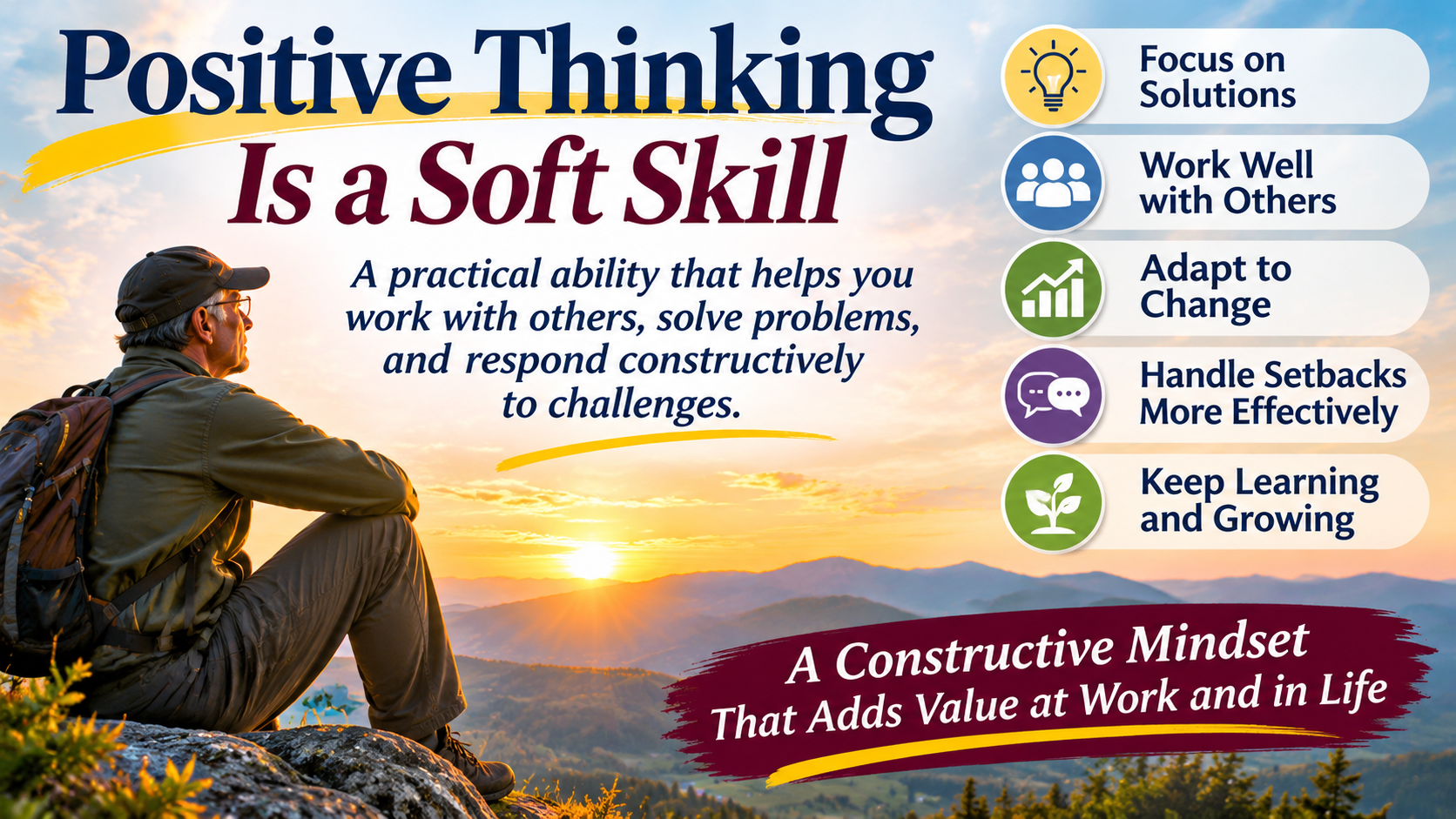
Employees who practice positive thinking may be better prepared to:
Approach problems with solutions in mind. Rather than concentrating exclusively on obstacles, they look for practical alternatives.
Respond constructively to setbacks. They recognize disappointments without allowing them to prevent further progress.
Work effectively with others. A willingness to listen, cooperate, and consider different perspectives strengthens working relationships.
Adapt to change. They are more willing to explore new approaches when familiar methods no longer work.
Encourage participation. Their behavior can help create an environment where others feel comfortable contributing ideas.
Continue learning. They recognize that mistakes and criticism can provide valuable information.
Positive thinking does not guarantee success. But when combined with sound judgment, competence, and effort, it can improve how we respond to the situations we encounter.
Positive Thinking Doesn't Mean Ignoring Reality
There is an important distinction between positive thinking and pretending that everything is fine.
A person who refuses to acknowledge problems is not necessarily demonstrating a valuable soft skill.
In fact, excessive optimism can interfere with good decisions when it prevents someone from recognizing risks or considering unfavorable possibilities.
Effective positive thinking begins with an honest assessment of reality.
It acknowledges difficulties while maintaining the belief that thoughtful action may improve the situation.
Sometimes the most constructive response is to recognize that a plan isn't working, admit a mistake, or accept that circumstances cannot be changed.
Being positive doesn't require us to believe that every outcome will be favorable.
It requires us to remain open to possibilities without losing sight of the facts.
Can Positive Thinking Be Learned?
Some people naturally approach life with greater optimism than others. Personality, upbringing, and personal experiences can influence how we interpret events.
But positive thinking isn't limited to those who seem naturally optimistic.
It can be strengthened through deliberate practice.
Here are five ways to develop it.
1. Pay attention to your automatic reactions.
When something goes wrong, notice where your thoughts go first. Do you immediately assume the worst, or do you begin considering possible solutions?
Recognizing habitual responses is the first step toward changing them.
2. Separate facts from assumptions.
A disappointing event doesn't necessarily mean that everything associated with it has failed.
Ask yourself what you actually know and what you may be assuming.
3. Focus on what you can influence.
Not every problem can be solved, and not every circumstance can be controlled.
Concentrating on the actions available to you can be more productive than repeatedly worrying about what cannot be changed.
4. Practice constructive communication.
The words we choose influence how others understand our attitudes and intentions.
Compare saying, "That will never work," with asking, "What would need to change for this to work?"
The second response doesn't guarantee agreement, but it opens the door to discussion.
5. Look for opportunities to learn.
Mistakes, criticism, and disappointments can be uncomfortable. They can also reveal information that helps us improve.
Developing the ability to learn from difficult experiences is an important part of maintaining a constructive mindset.
Positive Thinking and Career Development
Technical knowledge and experience may qualify someone for a job, but soft skills influence how effectively that person works with others and responds to everyday challenges.
During an interview, employers often look for examples of how candidates have handled difficult situations, resolved disagreements, or adapted to unexpected changes.
These questions provide opportunities to demonstrate positive thinking through actual experience.
Rather than simply telling an interviewer, "I have a positive attitude," describe a situation in which you faced a problem, evaluated your options, and took constructive action.
The example communicates more than the claim.
It demonstrates how your attitude influences your behavior.
And that is what makes positive thinking valuable as a workplace skill.
The Value of a Constructive Mindset Beyond Work
Positive thinking matters in our personal lives as well.
Relationships, family responsibilities, unexpected changes, and everyday disappointments all require us to decide how we will respond.
Our circumstances influence our experiences, but our interpretation of those circumstances can influence what we do next.
A constructive mindset doesn't eliminate life's difficulties. It may, however, help us respond with greater patience, perspective, and willingness to consider alternatives.
I've come to believe that many of the qualities we call soft skills are really habits of thought and behavior that influence how we relate to the world around us.
Positive thinking is one of those habits.
The goal isn't to see everything positively. It's to see things clearly while remaining willing to look for what might be possible.
And that is a skill worth developing.
What do you think? Is positive thinking something people are born with, or can it be developed through experience and deliberate effort?