
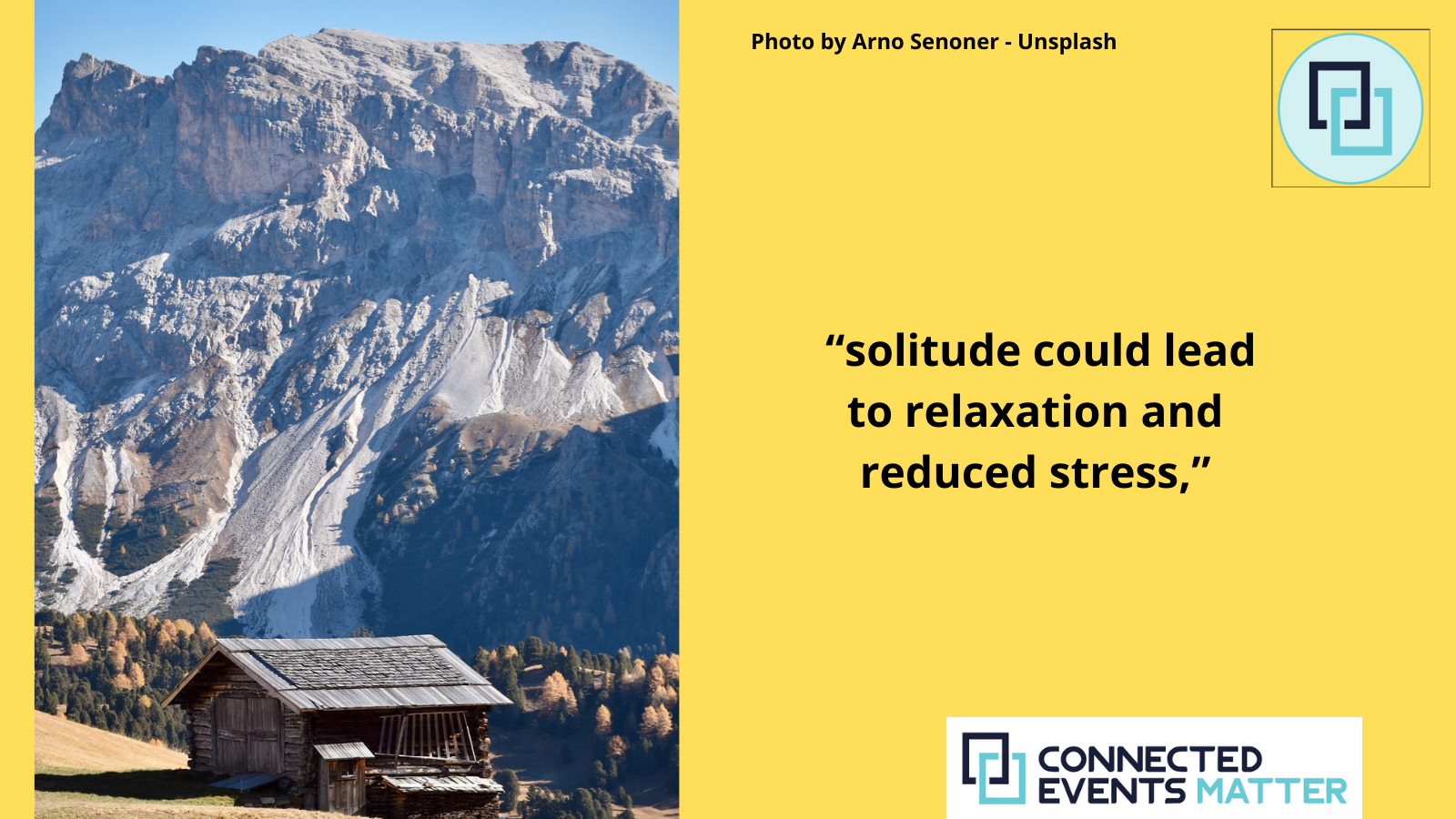

Nature offers some of the best stress reducing experiences →

Spending time around trees and looking at trees reduces stress, lowers blood pressure, and improves mood. Numerous studies show that exercising in forests and simply sitting looking at trees reduces blood pressure and the stress-related hormones cortisol and adrenaline.
In general, the outdoors has a calming effect on us, and it has to do with the fresh air we're inhaling. Breathing is linked to the production of stress hormones. When breathing rapidly, our sympathetic nervous system is activated, and the body is energized for a "fight or flight" response.
What you are seeing, hearing, and experiencing at any moment changes your mood and how your nervous, endocrine, and immune systems are working.

How do you learn good work ethics and how do you convey that you have them? →

Work ethic is a moral principle based on the idea that hard work is fundamentally valuable and worth pursuing. You likely possess other positive traits such as dependability, respectfulness, productivity, and collaboration if you have a strong work ethic.
Work ethics is one of the most critical factors for any professional's success and is a highly positive soft skill. Learning to have a positive work ethic by having good examples and leaders is the primary way it is developed, even though there is some evidence that it may be partially past on by genetics.
Work ethic is an essential Soft Skill based on hard work and diligence. In other words, work ethic is, for the most part, not something we are born with; it’s a learned behavior that becomes part of an individual's values. Like a company's corporate values, they must be taught and modeled daily.
Saying that your father had a good work ethic could mean that you had it passed on to you genetically, but it probably means that by example, at least, your father taught you about work ethics. Of course, talking about your genetic possibility of having a solid work ethic isn’t a good approach in a job interview.
If you find the occasion to talk about your work ethic, a good approach would be to describe yourself as reliable and consistent. You could add that you enjoy your work, and I find it easy to stay motivated and productive. You have also noticed that you feel better at the end of the day when you have had a great, productive day, and you find that I am that rewarding.

,
Change is Necessary for Self Improvement to Happen →

Self-improvement only takes place if you have identified your strengths and weaknesses. Knowing your strengths and weaknesses is essential, from your relationships to those in your career.
Self-assessment and seeing yourself outside of yourself help you better understand what you seek and where you are likely to thrive and excel. It gives you a better understanding of your desire and where you will likely do well.
The change enables you to become the person you want to be. Practicing and enacting change yourself is one of the most rewarding processes you will ever experience. It also displays a particular life skill, the ability to reinvent yourself.

What you do today changes who you are tomorrow. →

Deciding to “Be Somebody” will require introspection to discover who you are. Just taking inventory and doing some severe pondering is a good starting point to find out what you are good at and not good at. Don’t confuse your point of view and conclusions with other people's expectations. Finding out who we are means asking ourselves what our values are, what truly matters to us, and then following the principles we believe in.
Build a list and add the things you are passionate about and the things you love to do. Ask someone you trust and respect for feedback on what you have put down. These are the first steps in knowing who you are, and learning what you want from life is itself part of what real success in life is. Knowing yourself will give you purpose, direction, and a true sense of well-being; that knowledge will change some of the things you do today.
Change anything about today, and you will change tomorrow and your life.
Change who you associate with. Surround yourself with people who will tell you the truth.
7 Ways to Increase Self Esteem and Self Confidence →

Having the confidence to proceed in life requires more than just preparation. Of course, that is very important, but you must believe in yourself to value your practice and take the necessary steps.
7 Ways to Increase Self-Esteem and Self Confidence
1. Volunteering your time, money, or energy to help others doesn’t just improve the world but also makes you better. Studies indicate that the very act of giving back to the community boosts your happiness, health, and sense of well-being
2. Avoid dwelling on past negative experiences
3. Express your needs
4. Feel confident
5. Have a positive outlook on life
6. Say "no" when you want to say no.
7. See overall strengths and weaknesses and accept them

Why is Work Ethics a Soft Skill? →

Soft skills are those things that make you a good worker and include people skills, manners, emotional intelligence, and your ability to communicate and interact with others effectively. These skills are often self-taught and self-developed. Unlike hard skills, they are not specific to an industry or job.
Hard skills refer to employees' job-related knowledge and abilities to perform their duties effectively.
Research shows that a good work ethic is the number one soft skill sought by employers. This soft skill is linked to improved performance and a greater likelihood of career advancement, which are essential to your job satisfaction level.
Maybe you thought just being in the race was enough? Well, you can be in the race, but unless you finish, one might say the race wasn't in you. Finishing the race is how it is remembered. Work Ethics is finishing what you start.
LinkedIn's Global Talent Trends report found that 92 percent of hiring professionals say soft skills matter more than hard skills. Employers seek out employees they can trust to represent the company in a professional and friendly way.
You will not likely get good feedback on how effective you are using or not using your soft skills in your employment reviews. Even when these measures are in place, soft skills are still considered intangibles and seldom discussed. Most people don’t know how to talk about them and aren’t comfortable doing so. People with gaps in their soft skills are often blindsided the first time they hear that there’s a problem. They’re given vague feedback like “you’re just not a people person” or “we need someone who shows more leadership.” Then they’re left to their own devices to try and figure out what that means and how to fix it. They’re mostly confused because something that’s never been quantified feels arbitrary, personal, and optional.
Stick to your Task,
by Anonymous
Beginners are many, but enders are few.
Honor, power, place, and praise
Will come, in time, to the one who stays.
Stick to your task till it sticks to you;
Bend at it, sweat at it, smile at it too

2 Most Important Skills for Success →

These skills can be called “Soft Skills,” but they are the most important and often neglected. A person can have many other skills, but these are important.
#1 is showing up!
#2 is showing up on time


