

Now Is Full of Then
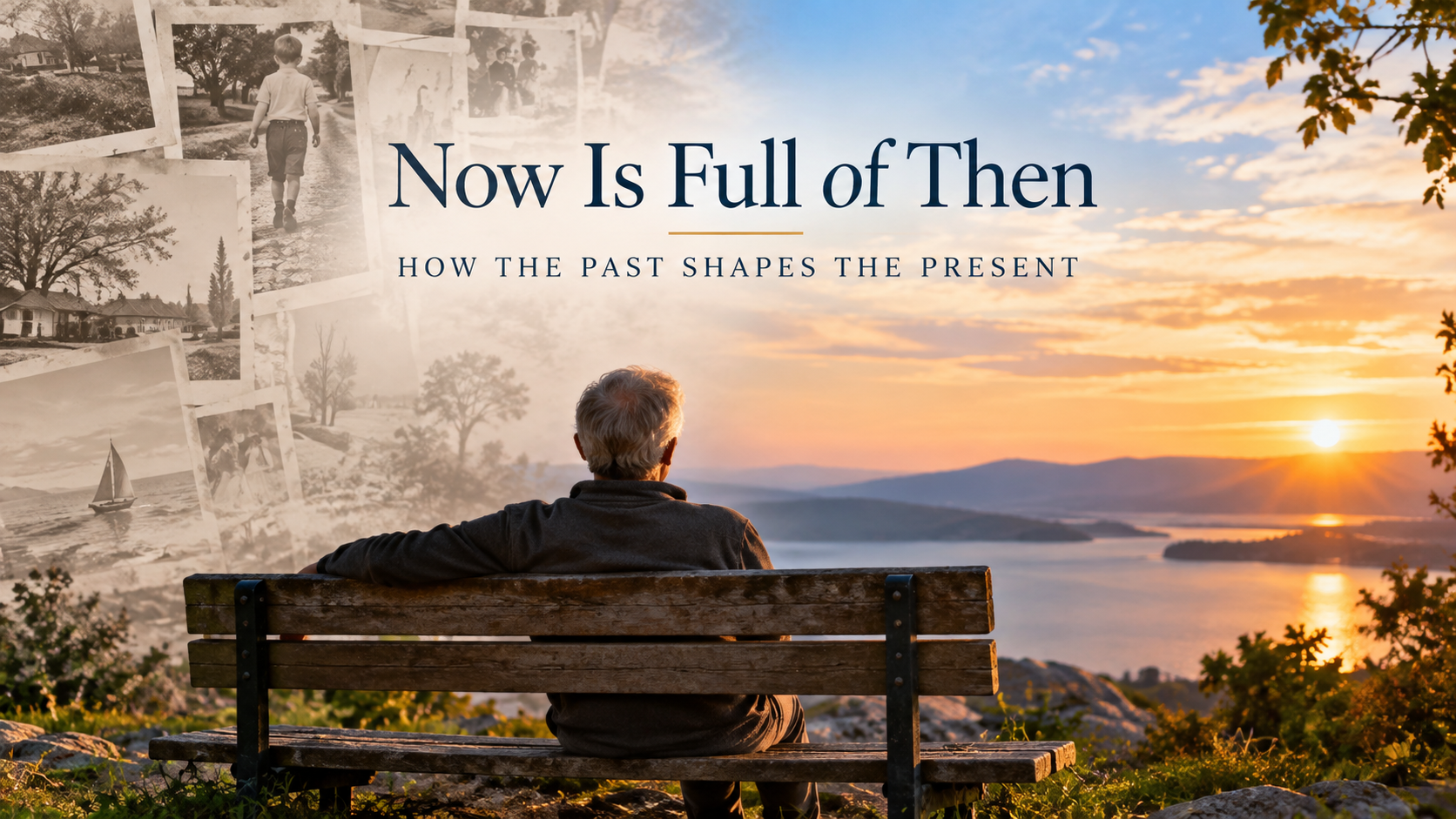
We are often told that all we really have is now.
That seems obviously true. Yesterday is gone. Tomorrow hasn't arrived. Whatever life we are actually living is happening in this moment.
But there is a complication.
Now is full of then.
We don't arrive at the present empty-handed. We bring yesterday with us.
We bring memories of people, conversations, disappointments, accomplishments, mistakes, losses, pleasures, and ordinary moments we may not even realize we remember. We bring assumptions formed years ago and expectations built from what happened the last time.
So when we look at what is happening today, how much are we actually seeing today?
And how much are we seeing what today reminds us of?
The Past Helps Us Understand the Present
There is nothing necessarily wrong with this.
Memory gives our lives continuity. Without some connection to what has already happened, every experience would stand alone.
What we learned yesterday helps us make better decisions today. Relationships deepen because they have histories. Places matter because of what happened there. Even our understanding of ourselves depends partly upon remembering who we have been.
Then gives now context.
But context can also become a filter.
Something happens and, almost immediately, we compare it with something that happened before. We decide what someone's words mean because we have heard similar words before. We anticipate disappointment because we remember being disappointed. We assume something will make us happy because it once did.
Sometimes those conclusions are useful.
Sometimes they prevent us from seeing what is actually there.
What If We Looked at Now by Itself?
Perhaps there are moments when we should try something different.
Instead of immediately asking, What does this remind me of? we might simply ask:
What is here right now?
Look at the room.
Look at the person sitting across from you.
Notice what you hear.
Notice how you feel before deciding why you feel that way.
Notice what has changed.
For a moment, don't compare it with yesterday.
When we do that, something interesting can happen. Familiar things become less familiar.
We may notice that someone we thought we understood has changed. A place we have stopped paying attention to becomes interesting again. Something we considered ordinary suddenly seems valuable.
Perhaps even our understanding of ourselves changes.
The Goal Isn't to Forget Then
I don't think living in the present requires us to abandon the past.
I am not sure we could even if we wanted to.
Our past is part of us. It has taught us, shaped us, warned us, comforted us, and occasionally misled us.
The challenge may simply be recognizing when then is interpreting now for us.
There are times when experience deserves a voice.
There are also times when it deserves to be quiet.
Because occasionally we need to see the person, the place, the problem, or the ordinary moment in front of us without immediately asking the past to explain it.
Maybe that is what being present really means.
Not living without yesterday.
Just giving today a chance to speak for itself.
See related articles
How Small Moments Quietly Shape Who We Become
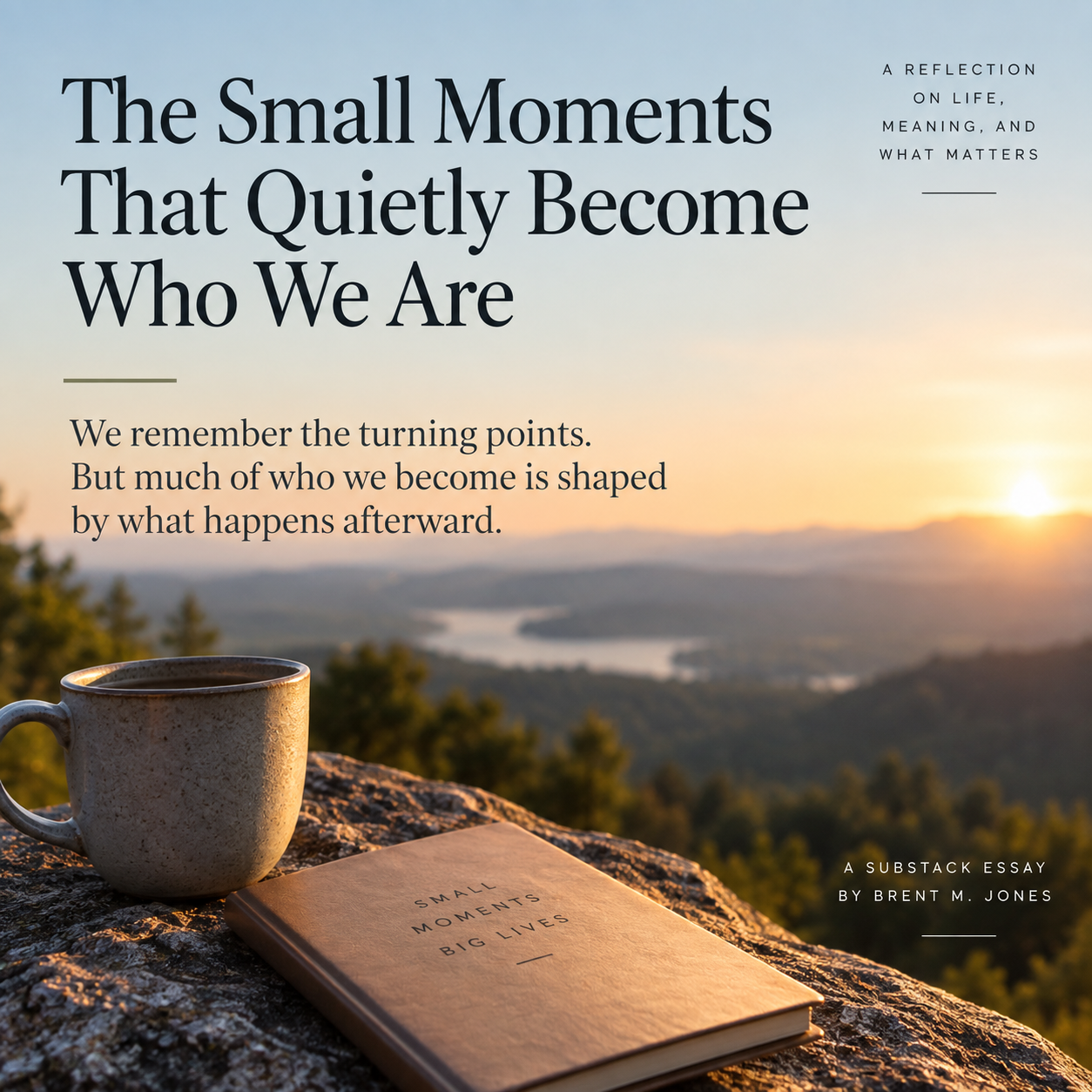
We tend to remember the big events.
A new job. A loss. A diagnosis. A success. A failure. A relationship beginning or ending. A conversation that changes our direction.
We call them turning points because we can see the difference between what came before and what came afterward.
But I've come to believe that much of who we become is shaped somewhere else.
It is shaped in the small moments that follow.
The event happens. Then we give it meaning.
For much of my career, I worked in environments where we had to make decisions quickly. Deadlines, expectations, problems to solve, people to manage, and outcomes that mattered.
We didn’t always have time to think about what those experiences were doing to us internally.
Later, as the pace of life changed, I began noticing something that had been there all along.
An event might last only a few minutes, but our interpretation can linger for years.
A conversation gets replayed.
A disappointment becomes a story we tell ourselves.
A criticism becomes a belief.
A success changes what we expect from ourselves.
The event ends.
The interpretation continues.
And when we repeat that interpretation often enough, it can become part of how we see ourselves.
Small moments rarely look important
That's what makes them easy to overlook.
Most formative moments don't arrive announcing that they are about to change us.
Someone says something.
We react.
We make an assumption.
We decide what something means.
Then we move on.
But sometimes we don't completely move on.
We carry the interpretation with us.
Consider the difference between these two ideas:
Something didn't work out.
and
Things never work out for me.
The first describes an event.
The second begins to describe an identity.
That difference can seem insignificant in the moment. Repeated over months or years, it may not be insignificant at all.
What are we rehearsing?
This is a question worth asking occasionally.
What interpretations do we keep repeating?
What assumptions have we stopped questioning?
What old conversations are we still carrying?
What conclusions about ourselves were formed years ago but continue to influence decisions we're making today?
This doesn't mean pretending painful experiences weren't painful or convincing ourselves that everything happens for a reason.
Sometimes things simply hurt.
Sometimes circumstances really are unfair.
Sometimes we make mistakes.
But the event and our permanent interpretation of the event don't have to be the same thing.
Interpretations can be examined.
And sometimes they can be revised.
Life looks different when the pace changes
There are seasons of life defined by forward motion.
We build careers. Raise families. Meet responsibilities. Solve problems. Plan what comes next.
There are other seasons when life becomes quieter.
We look backward more often.
Things that once seemed terribly important lose some of their urgency. Other things we barely noticed at the time become surprisingly meaningful.
A conversation.
Someone's kindness.
A decision that seemed minor.
A relationship we took for granted.
A moment when we chose to stay rather than leave, listen rather than speak, or try once more rather than quit.
Perhaps one advantage of looking back is that distance allows us to recognize patterns we couldn't see while we were living them.
No single moment defines us
One idea has stayed with me:
No single moment defines you. But repeated interpretation can shape you.
I find something hopeful in that.
We can't control everything that happens to us.
But we have some influence over what we continue to rehearse afterward.
We can question an assumption.
We can reconsider an old judgment.
We can shorten a reaction.
We can change the way we speak to ourselves.
We can return to steadiness after drifting away from it.
None of those things sounds dramatic.
But perhaps change doesn't need to be dramatic to matter.
We participate in who we become
We are influenced first by what we absorb from other people and from the world around us.
Then, with experience, we begin deciding what deserves to remain.
Some beliefs become stronger.
Others need revision.
Some can finally be released.
Eventually, we become more deliberate about what we choose to repeat.
That may be one of the quiet responsibilities of living thoughtfully.
Not to control every moment.
Not to perfect ourselves.
But to notice what we're allowing to become a pattern.
Because patterns accumulate.
They influence how we speak, how we respond to other people, how we interpret disappointment, how we handle uncertainty, and how quickly we find our balance again.
Over enough time, small responses become habits.
Habits become patterns.
Patterns become part of character.
And character becomes part of the life we eventually look back upon.
What matters may already be happening
We often look for meaning in the extraordinary.
Perhaps some of it is hiding in the ordinary.
In what we notice.
In what we repeat.
In what we question.
In what we release.
And in what we choose to carry forward.
We are the sum of small moments, not because any one of them defines us, but because we participate in what they become.
That idea became one of the foundations of my book, What Matters: We Are the Sum of Small Moments. The book explores how ordinary experiences, relationships, choices, and interpretations gradually shape the lives we come to recognize as our own.
But the question matters beyond the book:
What are you repeatedly returning to, and what might it be quietly shaping in you?
What Is Worth Continuing to Carry?

A lifetime of thinking does not necessarily leave us with more answers.
That seems strange to me because for much of life I thought that was what thinking was supposed to do. We learn. We experience. We make mistakes. We read. We listen. We change our minds. Presumably, all of that should eventually leave us knowing more than we did before.
And in many ways, it does.
But something else happens.
Some things I once thought I understood no longer seem quite so certain. Some questions I once believed had answers now seem larger than the answers I gave them. And some things that once occupied a great deal of my attention simply don't anymore.
I have let go of a lot.
Is that progress?
Not All Uncertainty Is Wisdom
It would be easy to say that growing older has made me more comfortable with uncertainty and leave it there.
There is some truth in that. Experience has taught me to be suspicious of easy answers. I have lived long enough to discover that I could be absolutely certain about something and still be wrong.
But uncertainty is not automatically wisdom.
Sometimes we become uncertain because we have learned enough to recognize complexity. That is intellectual humility.
Other times we haven't changed our minds at all. We have simply decided that something no longer deserves the amount of our life that we once gave it.
Those are very different things.
Politics is one example for me.
I don't spend much time thinking about politics anymore unless the news pushes it in front of me. That doesn't mean I have concluded that politics doesn't matter. Quite the opposite.
I remain concerned about the direction America has taken. Some things that once seemed outside the boundaries of acceptable public behavior have become increasingly normalized, and I don't believe that has been good for the country. I especially think about the kind of America my grandchildren will inherit.
So why don't I spend more time on it?
Because I have also come to recognize how little control I have over most of it.
The familiar answer is that everyone should get involved. Vote. Speak up. Pay attention. Participate.
There is truth in that too.
But there is another truth we don't talk about as much: none of us has unlimited time, energy, attention, or influence.
Eventually we have to decide where to spend them.
Caring Is Not the Same as Carrying
Perhaps that is one distinction I understand better now.
I can care about something without carrying it around with me every day.
I can believe something is wrong without spending hours consuming arguments about it.
I can worry about the world my grandchildren will inherit without believing that watching another hour of political commentary will improve that world.
That raises an uncomfortable question.
When does letting go become wisdom, and when does it become disengagement?
I don't have a clean answer.
"There is nothing I can do about it" can certainly become an excuse. If everyone believed that, nothing would ever change.
But the opposite can also become a trap. We can give enormous amounts of ourselves to things over which we have almost no influence while neglecting the people, relationships, ideas, and small moments where our presence actually does matter.
Maybe part of growing older is becoming more conscious of that tradeoff.
A Different Kind of Sorting
When we are younger, intellectual growth seems mostly about accumulation.
Learn more.
Read more.
Understand more.
Form opinions.
Find answers.
After enough years, growth may involve just as much subtraction.
Some beliefs are discarded because they no longer hold up.
Some answers become questions again.
Some convictions survive and become stronger.
Some things remain important even though we recognize we cannot control them.
And some things we simply decide not to carry any longer.
That doesn't mean they were meaningless.
It means we have made a judgment about what deserves the limited amount of ourselves we have left to give.
Perhaps that is where a lifetime of thinking eventually takes us.
Not toward certainty about everything.
Not toward uncertainty about everything either.
Maybe it takes us toward discernment.
What do I actually know?
What do I only believe?
What have I been wrong about?
What still matters enough for me to stand behind it?
What matters but lies largely beyond my control?
And what have I carried long enough?
Those questions feel different to me now than they would have years ago.
What Deserves the Life We Have Left?
Time changes the question.
When life appears almost unlimited, we can afford to spend enormous amounts of it on things that may or may not matter.
Eventually, time stops looking unlimited.
Then deciding what to think about becomes connected to deciding how to live.
There are still things worth opposing. Things worth defending. People worth helping. Questions worth pursuing.
But there are also arguments I don't need to win, events I don't need to follow, opinions I don't need to have, and uncertainties I don't need to resolve.
Perhaps wisdom is not simply knowing more.
Perhaps part of wisdom is knowing what deserves our certainty, what deserves our attention, and what deserves the limited amount of life we still have available to give it.
A lifetime of thinking may not finally tell us what to think about everything.
It may do something more useful.
It may teach us what is worth continuing to carry.
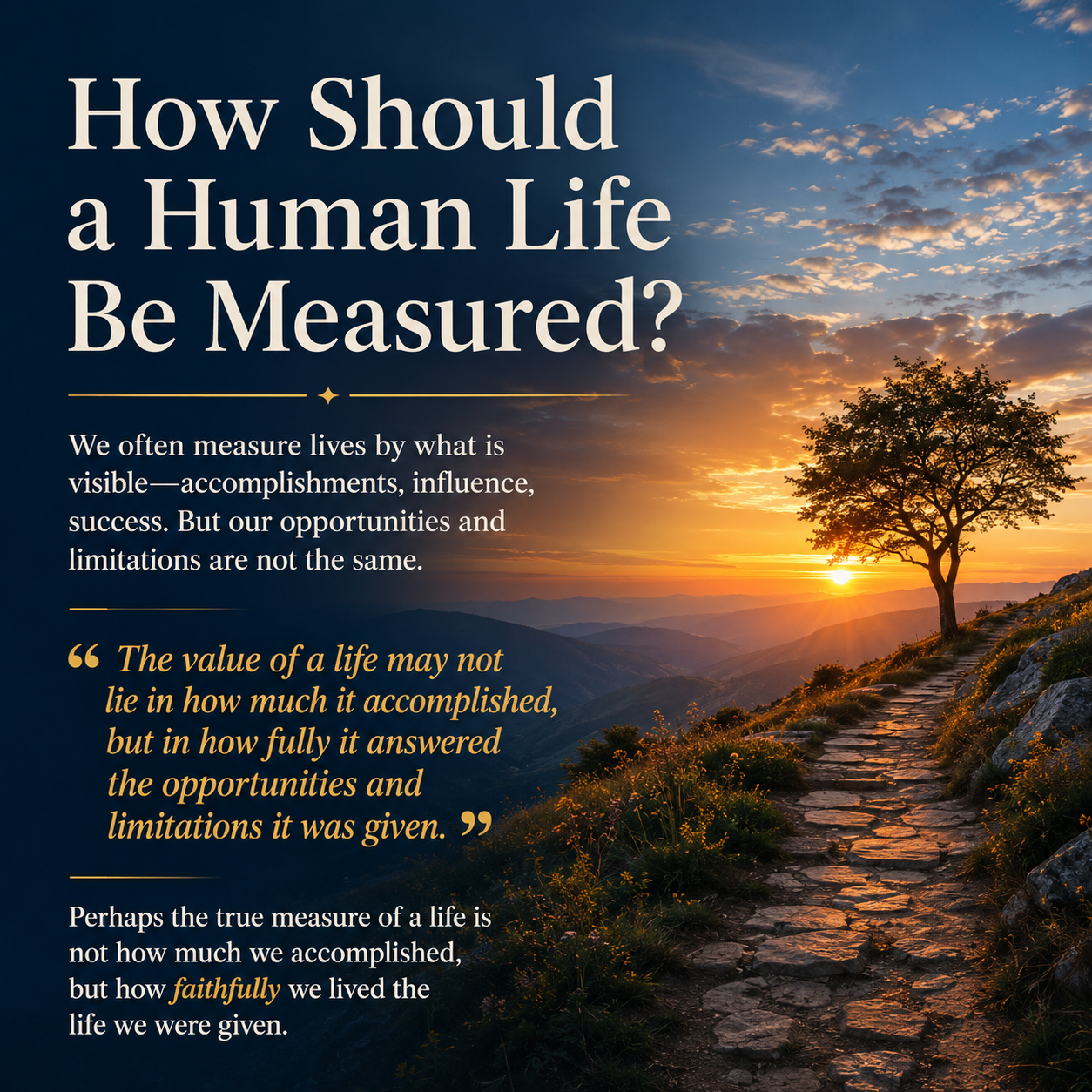
How Should a Human Life Be Measured?
When our attention becomes fixed on an abstract idea of happiness, we risk becoming trapped inside our own thoughts. We analyze. We compare. We wonder whether we are happier than we were yesterday or whether someone else has discovered the secret we have somehow missed.
Life quietly passes while we are evaluating it.
Thanks for reading What Matters Substack! Subscribe for free to receive new posts and support my work.
What often changes us is not endless reflection.
It is participation.
When we become involved with people, ideas, places, and experiences, our lives naturally expand. We encounter perspectives we could never have imagined on our own. We build relationships. We discover opportunities to contribute. We begin by collecting experiences rather than expectations.
Yet this raises another question.
Many philosophies suggest that a meaningful life grows from engagement rather than endless self-examination. Some speak of happiness. Others speak of purpose, service, love, or becoming our best selves. Whatever words they choose, they often imply that there is a good way to live.
But can there be one standard for every human life?
The opportunities available to human beings are anything but equal. One person may spend a lifetime surrounded by education, freedom, and opportunity. Another may spend that same lifetime simply trying to survive poverty, oppression, illness, or war. Even neighbors can experience lives that unfold in remarkably different ways.
If our circumstances differ so dramatically, should the measure of a life be the same for everyone?
Some would answer that a good life is measured by kindness, compassion, generosity, or making the world better because we were here. Yet even those opportunities vary enormously. One person may influence millions. Another may spend a lifetime caring quietly for a single family member. Which life has greater value?
Perhaps we have been asking the wrong question.
We often measure lives by visible accomplishments, influence, recognition, or wealth because those things are easy to count. But human lives are not lived under equal conditions, and they cannot be understood by numbers alone.
The value of a life may not lie in how much it accomplished, but in how fully it answered the opportunities and limitations it was given.
That does not mean every life produces the same results. It means every life presents its own possibilities, responsibilities, and challenges. The measure is not whether we accomplished more than someone else. It is whether we responded faithfully to what was placed before us.
Perhaps the measure of a life has never been how much a person accomplished compared with someone else. Perhaps it is found in how faithfully each person responded to the opportunities, limitations, and responsibilities that were uniquely their own.
If that is true, then the question is no longer whether we lived the biggest life.
It becomes whether we made the best use of the life we were given.
None of us can live another person's life. We cannot borrow their opportunities or escape our own limitations. Perhaps the only meaningful comparison is between who we might have become and who we chose to become. That is a comparison every person can make, regardless of where life began.
Thanks for reading What Matters on Substack! Subscribe for free to get new posts and support my work.
The Past Doesn't Change. Your Understanding of It Does.
We often assume that if we want a clearer future, we should spend more time looking ahead.
We set goals. We make plans. We imagine where we hope to be in a year, five years, or even decades from now.
Yet some of the greatest clarity about where we are going comes from looking in the opposite direction.
Not because the past predicts the future.
But because the meaning of the past is never fixed.
Every new experience changes how we understand the experiences that came before it.
The events themselves remain the same. What changes is the person remembering them.
That is why two people can experience similar circumstances and tell completely different stories about what happened. It is also why our own life story changes over time, even though the facts do not.
We naturally see our lives as a series of connected events. We weave relationships, successes, disappointments, losses, and unexpected opportunities into a narrative that explains who we believe we are.
That narrative quietly shapes our identity.
Stories of successful leaders often illustrate this point. Many describe setbacks, failures, disappointments, or periods of uncertainty as turning points that ultimately shaped their character and direction. Yet very few recognized the value of those experiences while they were living through them.
Only years later, after new experiences provided perspective, did those difficult moments begin to make sense.
Looking backward gave them a clearer understanding of how they had moved forward.
Several years ago, Julie Beck wrote an article for The Atlantic titled Life's Stories. Its subtitle captured an important truth: How you arrange the plot points of your life into a narrative shapes who you are and is a fundamental part of being human.
She quoted developmental psychologist Monisha Pasupathi, who observed that, "To have relationships, we've all had to tell little pieces of our story."
That simple observation carries an important implication.
If we are constantly telling our story to others, we are also constantly telling it to ourselves.
And as we grow, our understanding of that story evolves.
A disappointment that once felt like failure may later appear as preparation.
A career change that seemed frightening may eventually become the moment that redirected your life toward something more meaningful.
A relationship that ended may later reveal lessons you could not have learned any other way.
The events have not changed.
Your understanding has.
That realization can be surprisingly freeing.
Many people carry an outdated version of themselves because they continue to interpret their past through the perspective they had years ago.
But you are no longer that person.
The experiences you've had since then have given you new knowledge, greater empathy, different priorities, and perhaps a deeper understanding of yourself.
Why shouldn't those changes also reshape how you understand your past?
One practice I have found helpful is periodically writing a summary of my own life.
Not a detailed autobiography.
Just the significant moments.
The forks in the road.
The people who influenced me.
The decisions that altered my direction.
The unexpected opportunities.
The painful disappointments.
Then, months or years later, I revisit that summary and write it again.
What surprises me is not how much the facts have changed.
They haven't.
What changes is what I believe those moments meant.
New experiences illuminate old ones.
Connections I never noticed become obvious.
What once appeared random begins to reveal a pattern.
Looking back does something that constantly looking ahead cannot.
It helps us recognize themes.
It reminds us of strengths we forgot we possessed.
It reveals resilience that was quietly forming long before we recognized it.
And it often uncovers purpose hidden beneath experiences that once seemed meaningless.
If you've never reflected on your own story this way, consider asking yourself a few questions.
Which disappointment ultimately changed your life for the better?
Which success mattered less than you expected?
Which relationship taught you something you still carry today?
Which difficult season made you stronger without you realizing it at the time?
Which event would you describe differently today than you would have five years ago?
The answers may reveal that your life has been telling a richer story than you realized.
Your story is not finished.
Every year adds another chapter, but it also changes the meaning of earlier chapters.
The person you are becoming is quietly rewriting the person you once believed yourself to be.
The past does not change.
But your understanding of it does.
And sometimes, that new understanding is exactly what helps reveal the path forward.
Brent M. Jones writes about self-awareness, communication, identity, and the quiet moments that shape our lives. He is the author of What Matters, Why Life Stories Change, Terminology Is More Than Words, and several other books exploring meaning, personal growth, and authentic human connection.
Explore these relevant books and articles →
When You Feel Too Small to Matter
There are times when the world feels unsteady. Institutions we once trusted seem fragile. Public conversations grow louder and less thoughtful. Certainty hardens into anger. Even good people begin to wonder whether anything they do still matters.
Thanks for reading What Matters Substack! Subscribe for free to receive new posts and support my work.
It is easy, in moments like these, to feel powerless. You can vote, write, speak, reach out, and try to understand, and still the world can seem to tilt toward noise, anger, and indifference.
The thought comes quietly:
I’m just one person.
But that sentence has never told the whole story.
We often think change begins with power, with large movements, influential people, or moments dramatic enough to be remembered.
Most of the time, it does not.
Change begins with conscience. It begins in moments that do not look important while they are happening: a conversation grounded in honesty, an act of restraint when others react, a willingness to listen before deciding, a sentence that clarifies rather than inflames.
Sometimes it begins with a refusal to become the very thing we are criticizing.
These are small hinges. But small hinges can move heavy doors.
Perhaps part of the problem is that we have learned to measure influence by visibility. We see the person with the largest audience, the loudest voice, or the greatest authority and assume that is where influence lives. We count followers, reactions, votes, sales, and headlines because those things can be measured.
What we cannot easily measure is what happens afterward.
We do not know which conversation caused someone to reconsider a long-held belief, which act of patience prevented an argument from becoming something worse, or which words stayed with someone after everyone else had forgotten they were spoken.
Much of what matters most leaves no record.
That can make it difficult to keep trying. When we cannot see the result of our effort, we begin to question whether the effort mattered. We confuse the absence of evidence with the absence of influence.
But those are not the same thing.
A teacher may never know which sentence a student remembers twenty years later. A parent may not recognize which ordinary moment becomes part of a child’s understanding of kindness. A friend may never learn that one conversation arrived at exactly the right time. A writer may never know where a sentence travels after someone reads it.
Influence does not always announce itself.
Sometimes it simply continues.
There is another danger in believing we are too small to matter. It can become permission to withdraw.
If nothing I do will make a difference, why speak carefully? Why listen? Why try to understand someone I disagree with? Why resist the anger everyone else seems willing to embrace?
Powerlessness can quietly become an excuse for indifference.
But we are rarely as powerless as we imagine. We may not control institutions, movements, governments, or the behavior of other people. We may not be able to change the direction of the larger world.
But we still influence the part of the world that passes through us.
Every conversation asks something of us. Every disagreement gives us a choice. Every moment of frustration reveals something about the person we are becoming.
That may seem small compared with the problems around us.
But perhaps the scale is not the point.
You do not have to fix everything. You do not have to respond to every argument, correct every falsehood, or carry the weight of every problem you can see.
But you do have to decide what kind of person you will remain while the world feels unsteady.
Will you still believe clarity matters when noise gets more attention? Will you still choose kindness when anger travels faster? Will you still protect truth when certainty is easier? Will you still listen when everyone else is waiting to speak?
These choices may not feel like action.
They are.
The way we participate in the world becomes part of the world we are helping to create. Not all at once. Not dramatically. But repeatedly.
This is easy to forget because the loudest forms of influence are usually the most visible. Anger spreads quickly. Conflict attracts attention. Outrage announces itself.
Quiet influence works differently.
Someone remembers how you treated them. A sentence stays with them. Your restraint changes the direction of a conversation. Your willingness to listen gives someone else permission to reconsider. Your refusal to add more anger to an already angry moment changes something, even if only slightly.
You may never know what continued because of something you said, or what stopped because of something you refused to say.
The steady work of integrity spreads in ways the loudest voices may never see.
Perhaps that is why small moments matter so much. We tend to wait for the important moment, the opportunity to do something significant, the occasion when our choices will clearly make a difference.
But life rarely tells us which moments those are.
We usually recognize them only afterward, if we recognize them at all. The ordinary conversation may have been the important one. The decision to remain quiet may have mattered more than the speech. The small kindness may have traveled further than we knew. The person who seemed not to be listening may have remembered.
We cannot know.
So perhaps the question is not whether we are large enough to change the world.
Perhaps the better question is whether we are willing to take responsibility for the small part of it that we touch.
So write. Speak when it is time. Listen carefully. Hold to your values even when you doubt their reach.
You may be one person.
But small does not mean inconsequential.
In a world that often feels beyond our control, how we choose to act, speak, and respond may be the most meaningful form of influence we still have.
This reflection grew from an idea I have returned to more than once, including in What Matters: We Are the Sum of Small Moments.
Why Life Is Good
Life can seem good or bad depending on where we are, what we are facing, and who happens to be standing beside us. A difficult season can make life feel heavy. A meaningful conversation, an unexpected kindness, or a moment of connection can make that same life feel rich and worthwhile.
Perhaps that is because the quality of life is not determined solely by what happens to us. It is also shaped by how we respond to what happens and how our actions affect the people around us.
Many discussions about the meaning of life focus on grand questions. Why are we here? What should we accomplish? What happens after death? These questions have occupied philosophers, theologians, and ordinary people for centuries. They matter because they encourage reflection and help us consider what kind of life we want to live.
Yet when I look around, I notice something simpler.
Life is filled with other people.
Some inspire us. Some challenge us. Some confuse us. A few may even seem impossible to understand. Yet nearly every day involves relationships, conversations, and encounters that shape how we experience the world.
We often think meaning comes from major achievements, but much of life is lived in smaller moments. A word of encouragement. A gesture of patience. A willingness to listen. An act of forgiveness. These things rarely make headlines, yet they can change the direction of a day, a relationship, or even a life.
The older I get, the more I suspect that goodness is not something we discover once and possess forever. It is something we create and experience through our participation in life.
Perhaps the meaning of life is larger than any single answer. But if I were forced to begin somewhere, I would start with this:
How we treat other people matters.
And perhaps life is good when we help make it better for someone else.
The Small Moments That Reveal What Matters
While preparing for an upcoming discussion about What Matters, I found myself reflecting on a simple question:
How do we know which moments matter?
When we look back on our lives, we often focus on major events—career changes, marriages, moves, achievements, losses, and turning points. Those moments certainly shape us.
But I have become increasingly convinced that many of the most important moments are much smaller.
In my own life, I have found that small moments often bring clarity about whether a choice, decision, or conclusion was truly aligned with my values.
The moment itself may seem ordinary. A conversation. A realization. A quiet reflection at the end of the day.
Yet those moments sometimes reveal something important. They help us see whether we are moving in a direction that feels right—not because everything worked out perfectly, but because our actions reflected the person we hoped to be.
Looking back, I can often see that the logic behind these small choices repeats itself.
When a decision was aligned with my values, there was usually a sense of clarity that followed. When it wasn't, that became clear as well. Those realizations often led me to adjust course, reconsider an assumption, or move in a different direction.
Over time, I came to see that larger decisions are often built upon the same patterns found in smaller ones.
The habits that guide everyday choices eventually guide life's bigger choices.
I have also noticed something else.
Many of these moments appear only after we let go of something.
Sometimes it is a worry that no longer serves us. Sometimes it is an argument we do not need to win. Sometimes it is an expectation, resentment, or obligation that has occupied too much space in our thinking.
Letting go creates room.
And in that room, something surprising often appears.
We begin to notice simpler things.
A meaningful conversation.
A relationship that deserves more attention.
A quiet afternoon.
A moment of gratitude.
A realization that what truly matters may have been present all along.
Perhaps that is why so many important moments seem small when they happen.
They are not trying to impress us.
They are simply revealing what was already there.
Preparing for an upcoming discussion with Nathalle and the Lightening the World of Courage Community has reminded me of this truth. Meaning rarely arrives as a grand announcement. More often, it appears in ordinary moments that reveal who we are, what we value, and who we are becoming.
Those moments may seem small.
But they often change everything.
Why Do Certain Memories Refuse to Leave Us?
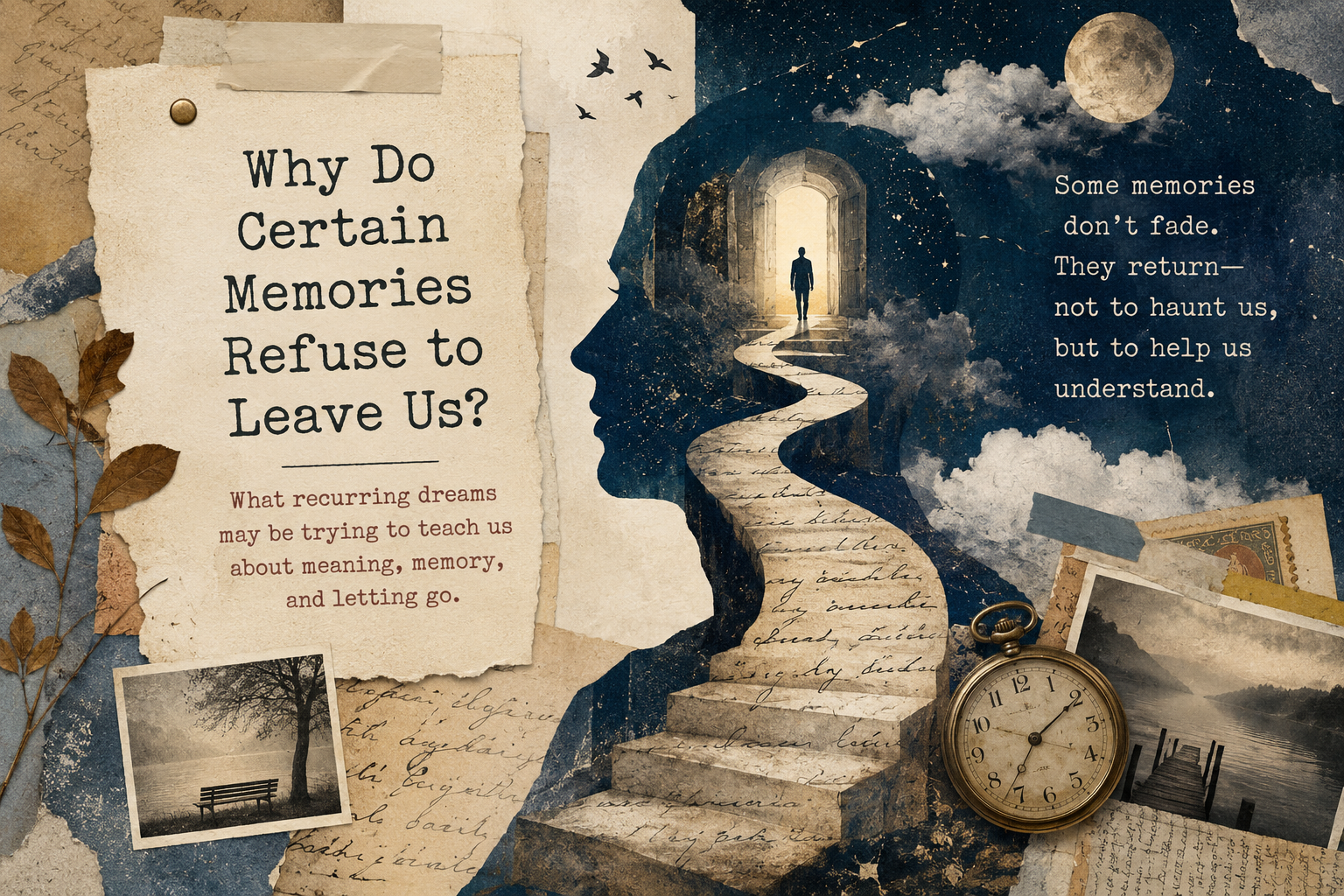
Some memories seem to have a life of their own.
Years pass. Circumstances change. People move away, relationships end, careers evolve, and entire chapters of our lives fade into the distance. Yet certain memories remain surprisingly close. They return unexpectedly while we are driving, reading, listening to music, or simply sitting quietly with our thoughts.
Perhaps even more curious is what happens when we sleep.
Certain memories seem to replay themselves in dreams over and over. Sometimes the details change. The setting may be different. The people may appear older, younger, or somehow transformed. Yet the emotional center remains the same. We revisit the same situations, the same questions, and the same unfinished feelings.
Why?
I have often wondered whether recurring dreams serve a purpose beyond simple remembrance.
It is easy to assume that memory functions like a recording device, storing information from our past. But memory rarely behaves that way. Each time we recall an event, we revisit it through the lens of who we have become. The story changes slightly. The meaning shifts. Connections emerge that we did not see before.
Perhaps dreams participate in that process.
Maybe certain memories return because they still have something to teach us.
A relationship that ended years ago may continue appearing in dreams not because we are trapped in the past, but because we are still learning from it. A difficult decision may resurface because we now understand something that escaped us at the time. Even painful experiences may return because our minds are attempting to integrate them into a larger story.
The dream is not necessarily asking us to relive the event.
It may be asking us to see it differently.
As we grow older, I have noticed that many of the memories that return most often are not the dramatic moments I once expected would define my life. Instead, they are often small moments. Conversations. Missed opportunities. Unexpected kindnesses. Brief encounters with people who changed me without realizing it.
These memories seem to persist because they became part of who I am.
Perhaps that is the value of memory.
Not to imprison us in the past, but to help us understand how we arrived here.
Some memories eventually lose their emotional weight. Others remain active for decades. Yet even those recurring dreams may serve a purpose. Each return offers another opportunity to understand, forgive, appreciate, accept, or simply let go.
Maybe that is why certain memories refuse to leave us.
They are not demanding our attention.
They are offering us another chance to learn from what mattered.
These thoughts are similiar to my other posts below
Who We Become Happens Gradually
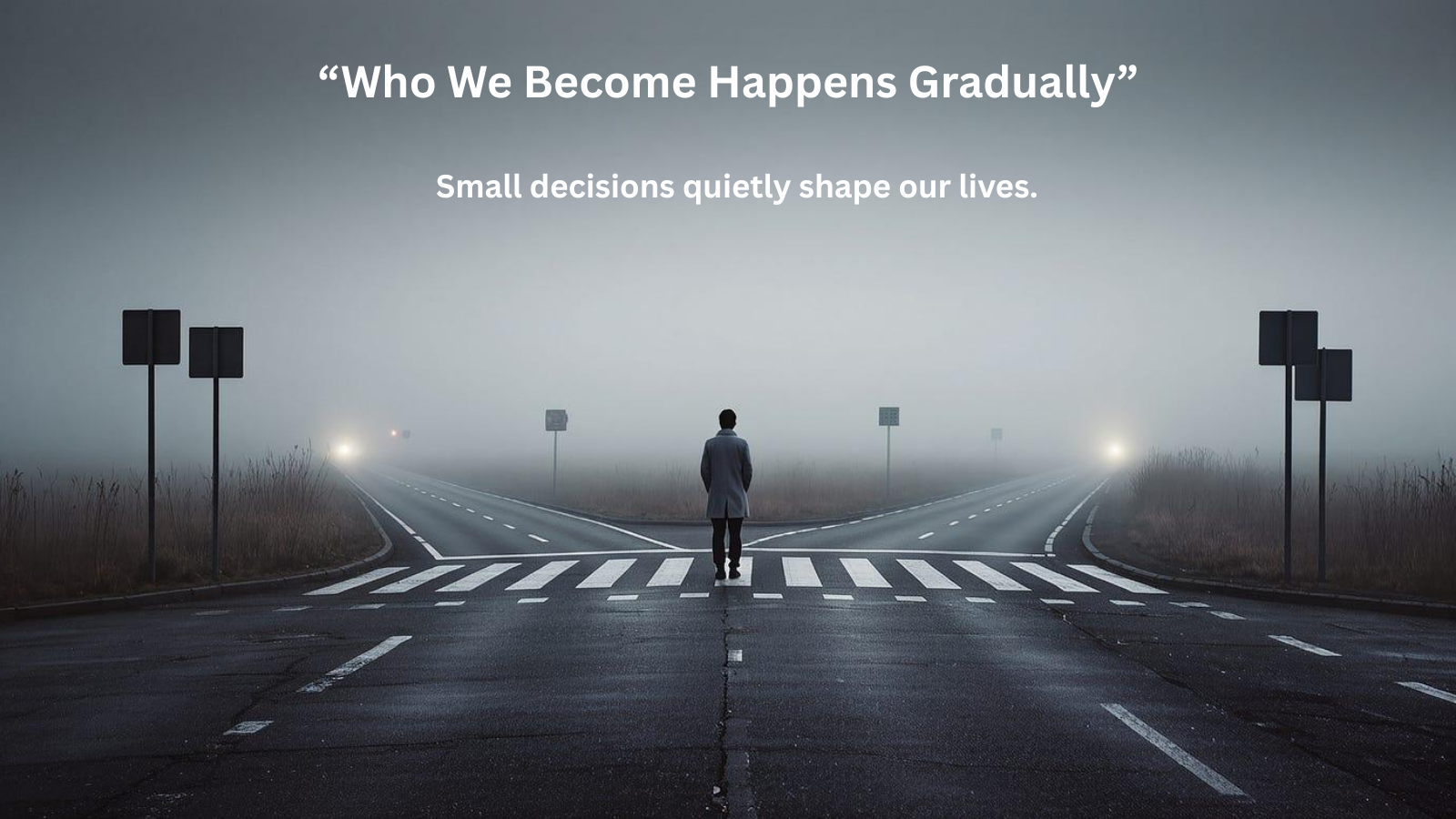
Most change does not happen dramatically.
We become different people gradually.
Through small decisions.
Repeated thoughts.
Honest reflection.
The people we continue to surround ourselves with.
What we do today quietly shapes who we become tomorrow.
Deciding to “be somebody” requires introspection and a willingness to discover who you really are. Taking inventory of your life and spending time in honest reflection is often the starting point for understanding what you are good at, what matters to you, and where you are most likely to thrive.
It is important not to confuse your own values with other people’s expectations. Finding out who we are means asking ourselves difficult questions: What do we believe in? What truly matters to us? What kind of life feels meaningful?
Make a list of the things you are passionate about and the things you genuinely enjoy doing. Ask someone you trust and respect for honest feedback. Sometimes other people can see strengths in us long before we recognize them ourselves.
Knowing yourself creates purpose, direction, and a greater sense of well-being. That understanding quietly changes the decisions you make each day.
Change anything about today, and you begin changing tomorrow.
Change who you associate with. Surround yourself with people who will tell you the truth, not simply what you want to hear.
Many people experience what could be called productivity shame — the feeling that their value depends entirely on measurable accomplishments. Productivity becomes more than completing tasks; it becomes a way of judging self-worth.
But productivity is subjective. It can be a philosophy of life, a state of mind, or simply someone else’s expectation placed upon us.
Freeing yourself from productivity shame requires letting go of the idea that your worth can be measured entirely by numbers, achievements, or constant output.
Instead of trying to do everything, decide what is enough.
Ask yourself why a particular goal matters to you in the first place. Then recognize that progress itself has value. Small improvements matter. Quiet consistency matters.
Becoming a better version of ourselves is rarely a dramatic transformation.
More often, it is a quiet process of noticing.
Adjusting.
Letting go.
Beginning again.
Little by little, our lives change because we do.
If this piece resonated with you, the books below explore many of these ideas more deeply.
If It Really Was My Life Story, Why Does It Change Each Time I Tell It?
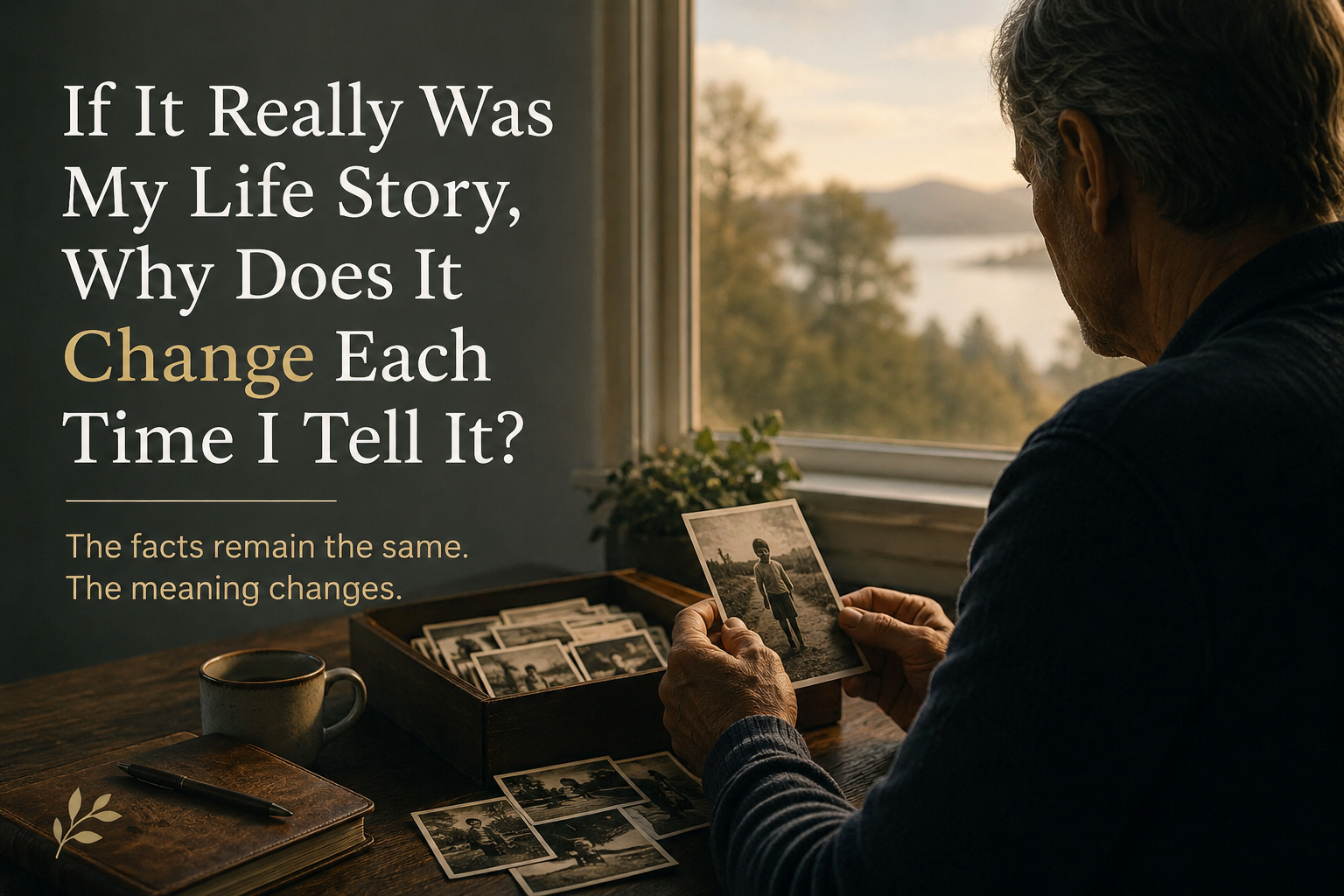
There is no story I know better than my own.
And yet, almost every time I tell it, something changes.
Not the major events. Not the people or places. The facts remain mostly the same. What changes is the meaning I attach to them. Connections that once seemed important begin to fade. Small moments I barely noticed at the time suddenly feel central. Coincidences become patterns. Losses become turning points. Conversations I once dismissed quietly reshape the entire narrative.
Over time, I’ve realized something unsettling and strangely comforting:
We do not simply remember our lives.
We reinterpret them.
And in doing so, we slowly reinterpret ourselves.
Author Pat Conroy once wrote:
“The most powerful words in the English language are: Tell me a story.”
But stories are never completely fixed. They continue evolving because we continue evolving.
For more than 35 years, I participated in a monthly men’s group through my church. Each month, one person would spend about 45 minutes telling the story of his life. The purpose was simple: to know each other more honestly. We believed men often stayed guarded, even among friends, and that listening deeply to another person’s story created trust, understanding, and connection.
Over the years, people moved away, new people joined, and eventually some of us began repeating our stories.
That’s when something fascinating happened.
The same events often carried different meanings the second or third time they were told.
A painful moment that once sounded unresolved later carried acceptance. A disappointment became a lesson. A coincidence became a defining turning point. Sometimes the facts barely changed at all, but the interpretation changed completely.
I noticed this in others, and eventually I noticed it in myself.
The retelling itself seemed to create new understanding.
It was as though people were discovering the meaning of their lives while speaking out loud.
I began to wonder whether this is true for all of us.
Perhaps we are not only shaped by what happens to us, but by the meaning we continue assigning to those events over time.
People come and go in our lives, often without us fully understanding their impact until much later. Some relationships seem temporary until we look back and realize they quietly changed our direction. Other moments feel insignificant at the time but later become impossible to separate from who we became.
As we change, our stories change with us.
And maybe that is not inconsistency at all.
Maybe it is growth.
This idea—that identity is shaped quietly through interpretation, relationships, memory, and reflection—eventually became one of the central themes in my book What Matters: We Are the Sum of Small Moments.
Because sometimes the meaning of our lives is not found in dramatic events, but in the gradual understanding of moments we once overlooked.
Finding Good in Others Lets You See the Good in Yourself

Originally written in 2021. Updated to reflect a deeper understanding of human complexity and compassion.
If you try to see the best in others, you have to let go of a dangerous idea: the belief that people should be free of anything that makes you uncomfortable.
Perfection is an illusion we project onto others when we want the world to feel orderly, predictable, or safe. But people are not clean abstractions. They are layered, inconsistent, unfinished. Expecting otherwise doesn’t make us virtuous—it makes us rigid.
Recognizing goodness requires something harder than judgment. It requires acceptance. Not approval of harm, not denial of accountability—but a willingness to acknowledge human complexity without turning it into a flaw.
Every person has something to teach us if we’re willing to listen. Even difficult people act as mirrors. They reveal our patience, our boundaries, our fears, and sometimes our blind spots. What irritates us often points to something unresolved within ourselves.
Looking for the good in others is not naïve optimism. It’s a discipline. It asks us to see beyond single moments, single traits, or single mistakes. It reminds us that growth rarely looks clean while it’s happening.
When you notice goodness in others, something subtle shifts. You become more forgiving—not just toward them, but toward yourself. Self-confidence grows not from comparison, but from recognition: If others can be imperfect and still worthy, so can I.
Sometimes we find the good in others while we are actively doing good—choosing patience over reaction, curiosity over certainty, action over judgment. That work changes us first.
The price of seeing goodness is giving up perfection.
And it’s a small price to pay.
The Selves We Outgrow Without Noticing

Sometimes we don’t outgrow people through conflict or distance. The change happens quietly—almost without noticing—until we realize we’re no longer borrowing our sense of self from the room we’re in. I explore that moment of subtle shift more fully in this reflection, originally published on my Substack, What Matters.
→ Read the full essay on Substack
This quiet sense of change echoes themes I explored more fully in Why Life Stories Change, where identity evolves not through events alone, but through how we reinterpret our past.
Where Happiness Actually Begins
People who consistently help others often seem steadier. Less overwhelmed. Less defeated by setbacks. Not because their lives are easier, but because their attention isn’t fixed entirely on themselves.
That raises an old question. Is the purpose of life to be happy or to help others?
From the beginning, happiness is instinctive. Newborns seek comfort. Warmth. Safety. Joy. They don’t yet understand gratitude or service. They simply receive.
Over time, something shifts. Children begin to recognize that what brings them joy comes through others. Love arrives before understanding. Care is felt before it is explained.
Affection matters. Being seen and supported shapes confidence, resilience, and emotional health. And over a lifetime, a quiet pattern becomes visible: gratitude doesn’t follow happiness. It makes happiness possible.
Gratitude is not a feeling we wait for. It’s a practice. A posture. A willingness to notice what we’ve been given and respond in kind.
As adults, happiness becomes less about what we acquire and more about what we contribute. Service changes its meaning when it isn’t transactional. When help is offered without expectation. When the intent is simply to ease another person’s burden.
That’s often where happiness shows up, not afterward, but in the act itself.
Mark Twain once said, “The two most important days in your life are the day you were born and the day you find out why.” For many people, that second day involves someone else.
Happiness may be our first instinct. But meaning is what sustains it.
I explore these ideas of meaning, gratitude, and presence more fully in What Matters.
The Quiet Changes We See Only Afterward
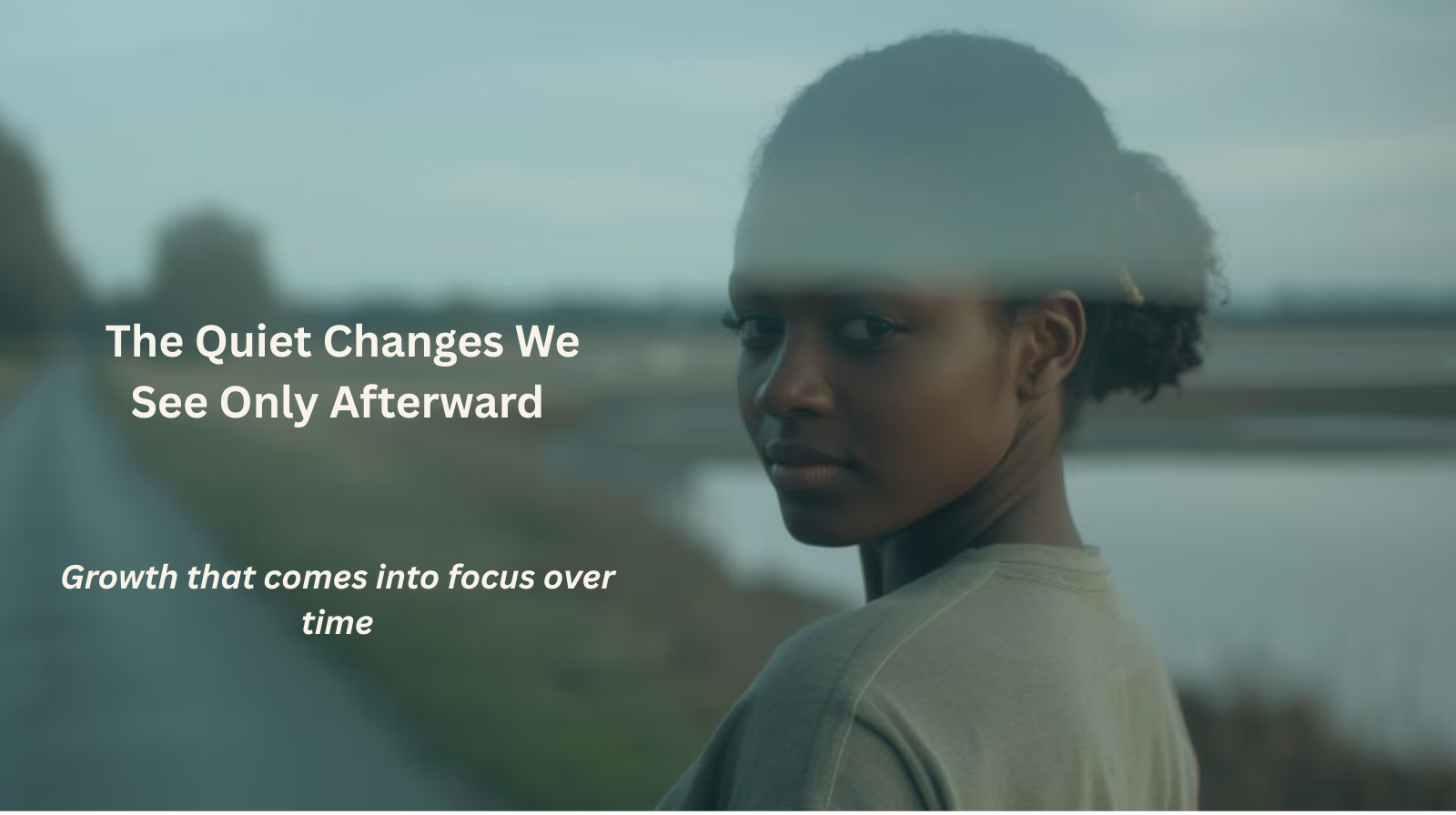
Change rarely announces itself. Most of the time it moves quietly, almost unnoticed, until one day we look back and realize something inside us has shifted.
We grow in small ways first. A different way of responding. A calmer thought. A moment of clarity that feels simple but stays with us.
These quiet changes often matter the most. They shape how we see ourselves.
They help us understand what we value. And they remind us that growth isn’t always loud. Sometimes it is slow and steady, finding its shape only in hindsight.
When we pay attention, we begin to notice the subtle ways we are becoming someone new.
If you found this interesting check out the artlec below