

Eldorado the Poem by Edgar Allen Poe
Read morePeople Come into your Life for a Reason, a Season or a Lifetime - Poem by Anonymous →

Why This Poem Still Matters
This poem never spread because of marketing. It spread because it spoke to something universal.
For years, it has been one of the most visited pages on this site—often by readers seeking clarity amid transition, loss, or necessary change.
It continues to influence how I think about relationships, timing, and how people shape our lives in ways we often don’t recognize until much later.
Note: The poem commonly known as “People Come into Your Life for a Reason, a Season, or a Lifetime” has circulated widely online for many years and is often shared with uncertain or disputed authorship.
The version referenced here is presented as a cultural reflection rather than as an original work.
🌿 People Come into Your Life for a Reason … (Author Unknown)
“People come into your life for a reason, a season, or a lifetime.”
You’ll know which it is once you understand what role they played.
When someone enters your life for a reason, it’s usually to meet a specific need. They appear during a moment when you require support—emotionally, spiritually, or practically. Their presence fills an important gap, often one you didn’t consciously acknowledge. And then, unexpectedly, they leave. Not because anyone failed, but because their purpose is complete.
Some people come for a season—a chapter marked by growth, laughter, or discovery. These relationships are vivid and real, but temporary. They enrich us, expand us, and then they end. Their significance isn’t measured by their duration but by the imprint they leave behind.
A few people become part of our lives for a lifetime. They build foundations with us. They teach us enduring lessons about friendship, resilience, honesty, and love. These relationships are the anchors we return to, again and again. As the saying goes, “Love is blind, but friendship is clairvoyant.”
💬 Interpreting the Poem: A Framework for Growth and Letting Go
Many people return to this poem because it gives language to something they’ve felt intuitively—that people cross our paths with purpose.
That relationships aren’t random.
That endings aren’t failures.
Even difficult relationships can act as teachers, revealing what we must learn, release, or no longer repeat. The poem offers more than comfort—it creates a framework. One that encourages acceptance, gratitude, and a gentler understanding of impermanence.
It reminds us that our lives are shaped—sometimes quietly—by the people who touch them.
This idea—that small moments and relationships quietly shape our lives—later became one of the central themes in my book What Matters: We Are the Sum of Small Moments.
🌿 How This Poem Influenced My Work
This website began as a place for book reviews. Only later did I add a small collection of poems and reflections that mattered to me personally. I didn’t expect this one to become the most visited page on the site. But it has—and consistently.
Its message sits at the heart of what I write about:
reinvention, seasons of life, personal narrative, and the quiet way we grow when we’re paying attention.
This poem helped shape the thinking behind several of my books, including:
Why Life Stories Change: As You Look At Your Own Life Story, You See Yourself Differently
Why Life Stories Change: Are We the Result of Chance or Circumstance?
Embrace Life’s Randomness: Your Path to Personal Reinvention and Positive Change
What Matters: We are the Sum of Small Moments. Its message sits at the heart of what I write about:
reinvention, seasons of life, personal narrative, and the quiet way we grow when we’re paying attention.
These influences continue to guide how I write—and how I understand the role of people in our lives.
📝 A Companion Reflection
This related essay explores how revisiting your past can reshape your understanding of your present—and why our life stories change as we change.
➡ Read: If It Really Was My Life Story, Why Does It Change Each Time I Tell It?
Our stories evolve because we evolve. Details fade or become clearer. What once seemed unimportant becomes pivotal in hindsight. We reinterpret events through the lens of who we’ve become.
For over 35 years, I participated in a monthly men’s group where we shared our life stories. As people repeated their stories over the years, something interesting happened: the stories changed—not the facts, but the meaning.
New understanding had settled in. New perspective had taken root.
This insight echoes the poem’s core message: People and events shape us, often long before we realize how. And as we change, our interpretation of those relationships changes too.
Recommended Next Reading
If reflections like this resonate with you, you may also enjoy my book What Matters: We Are the Sum of Small Moments.
The book explores how relationships, growth, and identity are often shaped by the quiet moments we barely notice at the time.
The Tide Rises, the Tide Falls, by Henry Wadsworth Longfellow →
The Tide Rises, the Tide Falls, by Henry Wadsworth Longfellow
Read moreA Question by Robert Frost (What does this poem mean and what is the question asked) →

A Question, by Robert Frost
A voice said, Look me in the stars
And tell me truly, men of earth,
If all the soul-and-body scars
Were not too much to pay for birth
Thoughts about the poem, A Question”
Is this a reflection on our past life or is it a question asking us if we properly value our life? The poem prompts us to analyze our lives and the value and worth. Was being born a blessing and a privilege or was it a curse?
The voice of the poem address the “men of the earth” bringing the question to your attention of your value and confirms that the questions you will find in your pondering will have answers. but also suggests that acceptance of the choices you made is also an answer.
"A Question" is a poem by Robert Frost, first published in 1942”
Acquainted with the Night, by Robert Frost →

I have been one acquainted with the night.
I have walked out in rain and back in rain.
I have outwalked the furthest city light.
I have looked down the saddest city lane.
I have passed by the watchman on his beat
And dropped my eyes, unwilling to explain.
I have stood still and stopped the sound of feet
When far away an interrupted cry
Came over houses from another street,
But not to call me back or say good-bye;
And further still at an unearthly height,
One luminary clock against the sky
Proclaimed the time was neither wrong nor right
I have been one acquainted with the night.

Analysis of Acquainted with the Night Poem
“Night" is where isolation, sorrow, and despair are found and when they are found they won’t leave. Your trapped, and the darkness is part of the trap.
Robert Frost is suggesting that this is just part of being human and that we all will feel a connection these thoughts. Perhaps we all do?

In a Station of the Metro, by Ezra Pound →

“In a Station of the Metro “ by Ezra Pound
The apparition of these faces in the crowd;
Petals on a wet, black bough
Ezra Pound’s “In a Station of the Metro” captures a moment of vivid imagery: the speaker, observing a crowd in a subway station, imagines the faces as petals on a tree branch. These faces aren’t described in detail, but sensed—as ghostlike presences, flickering identities that may have come to guide or support the traveler. The metro suggests motion and transition; the faces evoke the quiet possibility of help along the way.
But the poem leaves us with an unsettling ambiguity: Was it really help that came? The faces are damp, shadowed—more like drifting petals than living forms. Their presence feels more botanical than human, more ephemeral than comforting. In the end, we’re left to wonder whether the traveler encountered connection—or simply passed through a ghostly mirage of it.
“The Builders” by Henry Wadsworth Longfellow →

The Builders” by Henry Wadsworth Longfellow
All are architects of Fate,
Working in these walls of Time;
Some with massive deeds and great,
Some with ornaments of rhyme.
Nothing useless is, or low;
Each thing in its place is best;
And what seems but idle show
Strengthens and supports the rest.
For the structure that we raise,
Time is with materials filled;
Our to-days and yesterdays
Are the blocks with which we build.
Truly shape and fashion these;
Leave no yawning gaps between;
Think not, because no man sees,
Such things will remain unseen.
In the elder days of Art,
Builders wrought with greatest care
Each minute and unseen part;
For the Gods see everywhere.
Let us do our work as well,
Both the unseen and the seen;
Make the house, where Gods may dwell,
Beautiful, entire, and clean.
Else our lives are incomplete,
Standing in these walls of Time,
Broken stairways, where the feet
Stumble as they seek to climb.
Build to-day, then, strong and sure,
With a firm and ample base;
And ascending and secure
Shall to-morrow find its place.
Thus alone can we attain
To those turrets, where the eye
Sees the world as one vast plain,
And one boundless reach of sky
And ascending and secure
Shall to-morrow find its place.
We spend our lives working. We work in our jobs to be able to care for ourselves and our families. We work for our families to teach them how to live and how to work. Everything we do gets down to work and the question of why we work comes down to the fact that life requires it and rewards it.
It isn’t our profession that defines who we are rather it is our values that define us. Our values are revealed in how we mop the floor as well as how we approach technology or science. Our values when combined with work create relationships and trust and reflect the set of our sail and the direction of our lives.
Longfellow argues in this poem that all of us are architects and that our days are building blocks that contribute to the structure of our existence; and all of our actions and decisions determine our strength, and potential.
I Wandered Lonely as a Cloud by William Wordsworth →

I wandered lonely as a cloud
That floats on high o'er vales and hills,
When all at once I saw a crowd,
A host, of golden daffodils;
Beside the lake, beneath the trees,
Fluttering and dancing in the breeze.
Continuous as the stars that shine
And twinkle on the milky way,
They stretched in never-ending line
Along the margin of a bay:
Ten thousand saw I at a glance,
Tossing their heads in sprightly dance.
The waves beside them danced; but they
Out-did the sparkling waves in glee:
A poet could not but be gay,
In such a jocund company:
I gazed—and gazed—but little thought
What wealth the show to me had brought:
For oft, when on my couch I lie
In vacant or in pensive mood,
They flash upon that inward eye
Which is the bliss of solitude;
And then my heart with pleasure fills,
And dances with the daffodils.
Analysis of this Poem
"I wandered lonely as a Cloud" is a poem that just makes you feel peace and solitude. It says that even if you are alone you can use your imagination to find friends in the beauthy of nature. It suggests a value to the earth itself. Wordsworth most famous poem.
There Will Come Soft Rain, by Sara Teasdale →

There will come soft rain and the smell of the ground,
And swallows circling with their shimmering sound;
And frogs in the pools singing at night,
And wild plum trees in tremulous white;
Robins will wear their feathery fire,
Whistling their whims on a low fence-wire;
And not one will know of the war, not one
Will care at last when it is done.
Not one would mind, neither bird nor tree,
If mankind perished utterly;
And Spring herself, when she woke at dawn
Would scarcely know that we were gone.
Analysis and Thoughts: The author describes nature using the senses of a living being to give nature life and meaning.
Words like “smell of the ground,” “shallows circling,” “shimmering sound,” and “Robins will wear,” she personifies nature to give it a human-like approach.
She sums up her thoughts saying “Not one would mind, neither bird nor tree”, but that one is not mankind whom she feels could perish without being missed. For her nature exists alone.
Soft rain has been referred to being like white noise, able to calm us down. The words turn us to nature which also reduces anger, fear, and stress and increases pleasant feelings.
Bring on the Soft Rain.

Invictus, by William Ernest Henley →

Out of the night that covers me
Black as the pit from pole to pole,
I thank whatever gods may be
For my unconquerable soul.
In the fell clutch of circumstance,
I have not winced nor cried aloud.
Under the bludgeonings of chance
My head is bloody, but unbowed.
Beyond this place of wrath and tears
Looms but the Horror of the shade,
And yet the menace of the years
Finds, and shall find me, unafraid.
It matters not how strait the gate,
How charged with punishments the scroll,
I am the master of my fate:
I am the captain of my soul.
Thoughts on the poem Invictus
The words of this poem are inspiring and suggest the strength of the individual but even with that positive conclusion it does raise questions? Are we really the master of our souls? Is survival a adequate measure of success?
Invictus means unconquerable and the poem inspires that feeling about ourselves.

My book, Embrace Life’s Randomness: Breathe in the Amazing, compares this point of view labeling it stoic with a more free will view at life that it is random. Stoic because in-spite of what happens you have strength because you suck it up and get past adversity even accepting that you are giving the adversity to make you stronger compared to the idea that randomness is a way of freeing yourself from predestination and enabling true free will to kick in. More on these ideas in my book.
Fire and Ice, by Robert Frost (2nd Post on this Poem) →
This reflection has been updated and expanded here →
[Fire and Ice: Why Frost’s Shortest Poem Still Feels Unsettling]
“Some say the world will end in fire,
Some say in ice.
From what I’ve tasted of desire
I hold with those who favor fire.
But if it had to perish twice,
I think I know enough about hate
To know that for destruction ice
Is also great
And would suffice."
Thoughts about this Poem: Fire is Emotion; Ice is Hate.
Frost's stark warning that only fire or ice can bring about the end of the world is a cautionary tale. It's a clear reminder that either extreme can lead to destruction, urging us to tread carefully.
The two elements, fire, and ice, are not just destructive forces but also have a symbolic relationship with the world. The world symbolizes our relationships, and fire and ice represent the various people in our lives. This understanding deepens the reader's grasp of the poem's meaning.
Some people are fire, and some are ice, inferring that becoming surrounded by one type can be destructive.
It is possible that 'Fire and Ice' draws inspiration from Dante's Inferno, a classic work where sinners are condemned to a fiery hell and submerged to their necks in ice. This connection enriches the reader's understanding of the poem's inspiration.

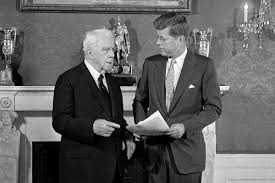
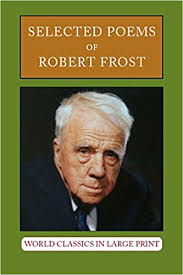
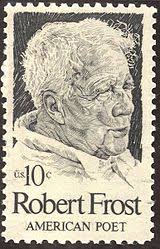
The favorite poetry section has poems and thoughts from Bob Dylan, Edgar Allan Poe, Henry Wadsworth Longfellow, Ella Wheeler Wilcox, Robert Frost, Francis William Bourdilion, Ezra Pound, William Wordsworth, Sara Teasdale, William Ernest Henley, L.R. Knost, many more. Take a look at some of them.
The Road Not Taken by Robert Frost →
Two roads diverged in a yellow wood,
And sorry I could not travel both
And be one traveler, long I stood
And looked down one as far as I could
To where it bent in the undergrowth;
Then took the other, as just as fair,
And having perhaps the better claim,
Because it was grassy and wanted wear;
Though as for that the passing there
Had worn them really about the same,
And both that morning equally lay
In leaves no step had trodden black.
Oh, I kept the first for another day!
Yet knowing how way leads on to way,
I doubted if I should ever come back.
I shall be telling this with a sigh
Somewhere ages and ages hence:
Two roads diverged in a wood, and I—
I took the one less traveled by,
And that has made all the difference.
Thoughts and Analysis
Where did the two roads lead? Were their destinations different, or was the difference only in the experience of choosing?
Frost quietly tells us something important: the roads were almost identical.
Both were worn about the same. Both lay equally untouched that morning.
Yet years later, the traveler will claim he took “the one less traveled by” and that it made all the difference.
The poem isn’t really about choosing the braver path. It’s about how we create meaning after a choice is made.
We look back and turn ordinary decisions into defining moments. We reshape memory to give our lives a clearer story. The roads were the same, but the act of choosing gave one of them significance.
What made the difference wasn’t the path itself. It was the choice, and the story we tell about it afterward.

Life Is Amazing by L.R. Knost →

“Life is amazing. And then it’s awful. And then it’s amazing again.
And in between the amazing and awful, it’s ordinary and mundane and routine.
Breathe in the amazing, hold on through the awful, and relax and exhale during the ordinary.
That’s just living a heartbreaking, soul-healing, amazing, awful, ordinary life.
And it’s breathtakingly beautiful.”
― L.R. Knost
About the Author L.K Knost. “She is an award-winning author, feminist, and social justice activist as well as the founder and director of the children’s rights advocacy and family consulting group, Little Hearts/Gentle Parenting Resources, and Editor-in-Chief of Holistic Parenting Magazine. Her work has been quoted from Hollywood to D.C. to South Africa, most notably in an address on children’s rights to the South African Parliament by the Minister of Justice. She lives in Central Florida with her husband and the youngest four of her six children.”
This information was taken from her website:
http://www.littleheartsbooks.com/about-the-authorillustrator/

He Only Had a Minute Elijah Cummings: →

At least two titles have referred to the poem:
"God's Minute" by Dr, Benjamin E. Mays
Also known as "Just a Minute."
______
I only have a minute.
Sixty seconds in it.
Forced upon me, I did not choose it,
But I know that I must use it.
Give account if I abuse it.
Suffer if I lose it.
Only a tiny little minute,
But eternity is in it.
Elijah Cummings recited this in his very first speech to Congress. The poem was written by Dr. Benjamin E. Mays, a pioneering civil rights leader who was the president of Morehouse College during Martin Luther King Jr.’s education there.

Acquainted With the Night by Robert Frost →

Robert Frost
Read more“Sailing to Byzantium” by W. B. Yeats →

That is no country for old men. The young
In one another’s arms, birds in the trees
—Those dying generations—at their song,
The salmon-falls, the mackerel-crowded seas,
Fish, flesh, or fowl, commend all summer long
Whatever is begotten, born, and dies.
Caught in that sensual music all neglect
Monuments of unageing intellect.
An aged man is but a paltry thing,
A tattered coat upon a stick, unless
Soul clap its hands and sing, and louder sing
For every tatter in its mortal dress,
Nor is there singing school but studying
Monuments of its own magnificence;
And therefore I have sailed the seas and come
To the holy city of Byzantium.
O sages standing in God’s holy fire
As in the gold mosaic of a wall,
Come from the holy fire, perne in a gyre,
And be the singing-masters of my soul.
Consume my heart away; sick with desire
And fastened to a dying animal
It knows not what it is; and gather me
Into the artifice of eternity.
Once out of nature I shall never take
My bodily form from any natural thing,
But such a form as Grecian goldsmiths make
Of hammered gold and gold enamelling
To keep a drowsy Emperor awake;
Or set upon a golden bough to sing
To lords and ladies of Byzantium
Of what is past, or passing, or to come.
Byzantium was an ancient Greek city in classical antiquity that became known as Constantinople in the late antiquity and Istanbul today. Yeats tell us of great poetry from long ago.
You, by Edgar Albert Guest →

You are the fellow that has to decide
Whether you'll do it or toss it aside.
You are the fellow who makes up your mind
Whether you'll lead or will linger behind
Whether you'll try for the goal that's afar
Or just be contented to stay where you are.
Take it or leave it. Here's something to do!
Just think it over — It's all up to you!
What do you wish? To be known as a shirk,
Known as a good man who's willing to work,
Scorned for a loafer or praised by your chief,
Rich man or poor man or beggar or thief?
Eager or earnest or dull through the day,
Honest or crooked? It's you who must say!
You must decide in the face of the test
Whether you'll shirk it or give it your best.
Nobody here will compel you to rise;
No one will force you to open your eyes;
No one will answer for you yes or no,
Whether to stay there or whether to go.
Life is a game, but it's you who must say,
Whether as cheat or as sportsman you'll play.
Fate may betray you, but you settle first
Whether to live to your best or your worst.
So, whatever it is you are wanting to be,
Remember, to fashion the choice you are free.
Kindly or selfish, or gentle or strong,
Keeping the right way or taking the wrong,
Careless of honor or guarding your pride,
All these are questions which you must decide.
Yours the selection, whichever you do;
The thing men call character's all up to you!
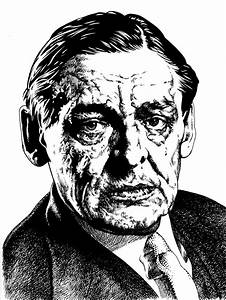
Eyes That I Last Saw in Tears, and New Eyes, by T.S. Eliot →

“Eyes That Last I Saw in Tears”
Eyes that last I saw in tears
Through division
Here in Death’s dream kingdom
The golden vision reappears
I see the eyes but not the tears
This is my affliction
This is my affliction
Eyes I shall not see again
Eyes of decision
Eyes I shall not see unless
At the door of death’s other kingdom
Where, as in this,
The Eyes outlast a little while
A little while outlasts the tears
And hold us in derision.
“New Eyes “
“We shall not cease from exploration, and the end of all our exploring will be to arrive where we started and know the place for the first time.”
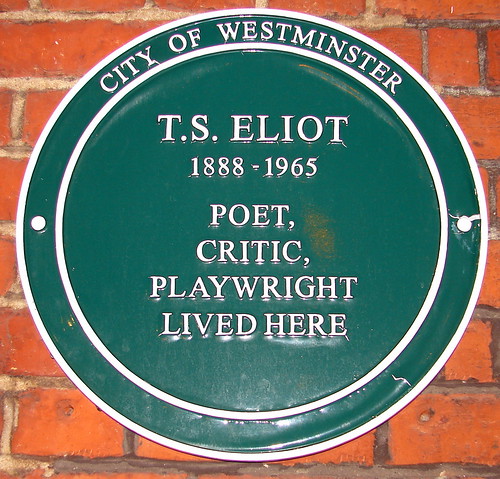
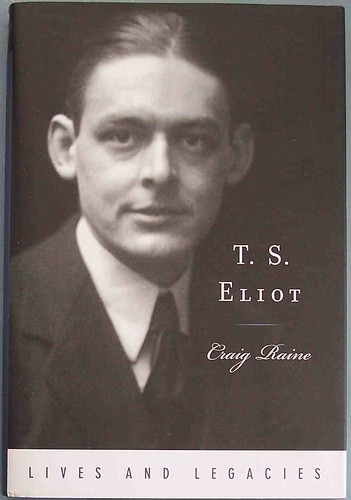
T.S. Eliot’s poetry is called Modernism, rejecting trends of the 19th century. The thoughts are fragmented in free verse with multiple points of view, often contradictory. I love both of these poems.
I loved “New Eyes” before I understood what it meant. It just drew me in, and I felt it was necessary. I am not saying that today I know what it means, but many things seem to fit.
We see ourselves differently when we look back at our li,ves and the experienced perspective lets us see the trip as if it was the first time we understood it.
I think our lives will seem very different when we reach the end and look back. All we have explored, learned, and done will change us. We will see the whole of it differently than we did when we experienced the parts. The beginning and all related circumstances of that beginning and what followed will be clear for the first time.
A similar Quote
"The real voyage of discovery consists, not in seeking new landscapes, but in having new eyes." Marcel Proust
T.S. Eliot Quote
“If you’re not over your head, how do you know how tall you are?”
Scripture can also be poetry →

Job 3:25-26
“For the thing which I greatly feared is come upon me, and that which I was afraid of is come unto me.
I was not in safety, neither had I rest, neither was I quiet, yet trouble came.”
Thoughts on this Scripture
These words reflect the deeper feelings of the soul in sorrow and the attraction one fear brings upon him.
It shows our fears’ poetic power and how they are compressed to convey emotion to the reader's mind. We become what we fear.
Imagery layered to generate meaning is what marks poetry.
Religious Literature and Religious Poetry and Poetry about Spirituality
Religious poetry is any poetry that contains teachings, themes, or references to deity.
Christian poems often directly reference the Bible, while others provide allegory.
If, by Rudyard Kipling →

If you can keep your head when all about you
Are losing theirs and blaming it on you;
If you can trust yourself when all men doubt you,
But make allowance for their doubting too:
If you can wait and not be tired by waiting,
Or, being lied about, don't deal in lies,
Or being hated don't give way to hating,
And yet don't look too good, nor talk too wise;
If you can dream- -and not make dreams your master;
If you can think- -and not make thoughts your aim,
If you can meet with Triumph and Disaster
And treat those two impostors just the same:.
If you can bear to hear the truth you've spoken
Twisted by knaves to make a trap for fools,
Or watch the things you gave your life to, broken,
And stoop and build'em up with worn-out tools;
If you can make one heap of all your winnings
And risk it on one turn of pitch-and-toss,
And lose, and start again at your beginnings,
And never breathe a word about your loss:
If you can force your heart and nerve and sinew
To serve your turn long after they are gone,
And so hold on when there is nothing in you
Except the will, which says to them: 'Hold on! '
If you can talk with crowds and keep your virtue,
Or walk with Kings- -nor lose the common touch,
If neither foes nor loving friends can hurt you,
If all men count with you, but none too much:
If you can fill the unforgiving minute
With sixty seconds' worth of distance run,
Yours is the Earth and everything that's in it,
And- -which is more- -you'll be a Man, my son!
