Most people assume life changes through dramatic moments.
A major decision. A loss. A new relationship. A career change. A breakthrough that divides life into before and after.
Sometimes it does.
But much of who we become is shaped more quietly.
A conversation changes how we see ourselves. A relationship ends but leaves something important behind. A disappointment redirects us. Something that once felt right gradually stops fitting. A small decision opens a door we never expected.
We may barely notice these moments when they happen.
Years later, we can sometimes see what they did.
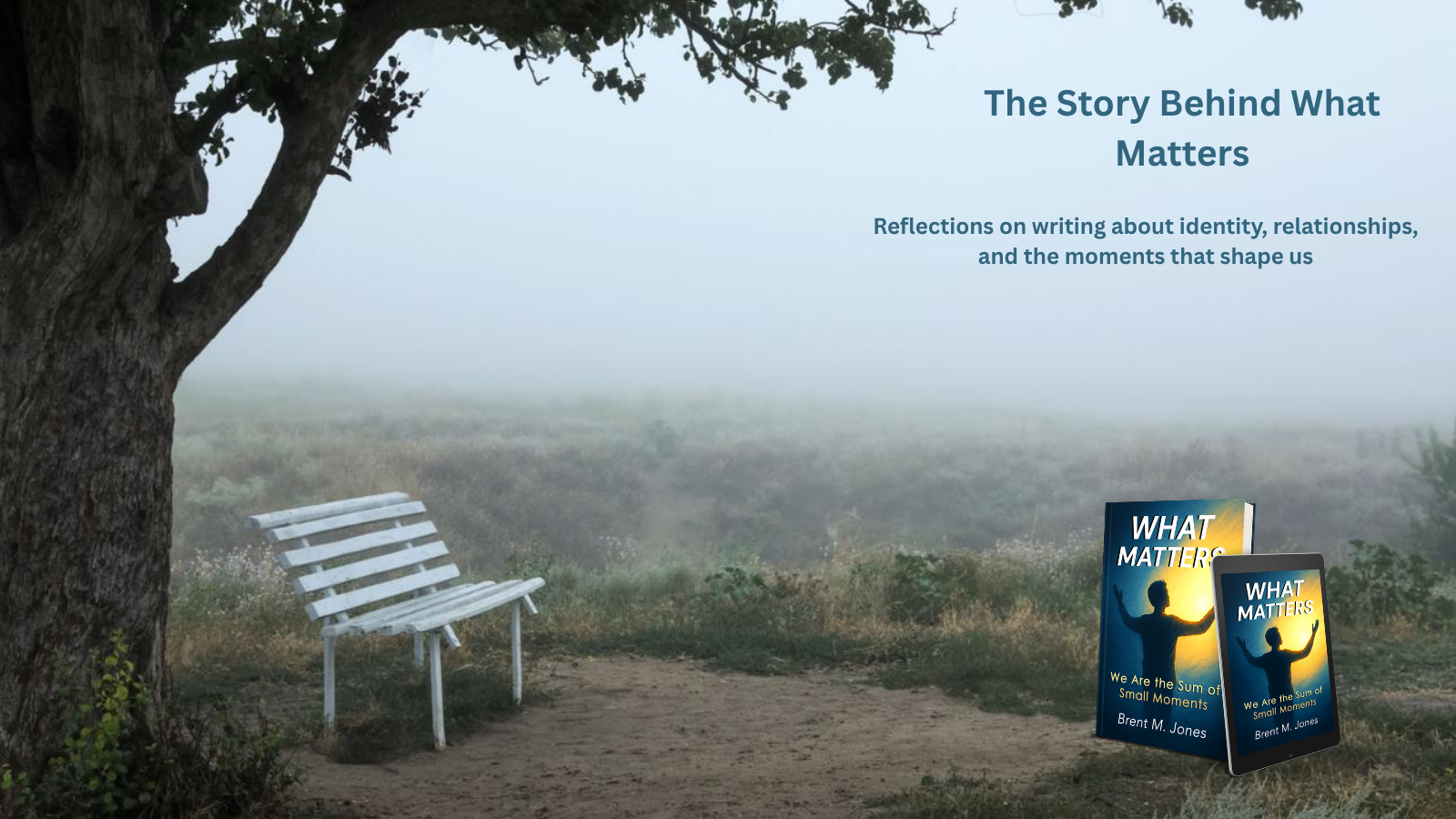
That is the idea at the heart of my book, What Matters: We Are the Sum of Small Moments.
But the Book Is About More Than Small Moments
I've come to realize that saying “small moments shape us” doesn't fully explain why recognizing them matters.
The more useful question is:
What can understanding those moments teach us about the life we are living now?
We all carry stories about ourselves. We have beliefs about who we are, relationships that influenced us, choices that changed our direction, and versions of ourselves that once fit but may not fit anymore.
Most of the time, we don't stop to examine how those pieces fit together.
But when we do, something useful can happen.
We begin to recognize what shaped us.
We see what still belongs in our lives and what we may have outgrown.
We notice which relationships changed us, even when they didn't last.
We become more aware of the stories we tell ourselves and whether those stories are still true.
And we may begin to understand what deserves more of our attention now.
We Don't Need All the Answers
One of the ideas I return to throughout What Matters is that clarity doesn't always come before we move forward.
Change rarely gives us certainty.
Sometimes the better question isn't, “What is going to happen?”
It's, “Am I moving toward what matters to me?”
That is a different way of approaching uncertainty. Instead of trying to control everything ahead of us, we can pay attention to our values, our reactions, our relationships, and the experiences that have already taught us something about ourselves.
The book explores reinvention, communication, presence, belief, relationships, change, and the stories we tell ourselves. But these aren't separate subjects.
They are different ways of asking the same question:
What is my life showing me about who I am and what matters now?
The Past Can Help Us Decide What Comes Next
Reflection has little value if it only leaves us looking backward.
The reason to understand the experiences that shaped us is to use that understanding now.
What drains us?
What restores us?
Which relationships bring out something good in us?
What are we holding onto simply because it once fit?
Which beliefs are helping us move forward, and which are quietly limiting us?
When have we felt most present, useful, connected, or at peace?
Those aren't abstract philosophical questions. The answers can help us decide where our time, attention, and energy belong.
That may be the most important idea in What Matters.
You can't change the moments that made you who you are. But understanding them can change what you do with the moments you have now.
The small moments matter because they don't merely tell us where we've been.
They can help us decide where we go next.
What Matters: We Are the Sum of Small Moments
If you're navigating change, reconsidering your direction, looking back on the life you've lived, or simply asking “What matters to me now?”, I wrote What Matters to help you explore that question.
Available in paperback, ebook, and audiobook.
This version is much more useful for selling the book because the post now moves through problem → insight → benefit → application → book rather than stopping at “small moments are meaningful.”
And it accurately reflects the manuscript. The book explicitly connects awareness with recognizing what still fits, examining the stories we tell ourselves, orienting ourselves by values during change, and using moments of alignment as guides.