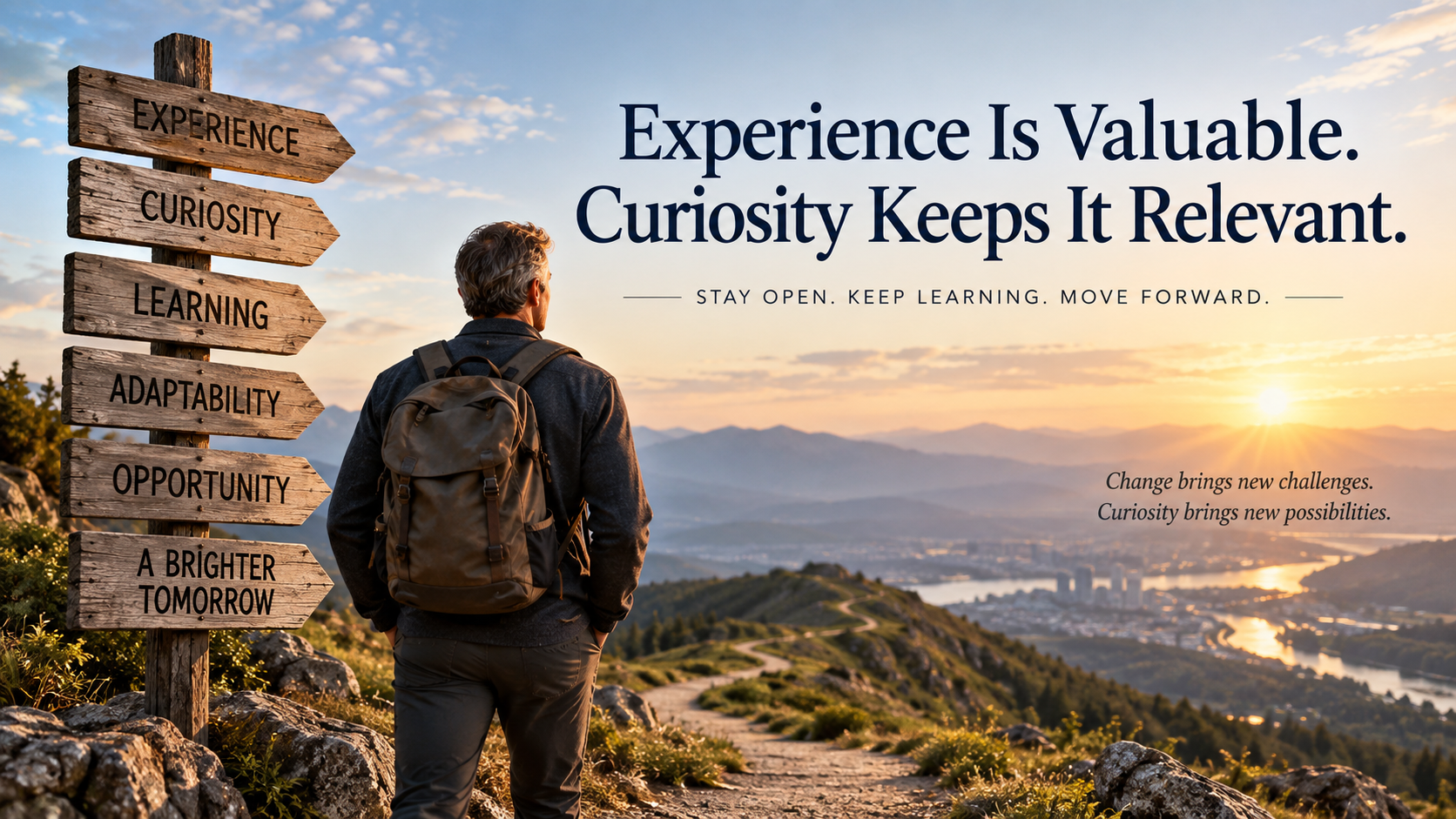
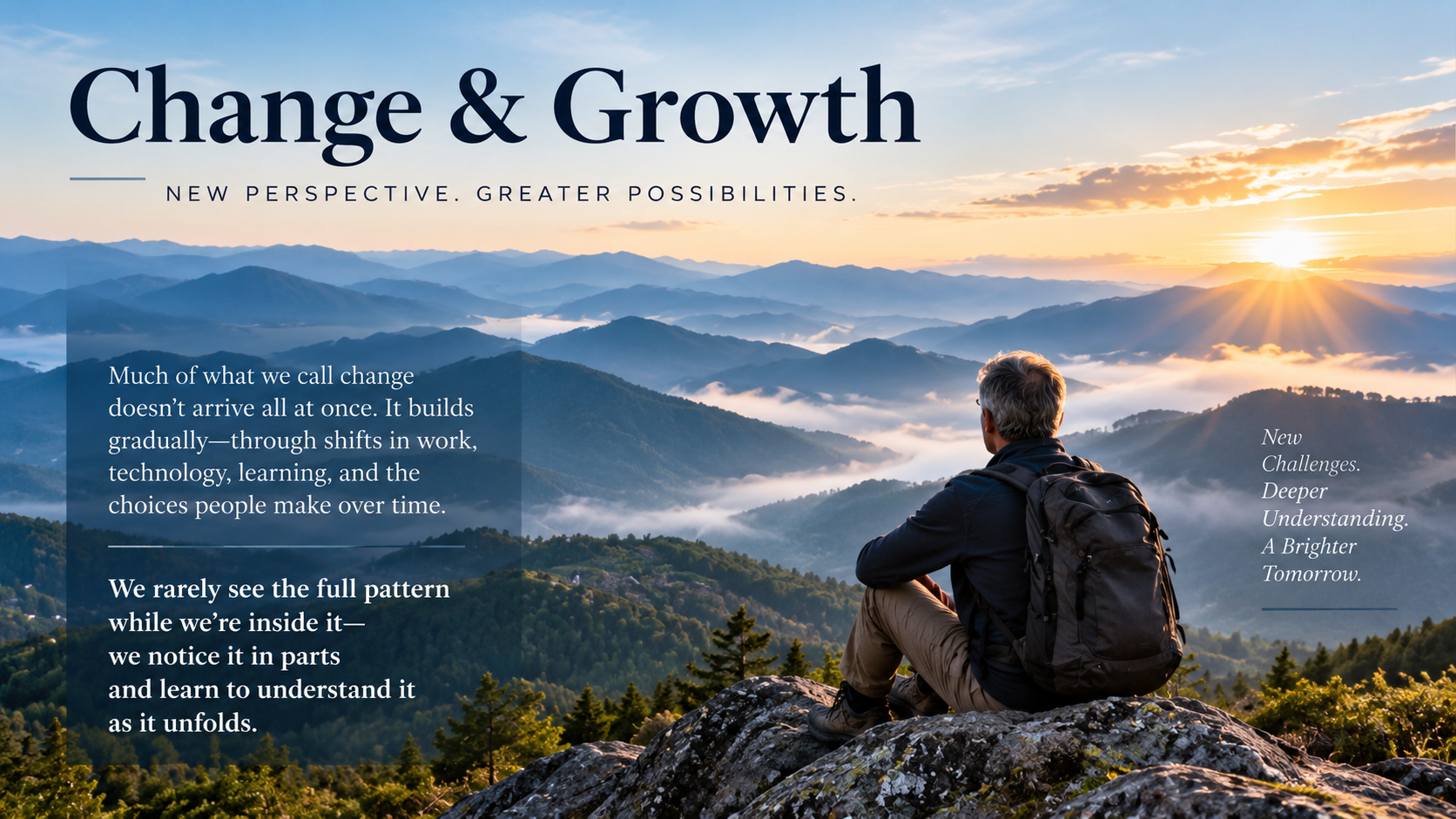
There comes a point in almost every career when experience begins to carry more weight than education.
We know how things work because we have done them before. We have made mistakes, solved problems, managed difficult situations, and learned lessons that could never have been fully understood in a classroom.
Experience matters.
But experience can also create a trap.
The longer we do something, the easier it becomes to believe that what we already know is enough. We rely on familiar solutions. We repeat approaches that worked before. We become more confident in our judgment, but sometimes less curious about what might have changed.
That is when experience can stop being an advantage.
Education Gives Us a Beginning. Experience Gives It Meaning.
Education and experience are sometimes treated as competitors. Which matters more?
I don't think that is the right question.
Education gives us knowledge, concepts, principles, and ways of thinking. Experience shows us what happens when those ideas collide with real people and real circumstances.
You can study leadership, but managing people teaches you things a textbook cannot.
You can study communication, but years of conversations, misunderstandings, disagreements, negotiations, and relationships teach you what it actually means to be understood.
You can learn the principles of business, but making decisions when the outcome is uncertain teaches a different kind of lesson.
Education can tell us what.
Experience often teaches us how.
But neither one should be the end of learning.
The Danger of Becoming an Expert
I once spoke with an old friend about his long and successful career. What surprised me was how conflicted he felt about his years of experience.
Instead of seeing those years entirely as an advantage, he wondered whether other people might see him as outdated.
There was something important in that concern.
Experience has tremendous value, but only when we continue doing something with it.
Twenty years of experience can mean twenty years of learning. It can also mean repeating essentially the same year twenty times.
The difference is curiosity.
Do we still ask questions?
Do we listen to people who know things we don't?
Do we pay attention when our industry changes?
Can we reconsider something we once believed was correct?
Can we learn from someone younger, less experienced, or very different from us?
Those questions become more important, not less, as we accumulate experience.
Burnout Isn't Always About Working Too Hard
We usually think of burnout as exhaustion caused by unreasonable expectations, poor leadership, excessive workloads, or prolonged stress. Those things certainly contribute to it.
But I think there is another kind of burnout.
Sometimes we become tired because we have stopped being interested.
When we stop learning, we can stop feeling connected to what we are doing. The work becomes repetitive. Curiosity disappears. We operate on experience and habit rather than attention.
Eventually, we may begin to wonder whether we have anything new to contribute.
One definition of burnout refers to the point in a rocket's flight when its propellant has been used up.
That's an interesting way to think about human burnout too.
It isn't always the feeling that we have worked too hard.
Sometimes it is the feeling that we have nothing left to discover.
What If Burnout Is Sometimes a Signal to Re-engage?
When something no longer feels meaningful, our first reaction may be to leave it.
Sometimes leaving is exactly what is needed.
But not always.
Before walking away, there is another question worth asking:
Have I stopped being a student of what I'm doing?
Maybe the work changed and we didn't.
Maybe technology changed.
Maybe the people changed.
Maybe the marketplace changed.
Maybe we changed.
An idea that failed ten years ago might work today. A skill that once seemed unimportant may suddenly matter. Someone entering our field today may see possibilities that those of us who have spent decades in it no longer notice.
Instead of saying, "We tried that before," we can ask, "What's different now?"
That small change in language opens the door to learning again.
Experience Should Make Us More Curious, Not Less
One of the great benefits of experience is pattern recognition.
After years of doing something, we notice things a beginner doesn't. We recognize warning signs earlier. We understand consequences. We have a larger collection of experiences against which to compare whatever is happening now.
But experience becomes wisdom only when we remain willing to question what those patterns mean.
Otherwise, experience can become certainty.
And certainty can close doors.
The person with decades of experience who remains curious has something unusually valuable: the perspective of the past combined with an openness to the future.
That combination is difficult to teach.
We Are Students Outside of Work, Too
This isn't only about careers.
We can stop learning in relationships. We can assume we already understand the people closest to us.
We can stop learning about ourselves. We continue describing ourselves according to who we were ten or twenty years ago.
We can stop exploring ideas because we think our opinions are already settled.
We can even stop noticing the ordinary experiences that are still teaching us something.
Life keeps changing whether we study it or not.
The people around us change. Our bodies change. Our priorities change. What once seemed terribly important may become surprisingly unimportant. Things we once overlooked can become precious.
Perhaps one of the advantages of getting older is having enough experience to recognize that we will never completely understand any of it.
There is always something else to learn.
Stay a Student
You don't need another degree to remain a student.
Read something outside your usual interests.
Talk with someone whose experience is different from yours.
Ask a younger colleague how they would approach a problem.
Revisit an assumption you haven't questioned for years.
Learn a new tool.
Pay attention to what excites your curiosity.
And occasionally ask yourself a difficult question:
What do I believe I already know that might no longer be true?
Education gives us a foundation. Experience gives us perspective. Curiosity keeps both of them alive.
The goal isn't to spend a lifetime proving how much we know.
It is to remain interested enough to discover how much there still is to learn.