Exploring the unexpected connections that shape our lives
Book Reviews, Comments & Stories, Quotes, & Poetry & More
"Connections and Why They Matter"
Most of what happens in our life will spark a connection. Life connects with what has been found in books. Books connect with what happens in life. Use the connections to help you see more clearly. A love of reading and writing is what motivated the creation of this blog. Thank you for coming to the blog.
How psychology blurs the line between influence, awareness, and, controland how to recognize it in everyday life.
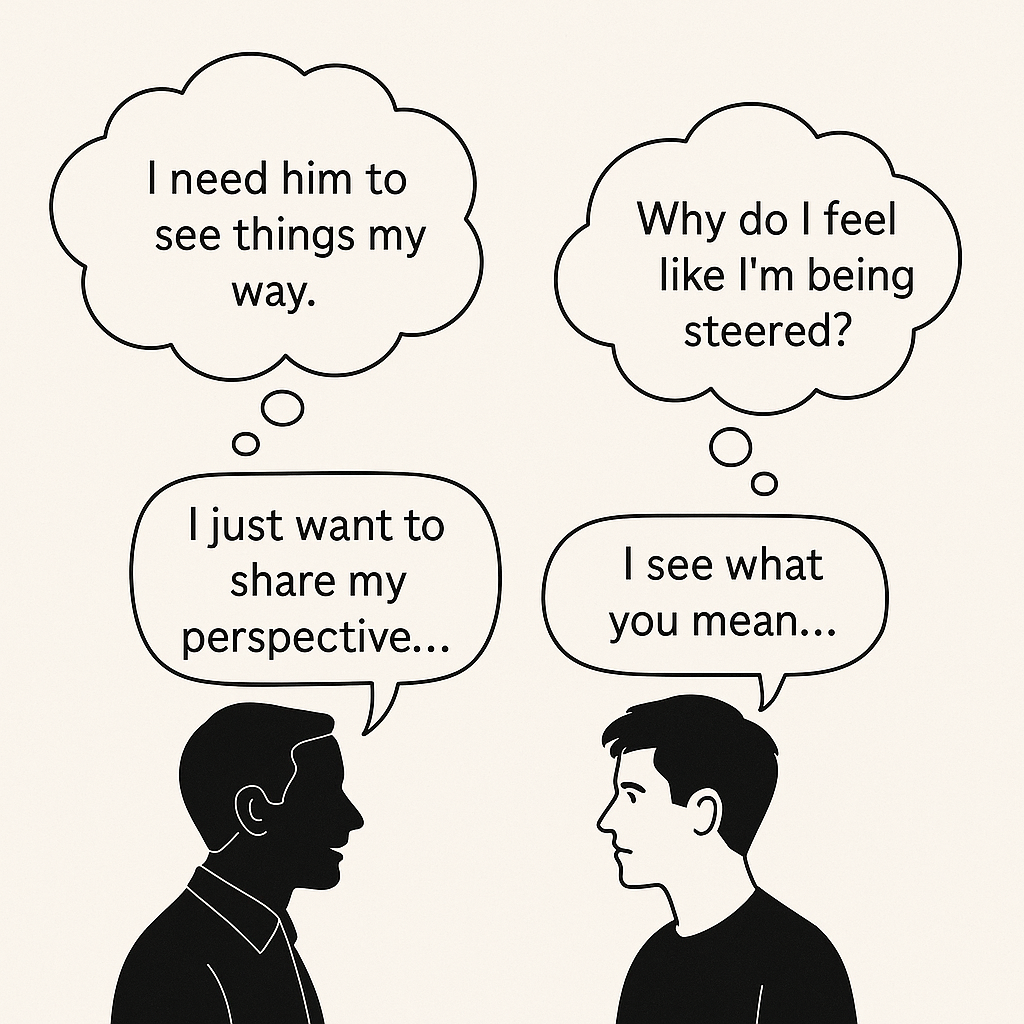
We’re influenced every day—by words, by images, by people. Most of the time, we don’t even realize it’s happening. A clever headline makes us click. A persuasive tone shifts our opinion. A well-timed silence in a conversation nudges us to reveal more than we planned.
That’s influence. But when does influence cross into manipulation?
Some people have called me a manipulator. Maybe there’s a grain of truth in that—but not in the way they mean it. To notice patterns, anticipate reactions, or think strategically isn’t manipulation. It’s awareness. And awareness, when paired with the right intent, is a strength.
The real difference is in the intent. Influence can guide, persuade, or connect with honesty. Manipulation hides its purpose and seeks control. The behavior on the surface may look similar, but the underlying motivation changes everything.
Here’s what psychology shows us:
Influence relies on transparency and trust.
Manipulation thrives on secrecy and imbalance.
Awareness, noticing how influence works, gives us the power to choose for ourselves.
Being smart doesn’t make you manipulative. But ignoring the forces that shape our choices can make us vulnerable. When we learn to recognize influence, we reclaim the ability to decide what truly matters to us, rather than letting others decide for us.
In the end, it’s not about escaping influence; that’s impossible. It’s about becoming more aware, so we know when we’re being guided and when we’re being pushed. That awareness is where freedom begins.
If this made you think, share it with someone you trust. Influence is everywhere, but awareness spreads, too.
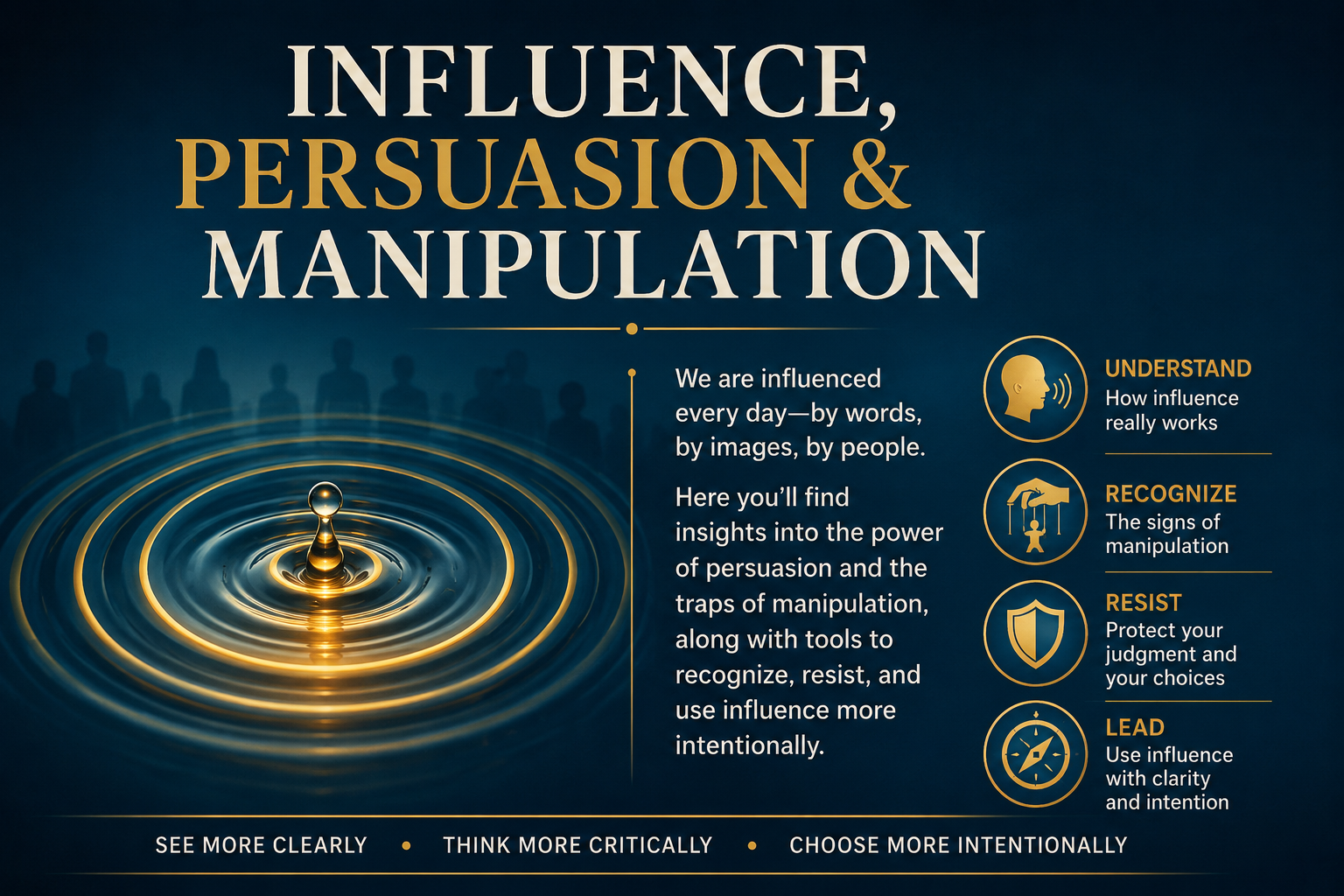
We are influenced every day—by words, by images, by people.
Influence surrounds us in ways we don’t always notice. A headline shapes our perception of an event before we’ve read the article. A colleague’s tone of voice makes us question whether we should speak up. A photo in an ad creates desire we didn’t feel moments before.
Influence is not inherently bad—it’s simply the reality of living in connection with others. The challenge lies in distinguishing between healthy persuasion and harmful manipulation.
The Power of Persuasion
Persuasion is built on trust, clarity, and respect. It is the art of presenting ideas in a way that resonates with others without undermining their autonomy. Good leaders persuade by aligning their vision with the values of their team. Teachers persuade by showing why knowledge matters beyond the classroom. Even a friend persuading you to try a new restaurant does so by appealing to your curiosity and appetite.
Persuasion can inspire, motivate, and build bridges. It asks, “Will you join me?” rather than “You must follow me.”
The Traps of Manipulation
Manipulation, by contrast, is persuasion’s shadow. It often uses the same tools—words, emotions, images—but bends them toward control rather than collaboration. A manipulative tactic might look like:
Feigning ignorance to gain sympathy or avoid accountability.
Framing information selectively to distort reality.
Guilt-tripping or gaslighting to make someone doubt their own judgment.
Creating urgency or scarcity when no real urgency exists.
The goal of manipulation is not shared understanding, but advantage at someone else’s expense.
How to Recognize the Difference
Check for Transparency: Is the full story being shared, or only what benefits the persuader?
Watch the Emotional Leverage: Does the message make you feel informed—or pressured, guilty, or afraid?
Consider the Outcome: Who benefits if you act? Is it mutual, or one-sided?
Notice the Patterns: A single persuasive request may be fair; repeated manipulation erodes trust.
Tools to Resist and Use Influence Wisely
Pause Before Acting: Influence thrives on quick reactions. Give yourself a moment to reflect.
Ask Clarifying Questions: The more you ask, the harder it is for manipulation to survive.
Set Boundaries: Recognize when someone consistently uses influence in harmful ways—and protect your time, energy, and choices.
Practice Ethical Influence: When you try to persuade, do it with honesty and respect. The integrity of your influence is what earns long-term trust.
Closing Thought
Influence is not something we can avoid—it’s part of being human. What we can do is learn to recognize it, resist its unhealthy forms, and practice it with integrity ourselves. By doing so, we become not just passive recipients of influence, but active shapers of our own choices and relationships.
"Like ripples on water, influence spreads—may yours move others with honesty, not control."