Exploring the unexpected connections that shape our lives
Book Reviews, Comments & Stories, Quotes, & Poetry & More
"Connections and Why They Matter"
Most of what happens in our life will spark a connection. Life connects with what has been found in books. Books connect with what happens in life. Use the connections to help you see more clearly. A love of reading and writing is what motivated the creation of this blog. Thank you for coming to the blog.
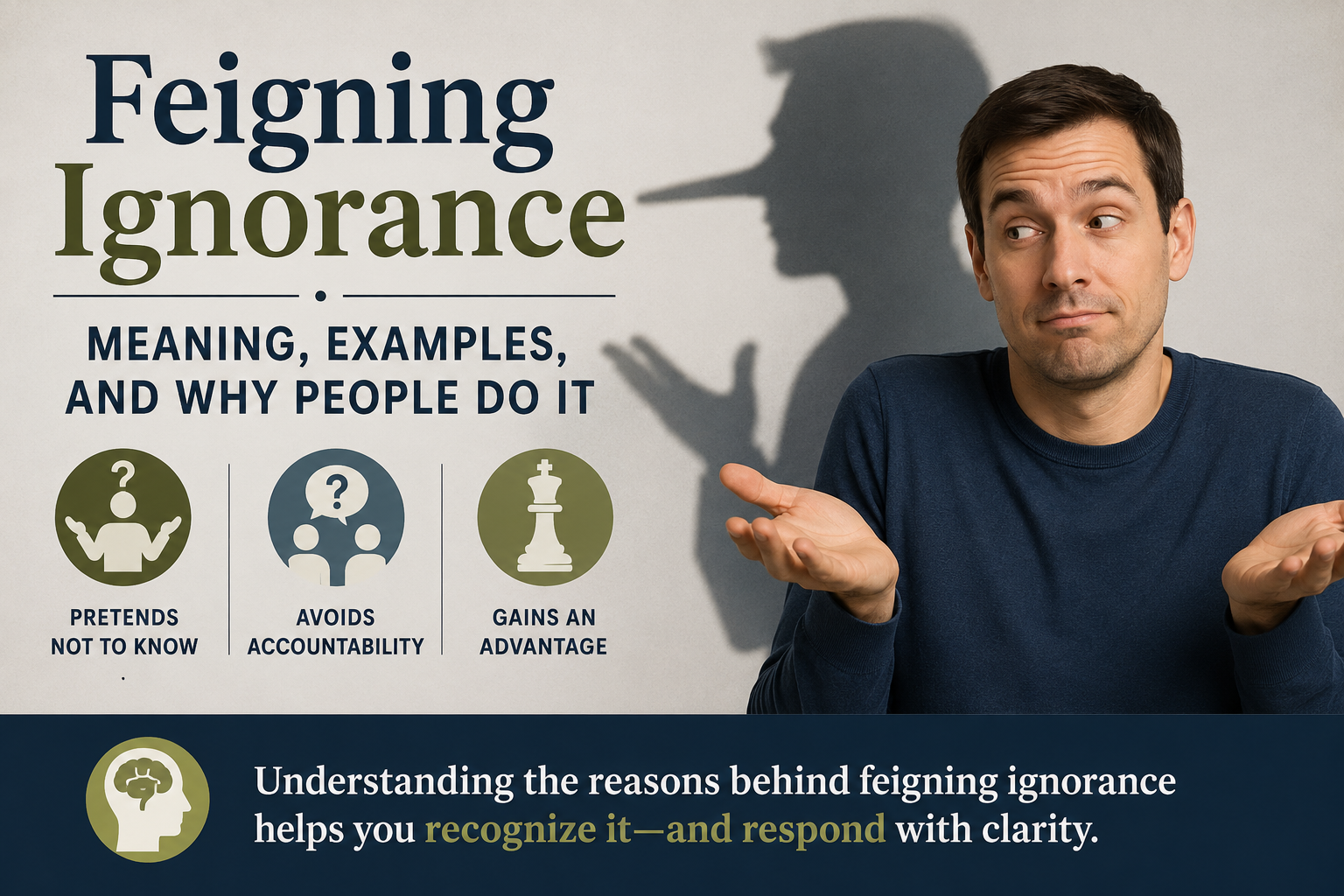
Feigning ignorance means pretending not to know, understand, or remember something, even when you actually do. People may do this to avoid responsibility, escape conflict, gain an advantage, or influence how others respond.
At its core, feigning ignorance is a form of impression management. Sometimes it's harmless, but in other situations it becomes a manipulation tactic used to avoid accountability or shift responsibility onto someone else.
Why People Feign Ignorance
People pretend not to know something for many reasons. Common motivations include:
Avoiding responsibility for a mistake or poor decision.
Escaping an uncomfortable conversation.
Delaying action or commitment.
Gaining an advantage in a negotiation.
Encouraging someone else to reveal more information.
Protecting their reputation or avoiding embarrassment.
The intention often determines whether the behavior is simply strategic or becomes manipulative.
When It Becomes Manipulation
Manipulation is the unfair or deceptive use of influence to achieve a personal goal.
Feigning ignorance can become manipulative when someone pretends not to understand in order to confuse another person, avoid accountability, or shift blame. In relationships or workplaces, this behavior can leave others feeling frustrated because responsibility is continually avoided rather than shared.
Some individuals with narcissistic traits may also use feigned ignorance to avoid accepting responsibility for the consequences of their actions. In those cases, pretending not to understand becomes another way of protecting their self-image rather than addressing the issue honestly.
Can Feigning Ignorance Ever Be Helpful?
Surprisingly, yes.
The ancient Greek philosopher Socrates was famous for asking questions while acting as though he didn't already know the answer. This teaching method, often called Socratic irony, encouraged others to explain, examine, and defend their own thinking.
Teachers, coaches, and even experienced leaders sometimes use a similar approach today. By asking questions instead of immediately providing answers, they encourage deeper learning and independent thought.
Authors occasionally do something similar. Rather than beginning with expert terminology, they introduce ideas from the reader's perspective, making complex concepts easier to understand. When done honestly, this builds clarity rather than deception.
The Difference Is Intent
Feigning ignorance is not always dishonest.
Sometimes it encourages learning.
Sometimes it avoids unnecessary conflict.
Other times it becomes a way to manipulate others or escape responsibility.
Understanding the motivation behind the behavior is often more important than the behavior itself.
"Related Articles"
Understanding why people behave the way they do is one of the themes explored throughout The Human Factor, where I examine communication, relationships, motivation, and the psychological patterns that shape everyday interactions.
Language shapes how we interpret people and situations. If you're interested in how words influence communication and perception, you may also enjoy Terminology Is More Than Words.
Our attitudes shape not only how we see the world, but how others experience us. If you're interested in how our beliefs, behaviors, and self-awareness influence authentic relationships, you may also enjoy Do Your Attitudes Reflect Your Authentic Self?