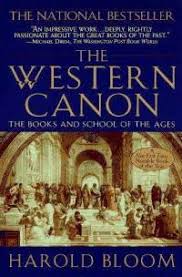
Professor Harold Bloom →
Professor Harold Bloom: July 11, 1930 -October 14, 2019
He was likely, no, he must have been, the most knowledgeable Shakespeare Scholar on the planet.
(See Shakespeare’s Literary Favorite Click Here)
An American literary critic and Sterling Professor of Humanities and English at Yale University. He wrote more than forty books, including twenty books of literary criticism, several books discussing religion, and a novel.
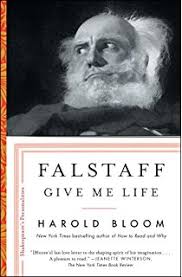
Bloom considered Shakespeare the ultimate center of the Western canon and even said he was only a parody of Falstaff.” (See Falstaff Review Click Here) The pictures used to portray Falstaff do seem to resemble Bloom.
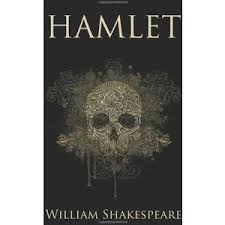
Bloom's theory was that people tend ultimately to be either more Hamlet (see Hamlet review Click Here), “an abyss, a chaos of virtual nothingness,” or Falstaff, overflowing with vitality and endless laughter, for whom “the self is everything. “
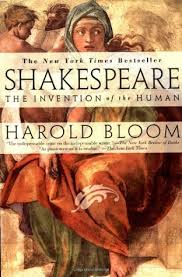
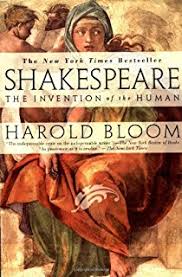
His book "Shakespeare The Invention of the Human" (see review click here) says that Shakespeare's vocabulary of 22,000 words is so infinite that it proves he knew pretty much everything there is to tell about humankind. That he, therefore, “invented the human.”
In an interview published in 1995, Bloom reflected on the great authors of the Western world, stating: "We have to read Shakespeare, and we have to study Shakespeare. We have to study Dante. We have to read Chaucer. We have to read Cervantes. We have to read the Bible, at least the King James Bible. We have to read certain authors.… They provide an intellectual; I dare say, the spiritual value that has nothing to do with organized religion or the history of institutional belief. They remind us in every sense of reminding us. They do not only tell us things that we have forgotten, but they tell us things we couldn’t possibly know without them, and they reform our minds. They make our minds stronger. They make us more vital."
Click Book to See Review
Bloom Categories Include
20th & 21st Century Educators, 20th & 21st Century American Writers, American Literary Critics, New York University Faculty, Yale Sterling Professor, Shakespearean Scholars, Yale University Faculty, Jewish Scholars, Jewish American Academics, Critics of Postmodernism,
How to Read and Why by Harold Bloom
In How to Read and Why Harold Bloom sets out a list of books that he believes can instill in one a life-long love of aesthetically and intellectually great literature.
Shakespeare: Poet, Writer, Actor, and Dramatist →
William Shakespeare (1564–1616) was an English poet, playwright, and actor whose influence on the English language and on storytelling is unmatched. He’s often called the greatest writer in the English language, and it’s hard to argue with that. Few authors have shaped a language the way Shakespeare shaped ours. His command of diction—his instinct for the exact word—expanded English in a way no one else has. Scholars estimate he used more than 20,000 words across his works and coined roughly 1,700 of them.
For anyone who cares about writing, Shakespeare becomes more than a historical figure; he’s a reminder of what language can do when imagination and precision meet. His impact reaches into every corner of literature. Many writers influence other writers. Shakespeare influenced the language itself. That’s a different level of legacy.
The New York Times, quoting Harold Bloom, once wrote that “after 400 years, Shakespeare’s genius is alive and well.” Bloom took that further, calling The Complete Works of William Shakespeare a kind of “secular scripture” — a source we draw from when we talk about human nature, emotion, psychology, and even myth. Bloom, a longtime Yale professor and one of Shakespeare’s most dedicated interpreters, is almost impossible to avoid when discussing Shakespeare’s reach and relevance.
Samuel Johnson said, “The essence of poetry is invention,” and invention is where Shakespeare excelled. Bloom used that idea to title his own book Shakespeare: The Invention of the Human, arguing that Shakespeare didn’t just create stories — he created characters with such depth, contradiction, and inner life that they felt unprecedented. They weren’t just believable; they were revelatory.
Good authors often say they discover their characters first, that the story reveals itself once they learn who those characters are. Shakespeare’s characters don’t just reveal plots — they reveal themselves in layers. They surprise, they shift, they grow. Falstaff and Hamlet, Bloom said, were “free artists of themselves,” constantly reshaping who they were through their choices. Shakespeare’s gift wasn’t just language; it was the way he used diction to open a window into the human mind.
Four centuries later, we still turn to Shakespeare because he understood people. And when language and insight come together at that level, they don’t fade. They stay.
Quotes
“Shakespeare is the happy hunting ground of all minds that have lost their balance.”
“With mirth and laughter, let old wrinkles come.”
“Et Tu, Brute?”
“Wise “All's well that ends well.”
“Better a witty fool than a foolish wit.”
My Tweet to Harold Bloom about Shakespeare
Thomas S. Monson Prophet and Literary Favorites →
Thomas S. Monson, President & beloved Prophet of The Church of Jesus Christ of Latter Day Saints, passed away on January 2nd, 2018.
"In addition to his deep love of scripture, Monson was also a lifelong reader of great literary works, often, over his 55 years of service, using themes and stories from novels, poetry, and musicals to express his faith and offer counsel to members of the church". The value of looking at some of his favorites is clear, as is his observation that "we become like those whom we admire.”
He said of Nathaniel Hawthorne’s classic account, "The Great Stone Face," we adopt the mannerisms, the attitudes, even the conduct of those whom we admire — and they are usually our friends."
President Monson's Favorites Qu o.
"My Kingdom," by Louisa May Alcott
"I do not ask for any crown but that which all may win, Nor try to conquer any world except the one within."
King Author quoted from Camelot.
"Do not let your passions destroy your dreams."
"A Tale of Two Cities," by Charles Dickens
"It was the best of times; it was the worst of times; it was the age of wisdom, it was the age of foolishness, it was the epoch of belief, it was the epoch of incredulity; it was the season of light, it was the season of darkness, it was the spring of hope, it was the winter of despair, we had everything before us, we had nothing before us."
He suggested that this quote, by President Gordon B. Hinckley, also refers to our day:
"This is your world. The future is in your hands. The outcome is up to you. The way to exaltation is not a freeway featuring unlimited vision, available speeds, and untested skills."
Favorite Quote by Clinton T. Howell
"It's Up to You,"
You are the one who has to decide; you’ll do it or toss it aside,
Whether you’ll strive for the goal that’s afar,
Or be content to stay where you are.