Exploring the unexpected connections that shape our lives
Book Reviews, Comments & Stories, Quotes, & Poetry & More
"Connections and Why They Matter"
Most of what happens in our life will spark a connection. Life connects with what has been found in books. Books connect with what happens in life. Use the connections to help you see more clearly. A love of reading and writing is what motivated the creation of this blog. Thank you for coming to the blog.
I first read The Tipping Point years ago, but now that I’m coming back to it, something stands out more clearly.
We often think change happens in a moment. Gladwell suggests something different.
What we call a “tipping point” is not the beginning of change—it’s the point where accumulated change finally becomes visible.
Small actions. Repeated patterns. Quiet influences.
Over time, they build. Then, almost suddenly, something shifts.
Gladwell describes this through three ideas: a small group of influential people, a message that stays with us, and the environment in which it all unfolds.
But what stayed with me this time wasn’t just the framework. It was the underlying assumption.
That which looks like a sudden transformation is rarely sudden at all. It has been forming, out of sight, through moments that didn’t seem important at the time.
That idea feels familiar. Not because of the theory, but because of how often we overlook what is shaping us while it’s happening.
We look for turning points. But most of what changes us doesn’t announce itself that way.
It builds quietly. And then one day, we call it a tipping point.
This way of thinking about change, how small moments accumulate before they’re recognized, is something I explore more directly in my own book, What Matters: We are the sum of small moments
Some of the earliest things we’re taught stay with us longer than we expect.
When I was young, my mother would have me kneel at my bedside and help me say my prayers. At the time, I didn’t question it. I believed that someone was listening and that speaking what was on my mind mattered.
Over time, my understanding of that moment changed, but the practice itself stayed with me. There was something steady about it—a quiet place to take what I didn’t yet understand. Even now, I can see how that early assumption shaped more than I realized. It shaped how I think and how I process what happens in my life.
We don’t always notice what stays with us. Some ideas remain because they were repeated. Others remain because they felt true, even if we didn’t fully understand them at the time.
At some point, I started asking a different question: what is it that actually lives on in us?
Not in a physical sense, but in the way we think, respond, and move through the world. We use words like soul, spirit, and identity, but what we’re often pointing to is something quieter—the accumulation of what we’ve experienced, what we’ve paid attention to, and what we’ve chosen to keep.
Louis Armstrong once said, “Musicians don’t retire; they stop when there’s no more music in them.” It’s a simple line, but it carries something deeper. For him, music wasn’t separate from life. It was how he lived.
So the question becomes: what is that “music” for the rest of us?
It may not be music at all. It might be writing, learning, or helping someone through something difficult. It might be the way you think, the way you notice things, or the way you care about people.
Whatever it is, it doesn’t arrive all at once. It develops over time. It’s shaped by small moments—what we return to, what we practice, and what we don’t let go of.
What we carry within us isn’t fixed. It evolves. What mattered to us years ago may not matter in the same way now, but something from those earlier moments usually remains. Not always the details, but the direction.
We often look for motivation outside of ourselves—something to push us forward, something to keep us going. But more often, what sustains us is already there. It’s the part of us that continues to show up, the part that stays interested, and the part that doesn’t fully disappear, even when we’re uncertain.
If there is something like a soul, it may not be something separate from our lives. It may be the pattern formed by how we’ve lived them—what we’ve paid attention to, what we’ve practiced, and what we’ve chosen to keep.
And if that’s true, then the question isn’t just what we believe. It’s what we are becoming through repetition.
Whatever it is we carry with us—whatever remains when everything else is set aside—I want it to be something I’ve taken the time to understand. Not all at once, but gradually, through attention, reflection, and the small moments that stay longer than expected.
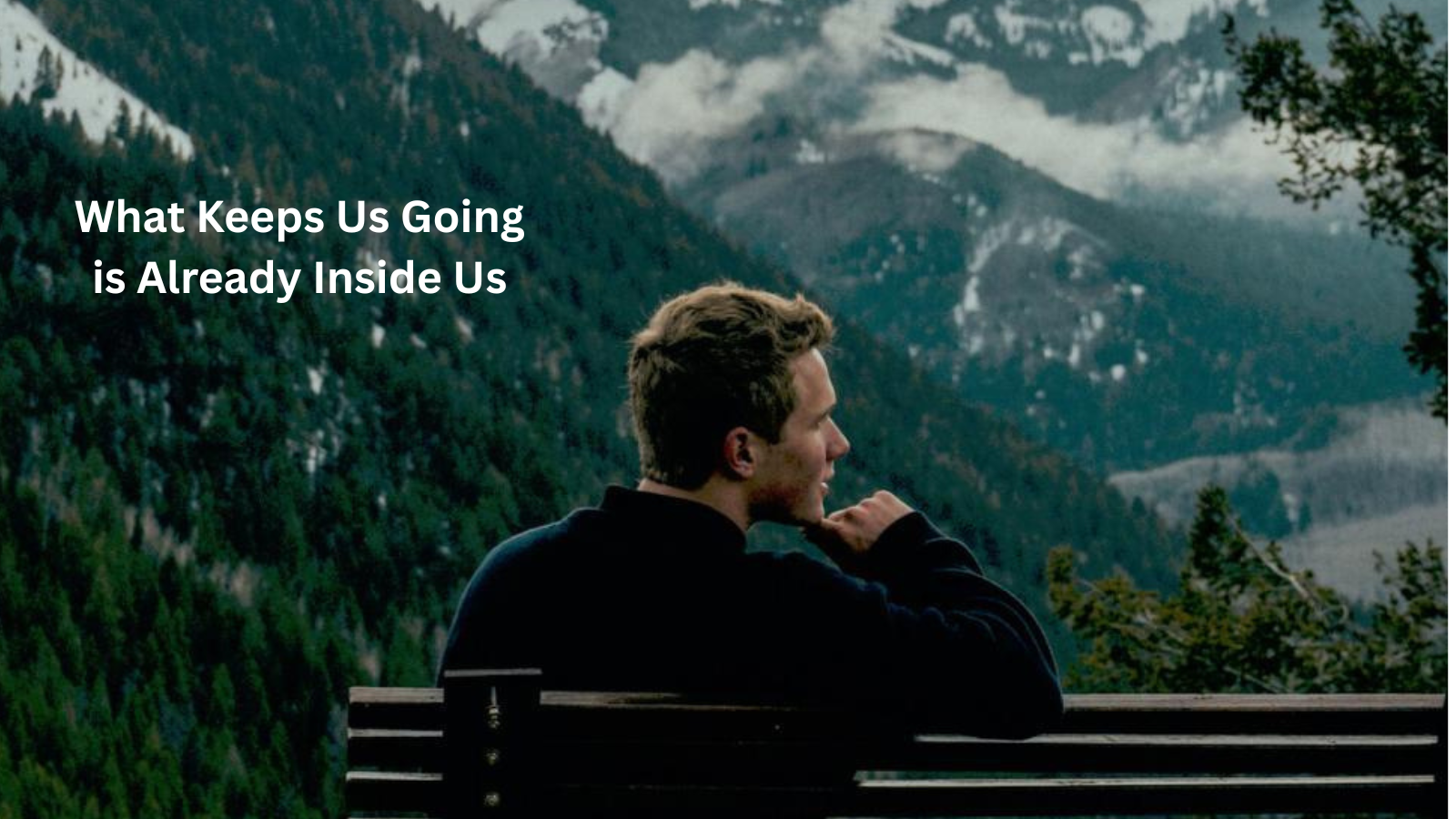
Because in the end, what keeps us going is often already inside us. We just have to learn how to recognize it.
This reflection connects closely with ideas explored in What Matters: We Are the Sum of Small Moments
We tend to believe that the most important parts of life arrive clearly.
The big decisions. The turning points. The moments that feel like they should define everything.
But much of what shapes us does not arrive that way.
It happens in smaller moments, the ones we almost overlook.
We are often moving inside a version of the “big picture.”
What we think our life is. What we believe it should become. What we’ve already explained to ourselves.
There is a kind of momentum to it.
We stay consistent. We follow through. We keep going.
But small moments interrupt that momentum.
Not in a dramatic way. They don’t announce themselves. They simply create a pause.
A shift in attention. A brief step outside of what we’ve been maintaining.
And in that pause, something different happens.
We are not performing. We are not explaining. We are not trying to arrive anywhere. We are just reacting.
This is where something becomes visible.
Not an answer. But a signal.
What holds your attention without effort. What feels right without needing to be justified. What creates a tension you can’t easily dismiss. What brings a quiet sense of ease.
These are small things. But they are also precise.
So the question becomes: Are we checking our direction against who we are? Or are we noticing where our direction no longer fits?
A small moment doesn’t tell you what to do.
It doesn’t correct your path.
It simply shows you something you might not see otherwise.
The big picture tells you who you think you are.
Small moments show you how you actually experience being that person.
And when those two don’t match, something important begins.
Not a decision.
Not a change.
Just awareness.
And over time, that awareness accumulates.
Not all at once. Not in a single realization.
But gradually, through noticing, pausing, and recognizing what keeps appearing.
You’re not finding answers in these moments. You’re noticing where your life is already responding to you. Quietly. Without explanation.
If you begin to pay attention to that, you may not change everything at once.
But you may begin to see more clearly what has been there all along.