Finding a Voice Through Constraint: A Reflection on Amanda Gorman
Originally published 2022 | Updated
Amanda Gorman’s work is often described in terms of performance, presence, and voice.
But what stands out is not just how she speaks—it is how that voice was formed.
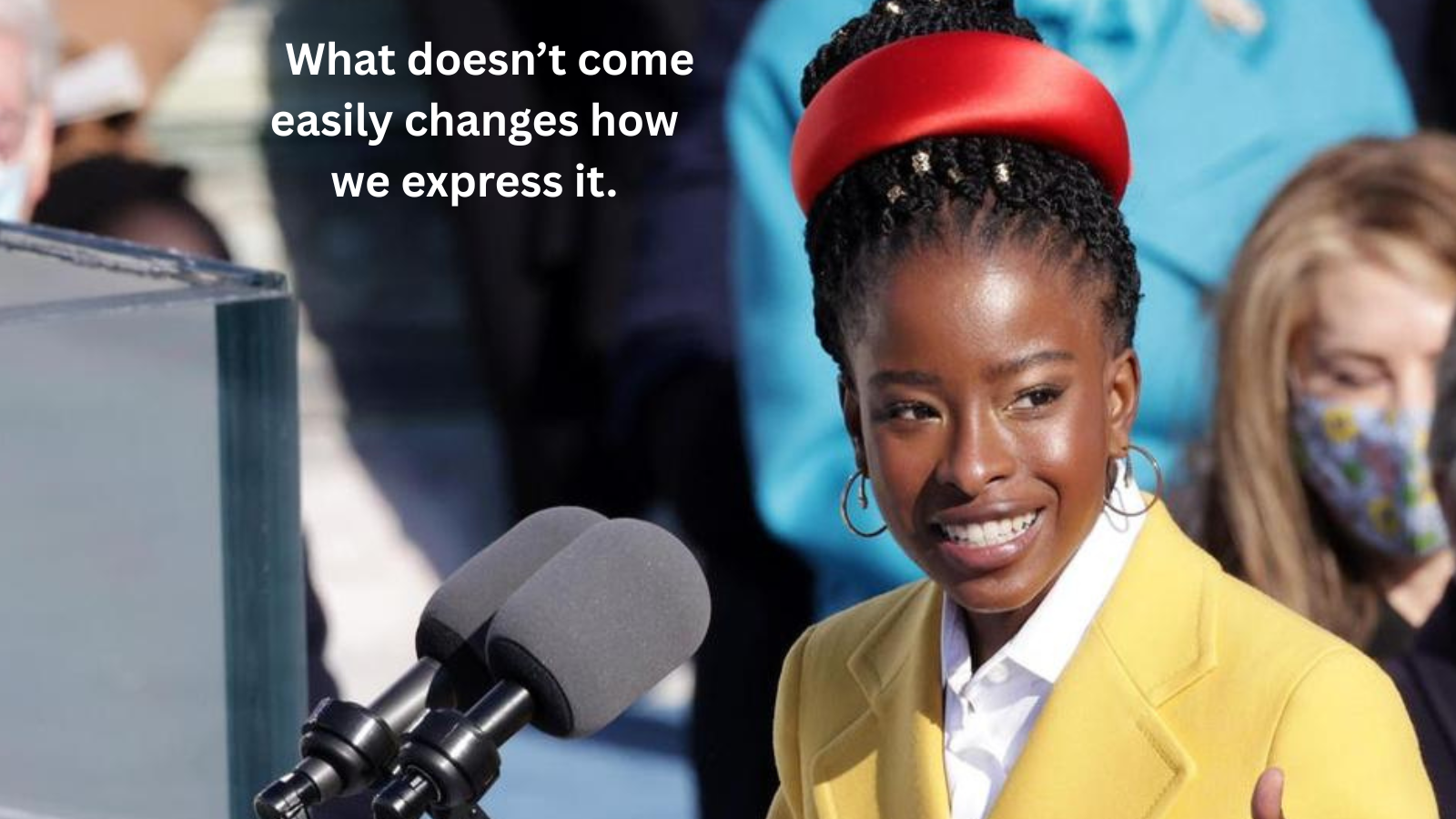
For years, she worked through a speech impediment, repeating sounds that did not come easily. The practice was not separate from her writing. It shaped it.
Language became something she had to move through deliberately.
That kind of constraint changes how expression develops. It slows it down. It makes rhythm more intentional. It turns repetition into structure rather than habit.
We often think of voice as something natural—something that either comes easily or does not.
But in many cases, voice is built.
Not just through what we say, but through what we have to work through in order to say it.
Gorman’s style reflects this. Her poetry carries a sense of movement, but also control. It is shaped as much by attention as by expression.
Spoken-word poetry emphasizes sound, cadence, and delivery. But underneath that is something more fundamental: the relationship between language and effort.
When something does not come easily, we engage with it differently.
We pay closer attention. We repeat more carefully. We refine more deliberately.
That process does not just improve skill. It changes how meaning is formed.
The result is not simply clearer speech. It is a different kind of voice.
One that carries both intention and awareness.
And that combination tends to stay with people long after the words themselves are finished.