Exploring the unexpected connections that shape our lives
Book Reviews, Comments & Stories, Quotes, & Poetry & More
"Connections and Why They Matter"
Most of what happens in our life will spark a connection. Life connects with what has been found in books. Books connect with what happens in life. Use the connections to help you see more clearly. A love of reading and writing is what motivated the creation of this blog. Thank you for coming to the blog.
I’ve written two books on networking, including a detailed look at informational interviews. What continues to surprise me is how often these familiar terms are misunderstood. People may recognize their value when looking for a job but overlook how useful they can be throughout their working lives.
The starting point is simple: recognize what you need to learn, find someone with relevant experience, and ask thoughtful questions.
An informational interview is a brief conversation, often 20 to 30 minutes, with someone who can help you understand a career, industry, company, or professional challenge. You arrive prepared to listen and learn. A job offer is not the purpose of the conversation.
That distinction matters. When you ask someone for insight, you give them a clear, manageable way to help.
Useful Far Beyond a Job Search
A person considering a career change might want to understand what the work actually involves. A salesperson might need to learn how a customer chooses suppliers. A manager could benefit from hearing how someone in another organization has handled a similar challenge.
In each case, another person’s experience can reveal something that assumptions and general research miss.
Even outside work, the same habit has value. If a friend’s attitude toward you seems to have changed, wondering why will only take you so far. A respectful question and a willingness to hear the answer may tell you much more.
Sometimes the hardest part is identifying whom to ask. That is where your existing relationships become useful. Someone you know may be able to introduce you to someone whose experience fits your question.
What Restaurant Garbage Cans Taught Me
Years ago, when I sold food to restaurants, I needed to understand what prospective customers were buying. One way I gathered clues was by looking at their discarded packaging. A restaurant’s garbage could reveal the products it used and sometimes the suppliers it bought from.
It was an unconventional form of research, but it taught me to pay attention to information that others might overlook.
Still, packaging could tell me only so much. It could show what a restaurant bought, but it could not explain why. Was the decision based on price, consistency, delivery reliability, or a long relationship with a supplier?
Those answers required a conversation.
The lesson stayed with me: observation helps you prepare better questions. Listening helps you understand what the answers mean.
Give the Conversation a Clear Purpose
Before requesting an informational interview, decide what you hope to understand. “I’d like to learn about your work” is a starting point. A more focused request makes it easier for someone to respond:
“I’m exploring opportunities in food distribution and would appreciate 20 minutes to ask about the skills and challenges involved.”
Prepare a few questions that invite the person to draw on experience:
What do you wish you had understood before entering this field?
What skills make the greatest difference in your work?
What do people outside the industry often misunderstand?
What would you suggest I learn or explore next?
Is there someone else whose perspective would help me?
Treat those questions as a guide. If an answer reveals something unexpected, follow it with curiosity rather than rushing to the next item.
Respect the time you requested, thank the person, and let them know when their advice proves useful. That follow-through gives a brief conversation the chance to become a lasting professional relationship.
Your Network Can Open an Unexpected Door
You do not need to know everyone. You need to be willing to begin a conversation and recognize that the person across from you may know something, or someone, you do not.
A former colleague, customer, neighbor, or friend may provide an introduction you would never have found on your own. Those connections develop through genuine interest and consideration. People are more than a route to your next opportunity.
Networking becomes meaningful when learning and helping move in both directions.
Why I Wrote Networking With a Purpose
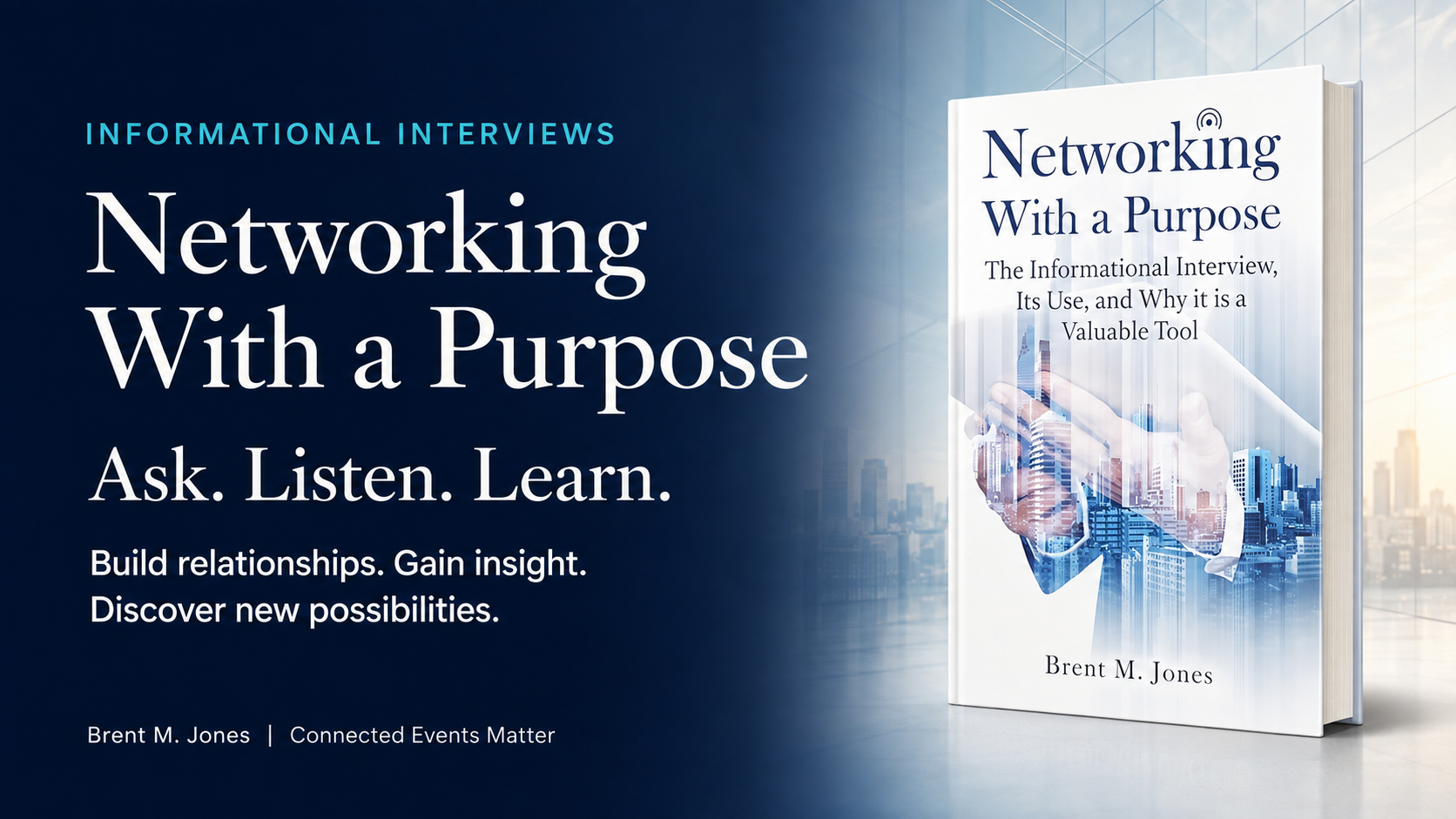
In March 2023, I published Networking With a Purpose: The Informational Interview, Its Use, and Why It Is a Valuable Tool. I wanted to make this process easier to understand and put into practice.
The book explains the purpose and benefits of informational interviews, offers strategies for building a network, and includes a step-by-step guide and sample questions.
These skills remain useful long after a job search ends. Knowing how to ask, listen, and build relationships can help you understand your customers, make better career decisions, and see possibilities you might otherwise miss.
Start with one question you genuinely want answered. Then think about who could help you understand it.