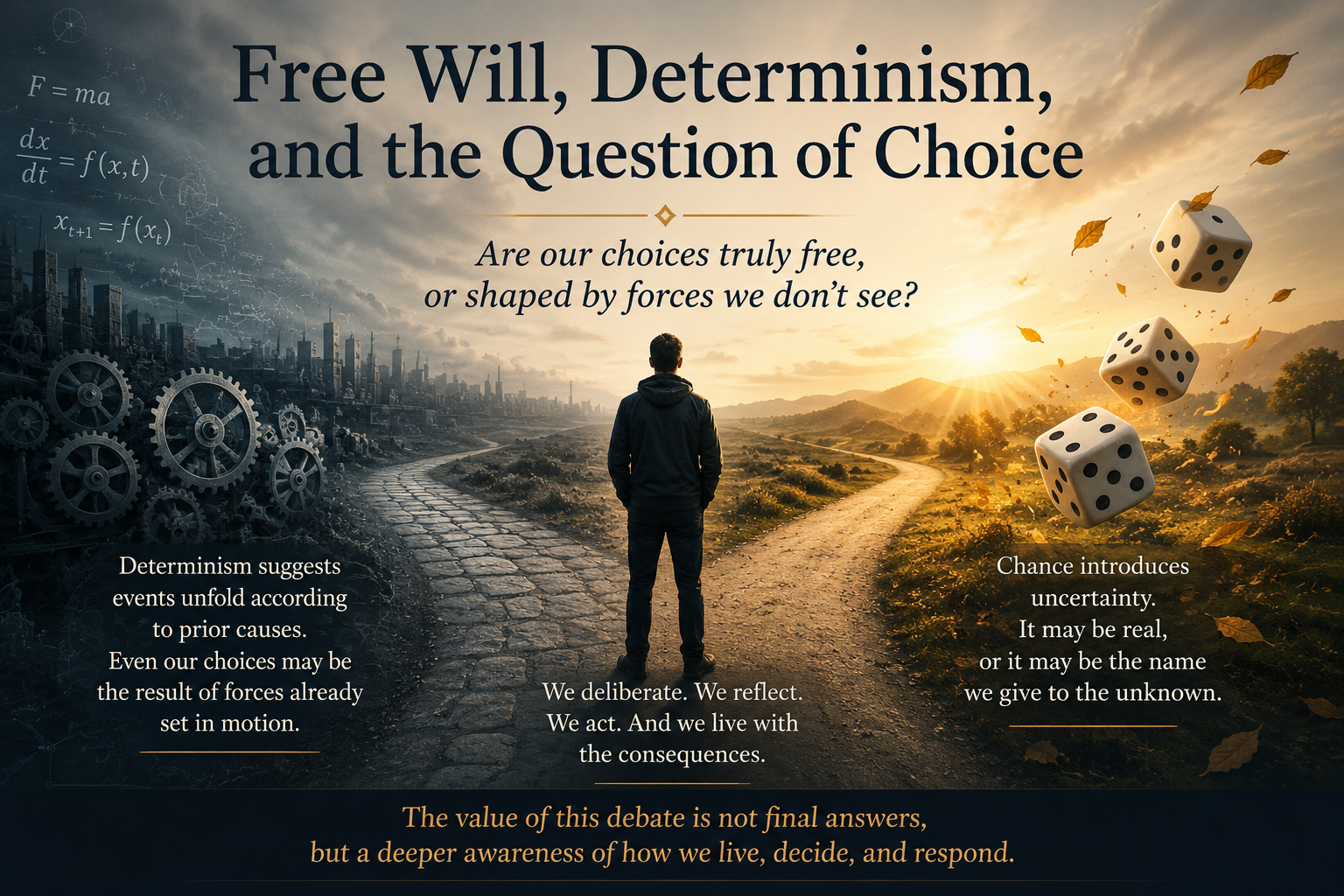
Determinism suggests that everything that happens, including human thought and behavior, is the result of prior causes. Under this view, events unfold according to laws of nature, leaving little room for genuine choice. Even our decisions may simply be the outcome of forces already set in motion.
Free will presents a different picture. It assumes that individuals can choose, act, and be held responsible for those actions. Moral responsibility depends on this belief. If we are free to choose, then our decisions matter, and accountability follows.
The tension between these two ideas has occupied philosophers and scientists for centuries. If everything is predetermined, responsibility becomes difficult to defend. If choice exists, then human agency carries real weight. The debate remains unresolved, but it continues to shape how we think about ethics, science, and personal responsibility.
There is another question often left on the margins of this discussion. What role does chance play?
Some argue that chance introduces genuine uncertainty into human life. Others see chance as merely a name we give to complexity we don’t yet understand. Whether chance is real or illusory, it complicates the simple divide between freedom and determinism.
What seems to persist, regardless of where one lands philosophically, is the experience of choosing. We deliberate. We reflect. We act. And we live with the consequences.
Perhaps the enduring value of this debate is not that it gives us final answers, but that it reminds us to pay attention to how we live, decide, and respond to the circumstances we’re given.
These questions about chance and choice are explored more fully in Embrace Life’s Randomness, where uncertainty is treated not as a flaw in life, but as one of its defining features