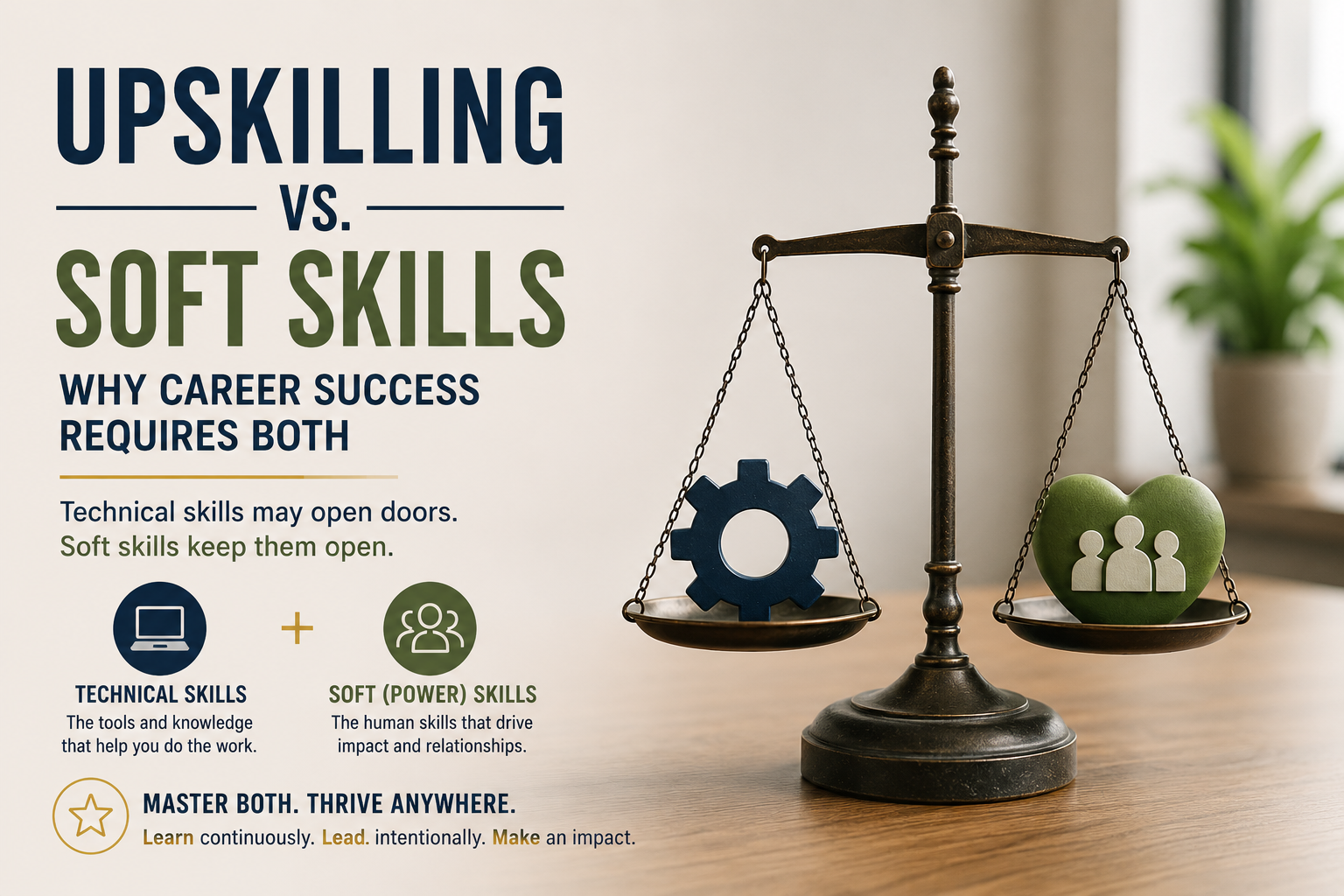
The modern workplace changes quickly. New technologies emerge, industries evolve, and job requirements shift. As a result, organizations and professionals have become increasingly focused on upskilling, the process of learning new knowledge and developing additional capabilities to remain competitive.
Most discussions about upskilling focus on technical abilities. Learning data analytics, artificial intelligence, cloud computing, or industry-specific software can create new opportunities and increase professional value. Technical skills matter because they help people perform increasingly complex work and adapt to changing business needs.
But there is another side to career success that receives far less attention.
Soft skills.
Communication, adaptability, emotional intelligence, problem-solving, collaboration, and leadership are often referred to as soft skills. In recent years, many organizations have started calling them "power skills" because their influence extends far beyond interpersonal relationships. These abilities shape how people work together, solve problems, manage change, and lead others.
Technical skills may help someone secure an opportunity, but soft skills often determine how far that person advances.
A highly skilled employee who cannot communicate effectively may struggle in team environments. A manager with impressive technical knowledge may fail to inspire trust or build engagement. An organization can invest heavily in new technologies, but if employees cannot collaborate, adapt, and communicate effectively, those investments rarely reach their full potential.
The workplace increasingly rewards professionals who can combine both skill sets.
Organizations benefit when learning and development programs address technical capabilities and interpersonal development simultaneously. Mentoring, coaching, and cross-functional experiences often help employees develop communication, leadership, and relationship-building skills that cannot be learned from software tutorials alone.
For professionals, the lesson is equally important. Continue developing your technical expertise. Stay curious. Learn new tools and remain adaptable. But invest just as intentionally in the skills that make you effective around other people.
Learn to communicate clearly. Listen carefully. Develop emotional intelligence. Become someone who can lead discussions, build trust, and navigate change.
Technology will continue to evolve. Job titles will change. New skills will emerge and others will become obsolete.
The human side of work remains remarkably consistent.
Career success rarely comes from choosing between technical skills and soft skills. It comes from understanding that both are essential.
Hard skills may open doors.
Soft skills often determine what happens after you walk through them.