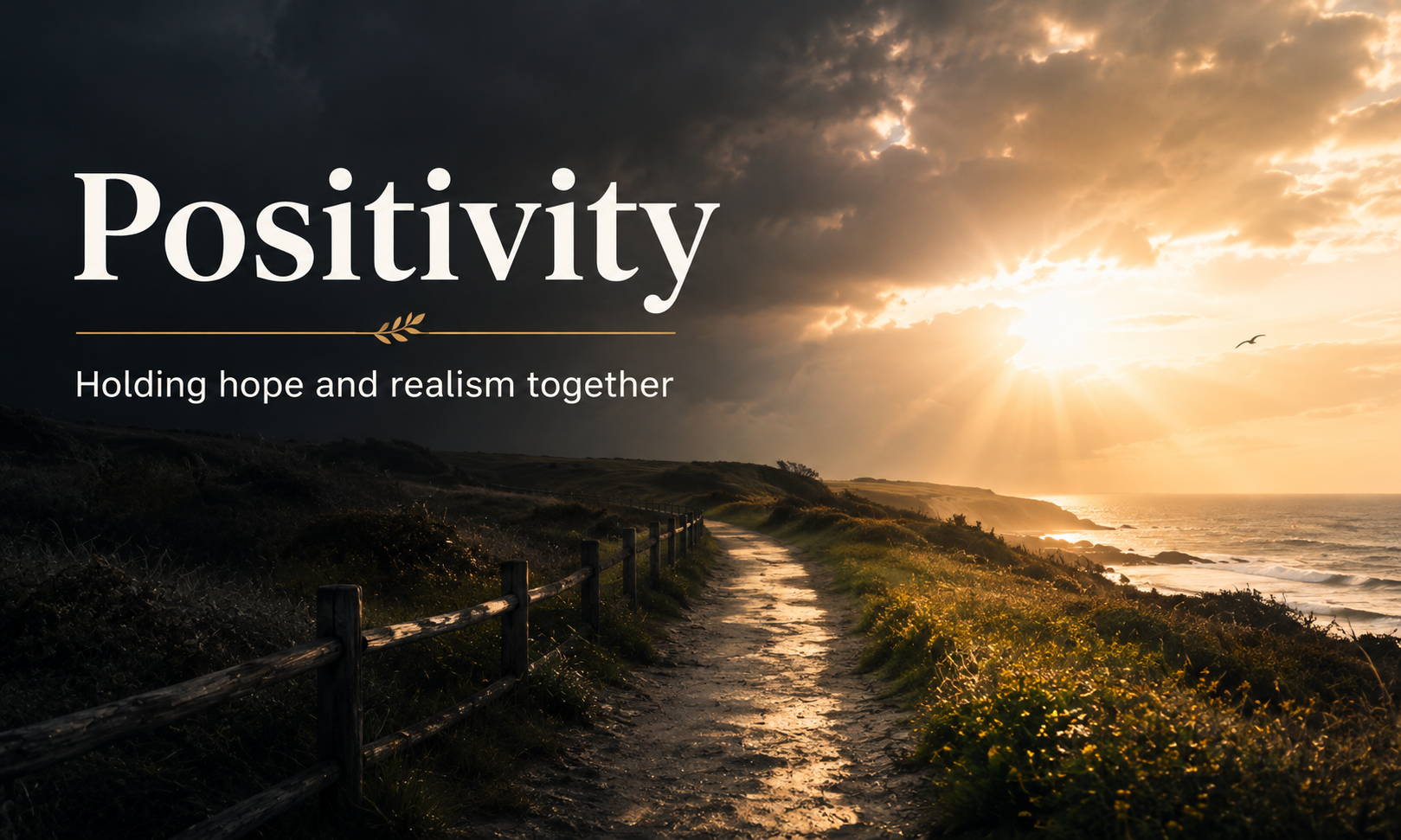
Positivity is often treated as a direction, something we move toward by turning away from what's difficult. We're encouraged to focus on the good, stay optimistic, and "keep things positive," as if positivity exists on its own, separate from doubt, loss, or struggle.
But positivity doesn't live in isolation.
The more I reflect on it, the more I believe positivity requires balance, not as a limitation, but as the very condition that gives it meaning.
Infinity offers a useful metaphor. It feels limitless, expansive, without edges. Yet even infinity has direction. Positive and negative stretch endlessly in opposite directions, mirroring one another. When we consider both together, something subtle appears between them: not emptiness, but balance.
Zero isn't nothing.
It's a meeting place.
In human terms, positivity works much the same way. When optimism ignores difficulty, it risks becoming denial. When it refuses to acknowledge pain, it loses depth. And when it insists on brightness at all costs, it can unintentionally silence genuine human experience.
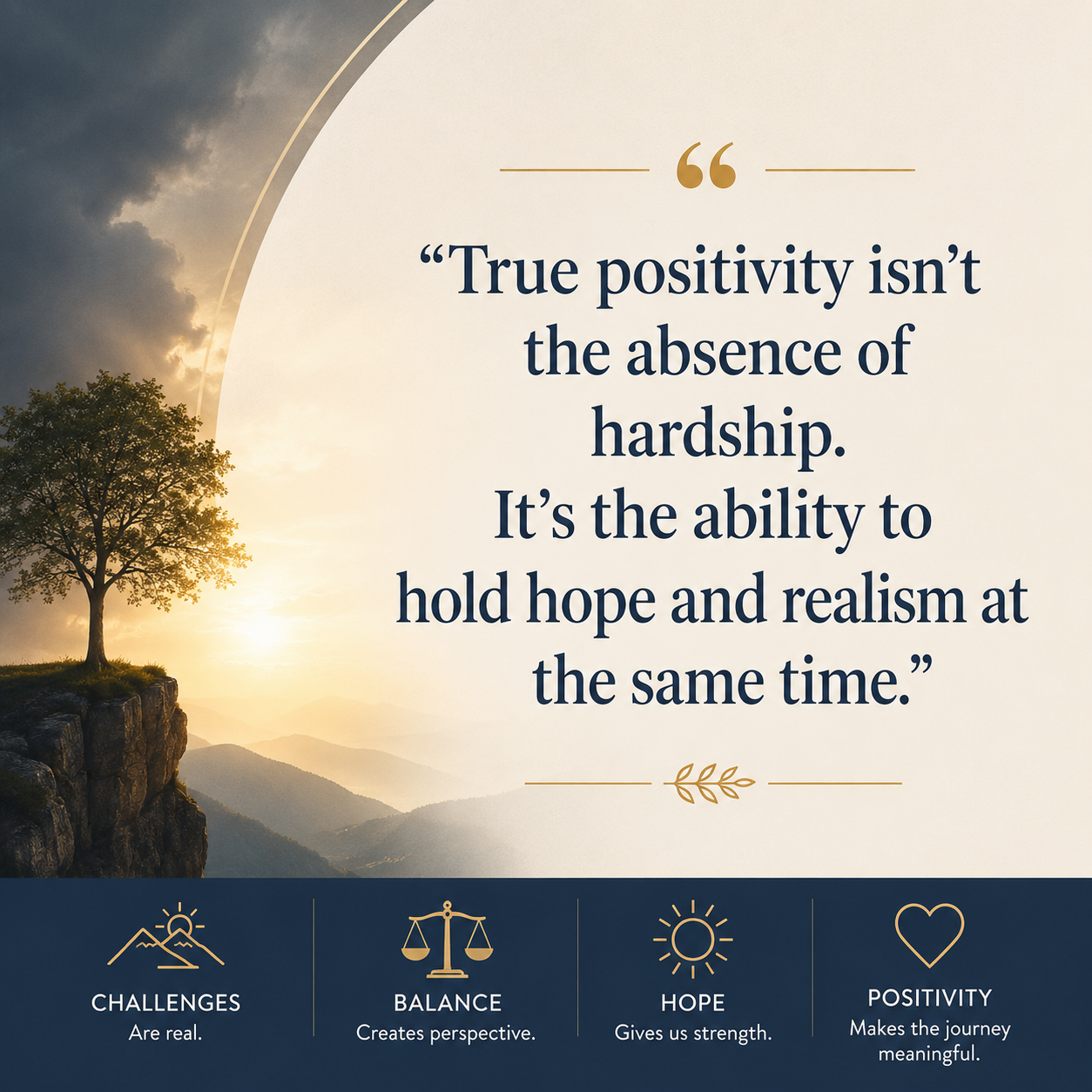
True positivity isn't the absence of hardship.
It's the ability to hold hope and realism at the same time.
Every positive experience, joy, growth, peace, success, draws meaning from the possibility of its opposite. Gratitude deepens when we've known loss. Peace feels more authentic after turbulence. Growth rarely appears without struggle pushing against it.
This doesn't mean we dwell on the negative.
It means we understand its purpose.
Positivity isn't about pretending the shadow isn't there. It's about recognizing that light becomes meaningful because shadow exists. The two are not enemies. Together, they give life its depth and contrast.
In that sense, positive thoughts aren't fragile ideas that must be protected from reality. They are resilient perspectives shaped by it. They don't eliminate uncertainty.
They coexist with it.
Perhaps positivity isn't something we maintain through constant effort or discipline. Perhaps it's something that emerges naturally when we allow balance to exist.
In daily life, this balanced perspective often appears in small, ordinary moments. It's the ability to acknowledge a difficult day without letting it define the whole story. To hold disappointment without surrendering hope. To recognize progress even when the path feels uneven.
Positivity, lived honestly, isn't about forcing optimism.
It's about remaining open to meaning as it moves, shifts, and quietly reappears in the middle of real experience.
Perhaps that is why balance matters so much.
Without contrast, even light loses its brilliance.
The relationship between balance, perspective, and authentic human growth is one of the central ideas explored throughout The Human Factor. If these reflections resonate with you, you may enjoy continuing the conversation there.
Learn more about The Human Factor.