Exploring the unexpected connections that shape our lives
Book Reviews, Comments & Stories, Quotes, & Poetry & More
"Connections and Why They Matter"
Most of what happens in our life will spark a connection. Life connects with what has been found in books. Books connect with what happens in life. Use the connections to help you see more clearly. A love of reading and writing is what motivated the creation of this blog. Thank you for coming to the blog.
The title matters. The cover matters. Reviews matter. Pricing, advertising, timing, categories, keywords, and visibility all matter.
But none of those things answers the question a potential reader is really asking:
What will I get from reading this book?
That may be the most important question in book marketing.
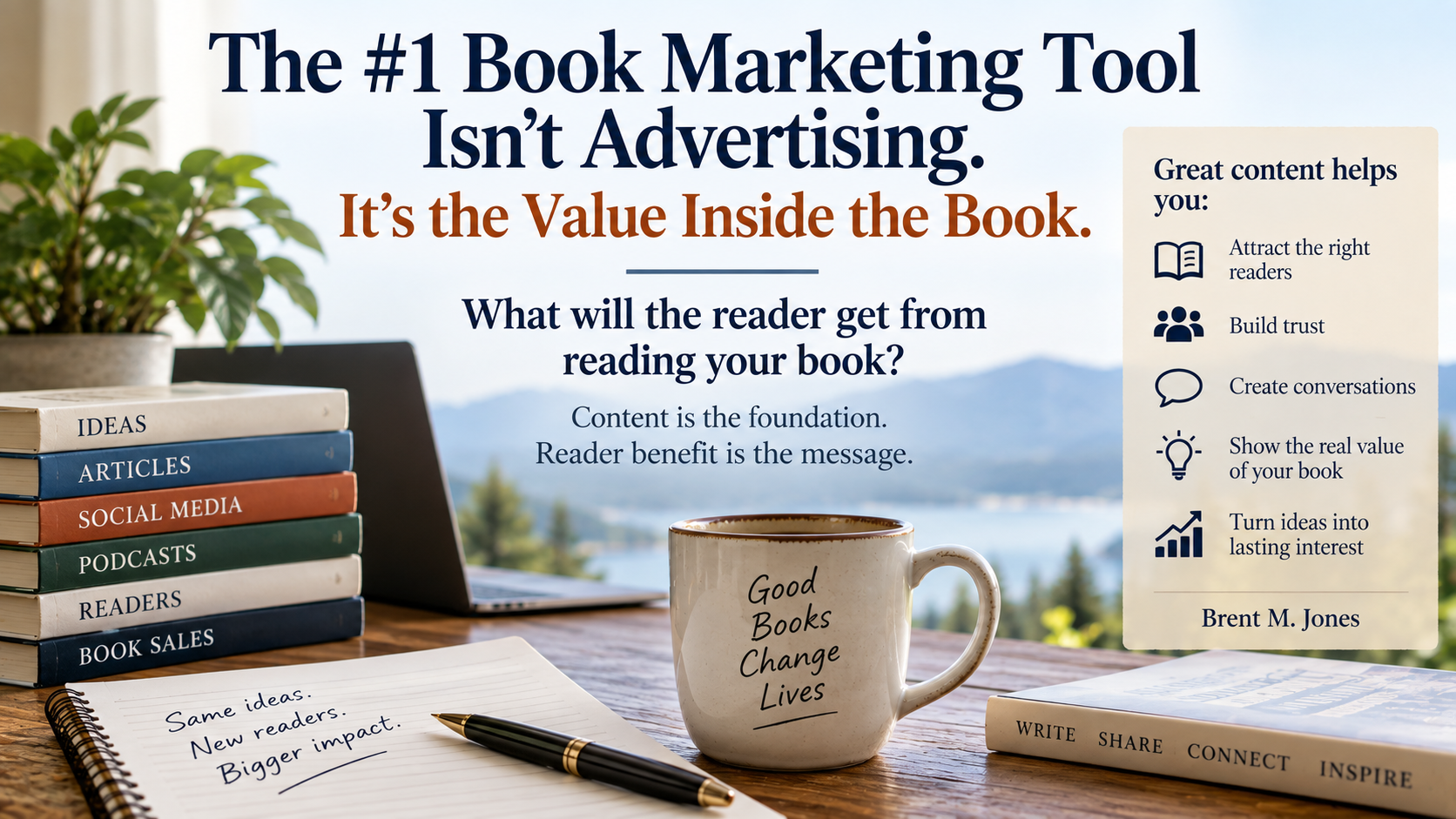
Content Matters, but Reader Benefit Matters More
Writers naturally think about what their books are about.
Readers tend to think differently.
They want to know what the book will do for them.
A book may be about communication. The reader may want to become better understood.
A book may be about finding purpose. The reader may want greater clarity about what to do next.
A book may be about relationships. The reader may want to understand why certain relationships affect them so deeply.
A book may be about the small moments that shape a life. The reader may want to better understand the experiences that made them who they are and what those experiences can teach them now.
That's the difference between describing content and communicating benefit.
And it changes how we market a book.
Don't Just Tell Readers What Your Book Contains
Authors often promote books by listing what's inside them.
"This book explores communication, relationships, identity, change, and personal growth."
That's useful information, but it doesn't give the reader a strong reason to buy.
Compare it with:
"This book can help you recognize the experiences that shaped you, understand what still matters, and make more intentional choices about what comes next."
Now the focus is on the reader.
The content hasn't changed. The marketing has.
Your Book Marketing Should Answer One Question
Before writing an advertisement, social media post, book description, email, or website page, ask:
What does the reader gain from this?
The answer doesn't always have to be dramatic.
A book doesn't need to promise to transform someone's entire life.
The benefit might be greater clarity.
A new perspective.
A better understanding of themselves.
A practical way to handle a problem.
Language for something they've felt but haven't been able to explain.
A sense that someone else understands an experience they've had.
Those are real benefits.
And they give people a reason to keep reading.
Content Gives Marketing Something to Say
This is why I still believe content is one of the most important book-marketing tools.
Good content gives you material to market.
One idea from a book can become an article.
One question can become a Substack post.
One sentence can become a social media post.
One insight can become a Pinterest pin.
One chapter can lead to several discussions.
Instead of repeatedly telling people "Buy my book," you demonstrate the kind of thinking they will find inside it.
The marketing becomes a sample of the value.
That is much more persuasive.
Seven Ways to Turn Your Book's Content Into Marketing
You don't need seven completely different marketing messages. You need a strong central idea that can be adapted to different places.
You can use your book's content through:
Articles and guest posts that explore one useful idea from the book.
Podcast and blog interviews built around questions the book helps answer.
Social media posts that offer an insight before mentioning the book.
Videos that explain one idea, question, or problem in a few minutes.
Reader communities where you can contribute to relevant conversations rather than simply promote.
Email and Substack where readers can regularly experience your ideas.
Your own website where articles, essays, and book pages connect your ideas with the books that explore them more deeply.
The channel changes.
The principle doesn't.
Give readers something valuable before asking them to buy something.
A Cover Gets Attention. A Benefit Creates Interest.
A strong cover can make someone stop.
A strong title can make them curious.
An advertisement can put the book in front of them.
Reviews can reduce their uncertainty.
But at some point, the reader still has to think:
"This sounds like something I want to read."
That happens when they recognize themselves, their interests, their questions, or their problems in what you're offering.
That's why effective book marketing shouldn't begin with:
What do I want to tell people about my book?
It should begin with:
What does my reader want, and how does my book help provide it?
That's a small change in thinking, but it can change almost every piece of marketing you create.
The Book Is Still the Product
Marketing can generate attention. It can't manufacture lasting value.
If the advertising promises something the book doesn't deliver, the marketing may produce an initial sale, but it won't produce satisfied readers, recommendations, or strong reviews.
The strongest approach is when the book and its marketing make the same promise.
The title introduces it.
The cover supports it.
The description explains it.
Your articles and social posts demonstrate it.
And the book delivers it.
Content is the foundation. Reader benefit is the message. Marketing is how we connect the two.
Reading increases our knowledge of the world. The attraction of words and the stories they create is like living multiple lives. But of course, that is the real message here, but there is no harm in considering what kind of book might be regarded as the best, format-wise.
I prefer the hardback format when I read a book, but where do you put them? At least they look good on a shelf, but I need more room with about 2000 + books (both hardback and paperback) in my library. Paperback books are number 1 in sales, indicating they are preferred over hardbacks.
The jury is still out for me on eBooks, but the more I get, the more I like them.
An entire library is a significant influence, so the quantity of books matters.
Big established publishing companies and established authors like the hardback because they make more money for them.
My thoughts about this are very different as a self-published author. I love eBooks because they are easier to do than paperback. Shorter books don’t cost as much to produce, and storage is no problem. Paperbacks are my favorite because they seem more like actual books.
75% of adults in the United States read a book in some format over the last year
32% of Americans claim they only read print books
33% say they read both print books and e-books
9% say they only read e-books
23% of the respondents said that they don't read books
10 Reasons that Paperback Books are Best, Compared to Hardbacks
Paperbacks Books are easy to take with you everywhere.
You can bring more of them with you when you travel. (compared to hardbacks, that is)
Paperbacks don't break the bank. (Again, compared to hardbacks)
You can fit more of them on your shelves.
It's easier to lend them to a friend. (Again, compared to hardbacks
They're easier to read on the train or in the car.