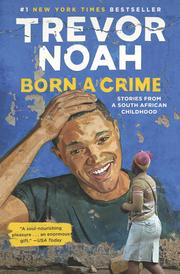
About Trevor Noah and His Book, "Born a Crime"
Before reading this book I didn't know who Trevor Noah was and I knew nothing about growing up in South Africa in the 1980's and 1990's.
On the dedication page Trevor writes: "For my mother, My first fan. Thank you for making me a man." His thoughts about his mother throughout this story explain a lot.
His story of his becoming a man is inspiring, I starts with the country under apartheid and then the transition that followed it.
Trevor's mother Patricia taught him to face injustice with humor and that must have sowed the seeds for who he is today.
“If my mother had one goal,
it was to free my mind.”— Trevor Noah
His birth into this world began as a criminal act. He was "Born a Crime", to a white Swiss father and a black Xhosa mother at a time when such a union was punishable by five years in prison.
During the early years of his life he spent most of his time inside so as not to be noticed. The government could have taken him away from his mother and his dad didn't live with them and couldn't even walk by him on the street.
After Apartheid ended a time came when he and his mother began a new life trying to live openly and freely but they still had many challenges with life the different groups and subgroups.
"language, even more than color, defines who you are to people.”
“Chapter 4: Chameleon"
"it is useful to know the language of your oppressor."
“Chapter 4: Chameleon”
Trevor was smart and his education and resourcefulness was his life line to success.
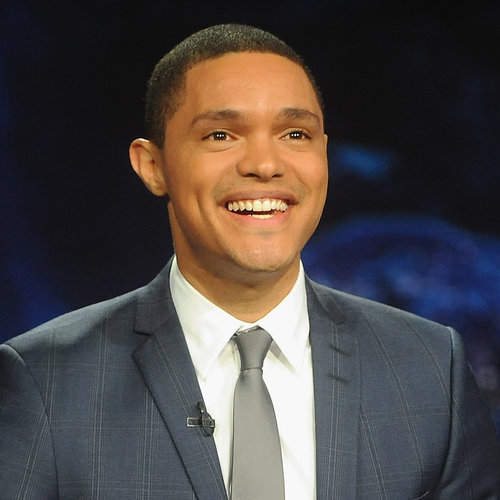
The book is his memoir of growing up in South Africa. It was challenging, sad, and even funny, but the true story of the book is in his love for his mother. The Trevor America knows best is of him from the desk of the Daily Show.
If you want to buy Born a Crime through your own Amazon Account hit the buy button below and then proceed with it takes you to Amazon
He has a facebook page.
https://www.facebook.com/OfficialTrevorNoah/
He also has an instagram account.
https://www.instagram.com/trevornoah/?hl=en
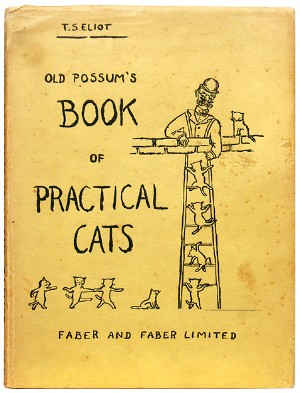
Old Possum's Book of Practical Cats, & Cats, the Musical
I loved the Play "Cats". It tells a story based on the poems from T.S. Eliot’s book- “Old Possum’s, Book of Practical Cats. My very favorite part of the play was the beginning of the second act. As it started out it said- “We had the Experience but missed the meaning”. We don't want our lives to be like that, we want to find the meaning of our experiences.
The story is of a tribe of cats called the "Jellicles" and the night they make "the Jellicle choice", which was to decide which cat will ascend to the Heaviside Layer and come back to a new life.
Andrew Loyld Webber produced the play. Late in the production, and probably not part of the original plan, the director, Trevor Nunn, wrote the song Memory. He based it on T.S Eliot’s poems, “Preludes” and “Rhapsody on a Windy Night”. The song, "Memory", proved to be the most popular song from the play. It was sung by the cat character Grizabella who was once a glamour cat but had become only a shell of her former self. The song is a remembrance of her glorious past and of her wish to start a new life. It is presented in the first act, but then again near the beginning of the 2nd Act. The song results in Old Deuteronomy choosing Grizabella to be able to go back and have another life.
Music has a way of taking us back to a time and a place. Memories are found by the music, as it seems to activate the brain. This happens in the medial prefrontal cortex region of the brain, which is one of the last to be changed with Alzheimer’s disease. That may help to explain why music can elicit such strong responses from people with Alzheimer's disease.
Many songs will bring back specific memories for us. Musicals often introduce songs, that are so powerful years later they easily bring back the first time you heard them. Examples of musicals that do this well are: Les Miserable, Phantom of the Opera, and Cats.
Memory
Barbra Streisand recorded “Memory” in 1981. Her presentation was awesome. It seems like it was made just for her to sing. The song took Grizabella and those that heard it back to a time and place and those memories expressed earned her another life.
In 2009 when Scottish singer Susan Boyle performed this song, at her audition for the third series of the British reality TV show Britain's Got Talent, her career sky rocketed. She seemed in many ways to be the character Fantine.
The Song
Midnight, not a sound from the pavement, Has the moon lost her memory, She is smiling alone In the lamplight, The withered leaves collect at my feet. And the wind begins to moan
Memory, all alone in the moonlight, I can dream of the old days, Life was beautiful then, I remember the time I knew what happiness was, Let the memory live again
Every street lamp seems to beat, A fatalistic warning, someone mutters and the street lamp sputters, and soon it will be morning
Daylight, I must wait for the sunrise, I must think of a new life, And I mustn't give in, When the dawn comes, tonight will be a memory, too, and a new day will begin.
Old Possum's Book of Practical Cats, & Cats,
Homo Deus, A Brief History of Tommorrow
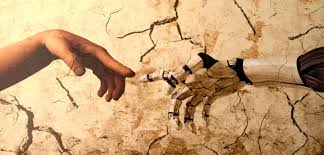
Yuval Noah Harari, the author of "Homo Deus, A Brief History of Tomorrow", builds on the past and projects the "History of Tomorrow". He writes that the 21st century will brings a big shift in the trends of events that will have a real impact on life as we know it and then asks, "what if we actually found a way to achieve “bliss, immortality, and divinity?”
Achieving these goals sounds good but he explores the down side if it turns out that only a small select group accomplish this by upgrading themselves through biotechnology and genetic engineering, and then leaving the masses behind. The "Homo Deus" of the future might just be the special few who, using artificial intelligence, know us better than we know ourselves.
The book defines the history of humans as "humanism". It adds that "the single greatest constant in history is that everything changes". From this it concludes that looking at humanity according to the humanist creed, where the universe revolves around humankind, will also change.
Humans throughout history have sought for deliverance from famine, disease, and war, and have done so with some success. The resulting toll on humanity looking back has been huge, but today your more likely to commit suicide than be murdered, and are more at risk of dying of obesity than starvation. This book talks about how delicate life has been, but it also compares the past with the real progress that has been made and what changes may occur next.
In the book’s final section, Harari talks about a change in religion in which the greatest moral good is to "increase the flow of information". This new religion “has nothing against human experiences,” he writes; “It just doesn’t think those experiences have intrinsic value.” What has value is "information" and it is the new religion.
The book looks into much of what has traditionally defined humanity and then takes those trends in surprising directions. Whether you agree with the conclusions or not it is an interesting book to read.
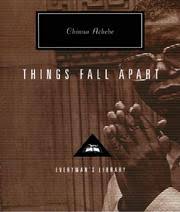
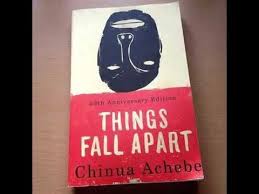
Things Fall Apart, by Chinua Achebe
It has been at least 20 years since I first read “Things Fall Apart” and discovered it's author, Chinua Archebe. The book must have resonated with others because today it is the most translated African work of all time. It has been translated into 50 languages and has sold over 8 million copies.
In “Things Fall Apart” the main character was Okonkwo from a village in Nigeria. He was a warrior, father, and husband. A single minded hard man.
In the beginning of the book the Africans appeared uncivilized. As the book proceeded we understand that they were indeed a African tribe with strong traditions and values.
The dignity and humanity of their lives just falls away with the influence of the white missionaries and intruders, whose teachings are foreign to the tribe and of which resistance is impossible. The Christian salvation just doesn't resonate.
Okonkwo can't change himself, and seems to be alone in his understanding of what is happening, and he commits suicide. The culture is lost and a civilization is lost
Quotes
“The white man is very clever. He came quietly and peaceably with his religion. We were amused at his foolishness and allowed him to stay. Now he has won our brothers, and our clan can no longer act like one. He has put a knife on the things that held us together and we have fallen apart.”
“There is no story that is not true, [...] The world has no end, and what is good among one people is an abomination with others.”
The Lovely Bones
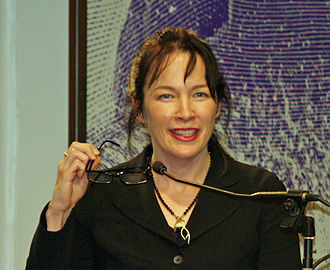
Alice Sebold, author of "The Lovely Bones" in 2007
"The Lovely Bones", by Alice Sebold, was published in 2002. It has sold millions of copies and been on best sellers lists for year. When you see all the reviews you find that many people love it but many hate it. It is dark and not for young kids but it has a different approach. The book is a commentary from heaven by the brutally murdered victim of as serial killer and pedophile.
“My name was Salmon, like the fish; first name, Susie. I was fourteen when I was murdered on December 6, 1973.” This is the first sentence but it is Susie’s voice that tells of her brief life, her tragic death, and the decade that follows as she sees it from heaven.
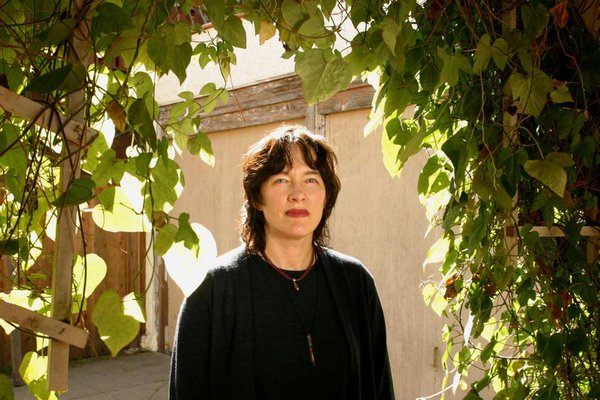
The author, Alice Sebold’s, first book was not fiction and dealt with her own death. In this book Susie Salmon tells of her own rape and murder by a neighbor. In a controlled matter of fact voice she tells of the deep emotions and grief of her family over the years that follow. The struggles of both her parents, sister, and brother. She watches everyone she knew on earth including her killer from heaven. After she died as she moves on into “her heaven” and it was her friend Ruth that her soul briefly touched as it left.
Ruth then becomes friends with Ray Singh who was the first and only boy to have kissed Susie. She eventually comes back briefly using Ruth’s body and has one more experience with Ray.
Her parents have very different reactions to the tragedy and their stories that follow the event are a lesson or at least an experience in grief and in love. The tenderness of their feelings for each other add a lot to the story.
Susie says of her life and the time that follows it: “The events that my death wrought were merely the bones of a body that would become whole at some unpredictable time in the future.”
The ending of the book shifted the dialog form the "matter a fact" overview of most of the book. The value of the story is not in the ending but in the feelings shared all through the book. I felt it was well written in a graceful style.
This paragraph comes on the page before Chapter One.
Inside the snow globe on my father's desk, there was a penguin wearing a red-and-white-striped scarf. When I was little my father would pull me into his lap and reach for the snow globe. He would turn it over, letting all the snow collect on the top, then quickly invert it. The two of us watched the snow fall gently around the penguin. The penguin was alone in there, I thought, and I worried for him. When I told my father this, he said, "Don't worry, Susie, he has a nice life. He's trapped in a perfect world."
"The Heart A Novel"
The French author, Maylis De Kerangal, wrote this novel about three 20 year old French men who go surfing in the middle of the night and on the way back they have a terrible accident and one man dies.
The book starts with the sentence: "The thing about Simon Limbres's heart, this human heart, is that from the moment of his birth, when its rhythm accelerated, as did the other hearts around it, in celebration of the event......................" . The sentence continues for more than a page.
Many of sentences are long and often are as poetic as this first one. You find yourself seeing this human, and his connection to his heart, differently. The story really is about his heart, his death, and the care and grief that follow. The heart and the event itself has a poetic feel to it because of the writers approach.
Bill Gates review this book and called it "A poetic novel about grief".
Kirkus review said "Doctors and other medical experts hasten to prepare a young man’s organs for transplant and reckon with the need to be both compassionate and precise in a hurry." The story of the heart and the young man are seen from the parents, friends, hospital staff, doctors, and even the body itself's experience with this tragic event. We share in the grief and the book is one you will not want to put down
Lincoln's Greatest Speech
Lincoln's Greatest Speech, The Second Inaugural by Ronald C. White Jr. is a treasure.
The "Contents" page captures the unique approach that the author, Ronald C. White Jr., approached this book with. Each chapter is a focus on on of eight key area of the speech.
Chapters
1. "Inauguration Day"
2. "At this second appearing.."
3. "And the war came".
4. "Somehow, the cause of the war..."
5. "Both read the same Bible & pray to the same God.."
6."The Almighty has His own purposes."
7. "Every drop of blood drawn with the lash, shall be paid by another drawn with the sword".
8."With malice towards none; with charity for all..."
A favorite thought worth pondering is in the third verse of chapter 5. It says,
"Both read the same Bible, and pray to the same God ; each invokes His aid against the other. It may seem strange that any men should dare to ask a just God's assistance in wringing their bread from the sweat of other men's faces: but let us judge not that we be not judged. The prayers of both could not be answered; that of neither has been answered fully".
"Wringing their bread from the sweat of other men's faces" reminds us of Genesis 3:19 where it says that "By the sweat of thy face you will eat bread". Addressing slavery in this way is brilliant.
Lincoln's surpassed any previous President with his use of the Bible in his speeches. This speech acknowledged the universal use of the Bible on both sides of the war and in doing so brings God's influence and leverage into the discussion.
The book helps understand the deep insights of the "The Second Inaugural, Lincoln's Greatest Speech. The best summary statement of this effort is from Lincoln:
"I claim not to have controlled events, but confess plainly that events have controlled me".
The Cat In The Hat / Should Adults Read Kid Books?
C.S. Lewis said, "A children's story that can only be enjoyed by children is not a good children's story in the slightest."
Albert Einstein said, “If you want your children to be intelligent, read them fairy tales. If you want them to be more intelligent, read them more fairy tales.”
The Cat in the Hat, by Theodor Geisel (Dr Seuss), was first published in 1957. It is a story about a tall human like cat who dresses in a red & white striped hat with a red bow tie.
With his companions, "Thing One & Thing Two" they try to entertain some neighbors and wind up wrecking the house. Finally the Cat uses a special tool to clean everything up. He then says his goodbyes and disappears just before the children's mother walks in.
The book offers lessons that need to be learned. For example The Cat in the Hat is about stranger danger. Although it may seem fun to let a big cat into your house, maybe think twice. That's just common sense for all ages.
This is the book that made Dr Suess famous. It kicked off an emphasis on beginning readers books. The focus on imagination for the characters and the ease of reading resulted in these books being read over and over again. Ok, the truth is they are often read every night. Many kids learned to read from them.
Characters: The Cat in the Hat,Thing One,Thing Two, Sally, Sally's brother, Fish & Mother
"Don't Forget the Oatmeal"
"Don't Forget the Oatmeal" was published in 1980. Many think of it as one of their favorite books growing up.
Our family remembers it as one that was read to my oldest son very, very often.
The story is pretty simple. A list is worked on for the grocery store and several reminders to "not forget the oatmeal are given". Bert and Ernie go to the store but Cookie Monster somehow is there. Cookie Monsters efforts to find the cookies becomes a focus. Problems follow.
Please forgive me for letting some of the story leak out here. I know this is wrong (never do spoilers in important book reviews) but I am going to leak what happened.
"They forgot the oatmeal!"
Key Characters, in this very important story, are Bert, Ernie and Cookie Monster. Well worth re-reading. O yes, the book is educational.
Thoughts on a The Writing Life or Ramblings that Suggest Thoughts
I read the book, The Writing Life, by Annie Dillard for the first time in 2001 and again in 2015. I just finished it again. (I mark the date inside the cover when I read a book because I often re read them)
This book is like a lot of books written by accomplished and skilled writers. The comments of the critics written on the back cover of the book reveal a common thread to these type of books. "A kind of spiritual....". "For non-writers, it is a glimpse into the trails and satisfactions.....". "Anyone hoping to see inside the process of literary artistry....", are some comments from "The Critics Praise".
Looking at how many of these books flow, it seems to me that they both pontificate and at the same time evangelize the life and thought processes of the writer.
The New York Times said "Annie Dillard is a wonderful writer and "The Writing Life" is full of joys." She is a great writer but the book doesn't push her joys as much as it suggests the struggle of writing.
It talks of laying out words. Words written and discarded and the long time it takes. Writing in an isolated place sometimes a cabin or special room. When it mentions things like cabins, rooms or typewriters it goes into great detail. Daily routine is always included and is explored in great detail. The routine seem to suggest that a process is like marks on a trail that have to be found to get to the destination,
After detailing out the processes and everything that has popped into their mind, these "Writing Life" authors seem to get to the same point. The plot and story just happens. The characters sort of tell the author what to write. Well learn that well defined characters can have thoughts of their own. Sometimes the words just pops into the writers mind. Creativity just happens when perhaps you are living the life?
Steven King's book, "On Writing" is similar in some ways. He has his routine and tool chapters, but the writing itself seems to demonstrate what great writing can be.
PS: New Post in What Matters Section...............The Picture section consists of pictures I took or like and have made me think.
A Liberal Society vs's Totalitarian Society
A war of ideas. Discusses two different universes of reference, two civilizations and two cultures.
The Western impulse is to rebel, and can be traced back to an impulse to rebel against God. The struggle testifies to the sincerity of ones beliefs. It may also strengthen the beliefs.
In the Muslim tradition there is no impulse to rebel. They have no struggle or temptation to rebel. Submission is everything. Another way to look at it might be considered a life with agency vs's no agency. The irony of the position is that it asks total obedience to secret leaders whose principles are to break every principle.
This book was written by Paual Berman in 2004 but has even more relevance today.
See pictures section May 30th for information on what snails eat. Has nothing to do with anything
Ellis Kackley, Best Damn Doctor in the West /The Best Story is You!
Dr. Kackley lived in Soda Springs Idaho and helped those in the small towns in that part of Southeastern Idaho. He was a doctor for Butch Cassidy on a few occasions. These small towns were wild and growing fast in the late 1800's and early 1900's. The small towns often had two sides. One wild with gambling and all that went with it and the other hard working ranchers and farmers.
This book presented a good story and was well down but it was particularly interesting to me because our families pioneered the settlements throughout the areas mentioned in the book and a real life like experience is felt from the book For example, we don't know if Great Great Grandma **Ruth worked directly with Dr. Kackley, but the towns and the dates match perfectly.
Dr. Ellis Kackley was instrumental in the construction of the Caribou County Hospital in Soda Springs Idaho. With a $30,000 bond and his $3,000 donation the 30 bed hospital opened it's doors on December 1, 1925. He and his son, Dr. Evan Kackley donated much of the medical equipment. The hospital served the county until 1969 when the new Caribou Memorial Hospital opened.
**Ruth grew up and was the mother of ten children. She worked helping those in need and also went as doctor and nurse to every home where sickness prevailed.
Stephen King On Writing / A short course and a clear example!
Stephen King is the master craftsman of writing. He tells us a lot about himself in his book, "Stephen King On Writing, A Memoir of the Craft".
Early in the book he says:
"You must not come lightly to the blank page".
The irony of this quote is that this book was completed after his his very serious accident. He was hit head on while walking along along the gravel shoulder of Maine State Road Route 5. It was his habit to walk along this same road in the country near his house. It was June 19, 1999 at about 4:30 PM when a van coming towards him hit him. H e flipped and flew through the air landing 14 feet from the road.
When this terrible accident happened this book was about half way through the first draft. He offers a lot of detail on the event and his recovery. You really see that he did not indeed re-approach his writing lightly.
The book covered events from his life growing up, school experiences, his marriage, early efforts at writing and his first big success, the book Carrie.
He discusses the craft of writing and offers examples that are a real help. The whole book, life history and all, were examples of writing style and you learn just from reading it. Another statement of his I like is:
If you want to be a writer you have to do two things above all others: read a lot and write a lot.
The idea of why you have to read a lot really didn't sink in for me until I read this book. The reality that you have to read before you learn to write is something that takes time to sink in. This book helped.
The value of reading also changed for me because of Stephen King. I have gotten over feeling I had to be reading only classic literature and have come to value good stories. I enjoy his books but some do scare me. You will have to see which ones scare you but two I could mention for me were "Christine" and "Revival".
Falstaff Give Me Life, by Harold Bloom / Falstaff is a happy fellow it seem! →
I have made some comments below about Professor Bloom and his favorite Shakespearean character, Falstaff.
Harold Bloom is a Shakespeare Scholar and Sterling Professor of Humanities at Yale. He was a former Harvard Professor. He knows the Shakespeare plays like no one alive today.
He has said of Shakespeare that these particular plays are his favorites: Henry IV and parts 1 and 2 of Henry V. Bloom makes this choice because of his appreciation and love of the character Falstaff who has interesting roles in these plays. Bloom thinks of himself as a Falstaff character.
Falstaff is a happy guy (Tragic and Comic). He mocks faith, can be lewd, funny and reckless. When thinking of him Bloom offers these comments for traits: 'age, care, wisdom, & reflection!"
He imagines Falstaff and Socrates meeting in a pub and trading wit. This would be the ideal play script and it has been a wish of his for many years. The idea of one character from one play and then another from another and then someone way back in history meeting and talking would take a deep understanding of what the characteristics and personalities of those involved would be. For Bloom this is no problem and he seems to know the characters extremely well
I hope at 86 I can care enough about some of my reading to imagine my own plots. What focus to have carried the image of character you read about for years. It testifies of both the strength of the author and of the student.
Quotes about Falstaff