

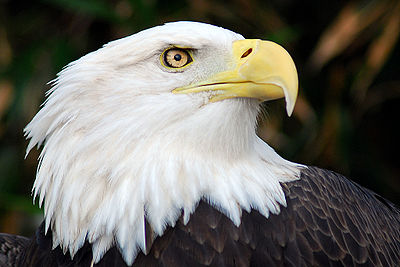
"He clasps the crag with hooked hands;
Close to the sun in lonely lands,
Ring'd with the azure world, he stands.
The wrinkled sea beneath him crawls;
He watches from his mountain walls,
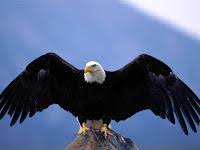
And like a thunderbolt, he falls."
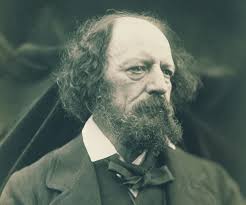

Review of "The Eagle’ by Lord Alfred Tennyson" --
There is a stillness in this poem before there is movement.
The eagle is not introduced in motion, but in position—held, elevated, and alone. The language places it above everything else, not just physically, but in perspective.
“Close to the sun in lonely lands.”
Power, in this sense, is not only height. It is distance.
From that height, everything below appears smaller. The sea does not move as it does to those within it—it “crawls.” Scale changes perception.
But the poem does not stay in stillness.
It ends in motion.
“And like a thunderbolt he falls.”
The shift is immediate. No transition, no hesitation. What was still becomes decisive.
That movement carries a kind of tension.
Height suggests control. Stillness suggests awareness. But the fall reminds us that position does not remove action, it precedes it.
The eagle is not only a symbol of strength. It reflects something more specific: the relationship between perspective and decision.
We often associate clarity with distance, stepping back, rising above, seeing more completely.
But clarity alone is not the conclusion.
At some point, there is movement.
And that movement is rarely gradual.
It arrives with the same suddenness the poem gives it.
The stillness matters. The height matters. The view matters.
But the moment of change is always something else.
It is not observation.
It is action.