Kindness and empathy are closely connected, but they are not the same.
Empathy is the ability to understand or feel what another person may be experiencing. Kindness is the choice to respond with care.
A person can feel empathy without taking action. Another person can act kindly without fully understanding what someone else feels.
That distinction matters because kindness is visible in behavior, while empathy begins internally.
What Is Kindness?
Kindness is a deliberate act of care, generosity, patience, or consideration.
It may be as simple as listening without interrupting, offering encouragement, helping someone complete a difficult task, or treating a stranger with respect.
Kindness does not require a dramatic gesture. It is often expressed through small choices that make another person feel noticed, supported, or valued.
It also does not always depend on emotion.
You may not fully understand what someone is going through, but you can still choose to respond thoughtfully. You can offer help, give someone more time, or avoid adding to their difficulty.
In that sense, kindness is less about what you feel and more about what you decide to do.
What Is Empathy?
Empathy is the ability to recognize and understand another person’s emotional experience.
It asks us to move beyond our own perspective and consider what life may feel like from someone else’s point of view.
Empathy may involve imagining another person’s fear, disappointment, loneliness, confusion, or hope. It helps us listen more carefully and respond with greater sensitivity.
But empathy does not automatically produce kindness.
We may understand that someone is hurting and still remain silent. We may recognize another person’s struggle but feel unsure about what to say or do.
Empathy creates awareness. Kindness turns that awareness into action.
Can You Be Kind Without Being Empathetic?
Yes.
You can behave kindly because you believe it is the right thing to do, even when you do not fully understand another person’s emotions.
A cashier may patiently help a frustrated customer without knowing what caused the frustration. A neighbor may bring food to someone who is grieving without being able to imagine the depth of that loss.
The kindness is still real.
This matters because we sometimes assume that people must deeply understand us before they can support us. In reality, thoughtful action can still be valuable even when emotional understanding is incomplete.
Can You Feel Empathy Without Being Kind?
Yes.
A person may recognize another individual’s pain but fail to respond. They may feel uncomfortable, distracted, afraid of saying the wrong thing, or unwilling to become involved.
Empathy can also become passive when it remains only a feeling.
Understanding that someone is struggling does not help them very much unless that understanding influences how we treat them.
This is why empathy is important, but not sufficient by itself.
Kindness vs. Empathy
The simplest distinction is this:
Empathy is understanding what someone may feel. Kindness is choosing to respond with care.
Empathy helps us see the need.
Kindness helps us meet it.
Empathy can make kindness more personal and appropriate. Kindness gives empathy practical value.
The strongest human connections often include both.
Where Admiration Fits
Admiration is different from both kindness and empathy.
Admiration is the respect or appreciation we feel when we recognize a quality in someone else that we value.
We may admire another person’s courage, generosity, honesty, patience, or compassion. That admiration can influence our own behavior because it shows us what those qualities look like in practice.
When we see someone respond kindly in a difficult moment, we may begin to imagine ourselves doing the same.
Admiration becomes a form of social learning. It does not directly relieve another person’s pain, but it can encourage the spread of behavior worth repeating.
Why the Difference Matters
People sometimes use the words kindness and empathy as though they mean the same thing.
They do not.
Someone may be highly empathetic but emotionally overwhelmed and unable to help. Someone else may not naturally absorb the feelings of others but may consistently behave with patience, generosity, and respect.
Neither experience should be dismissed.
The more useful question is not whether kindness or empathy is better. It is whether our understanding of others is reflected in how we treat them.
Empathy without action may remain private.
Kindness without empathy may sometimes miss what a person truly needs.
Together, they create a more complete response.
How Kindness and Empathy Work Together
Empathy helps us notice.
Kindness helps us respond.
Admiration helps us remember what is possible.
We recognize another person’s experience. We choose to act with care. Someone else sees that behavior and may repeat it later.
That is how values move through families, workplaces, friendships, and communities. Not through declarations, but through visible choices.
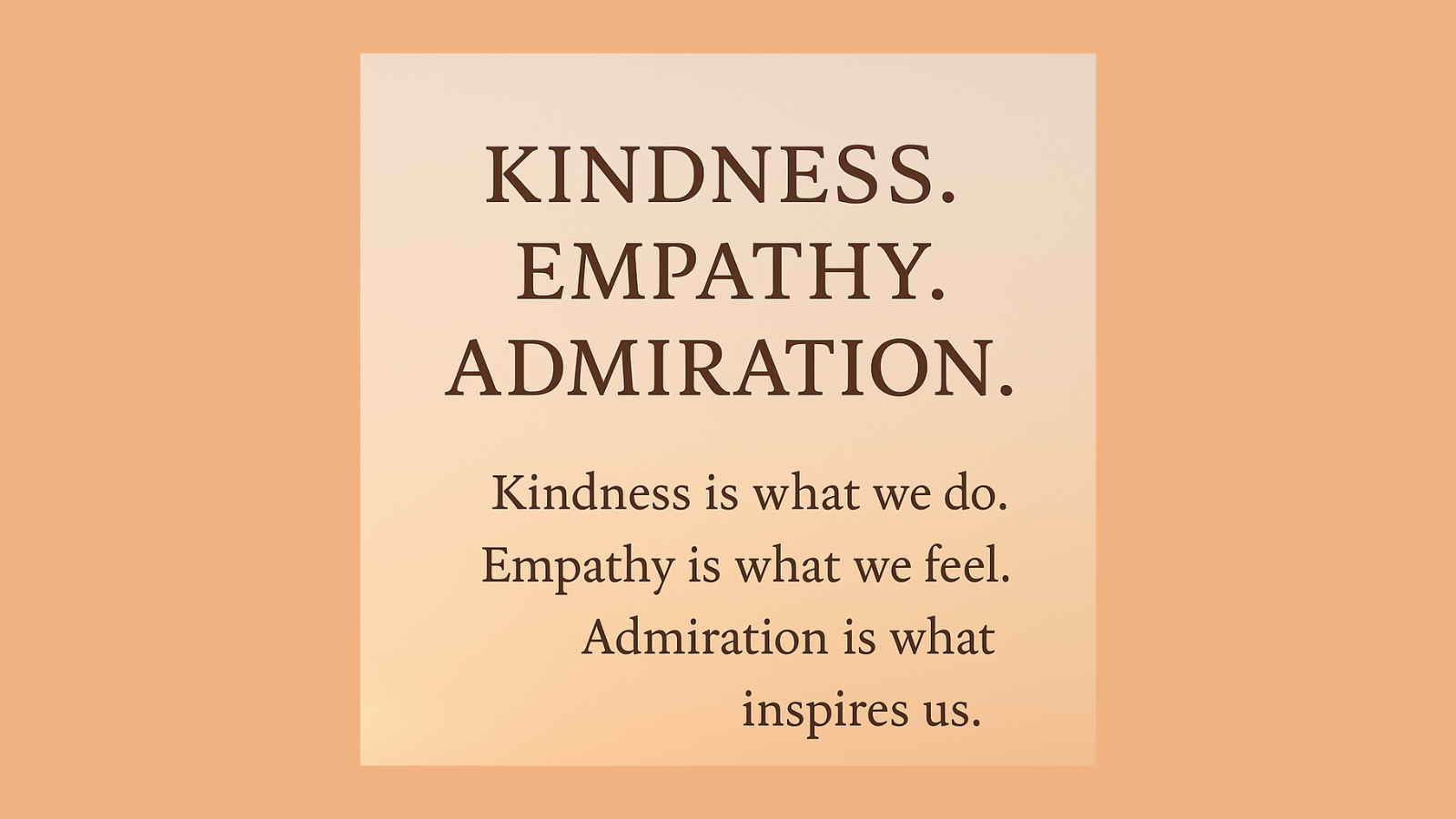
Kindness is what we do.
Empathy is how we understand.
Admiration is how we recognize qualities worth carrying forward.
Each matters. But their greatest influence appears when understanding becomes action, and action becomes an example others choose to follow.