What Augmented Reality Actually Changes
Originally published 2021 | Updated
Augmented reality is often described as a layer placed over the physical world—digital information added to what we already see.
That definition is accurate, but it misses what matters.
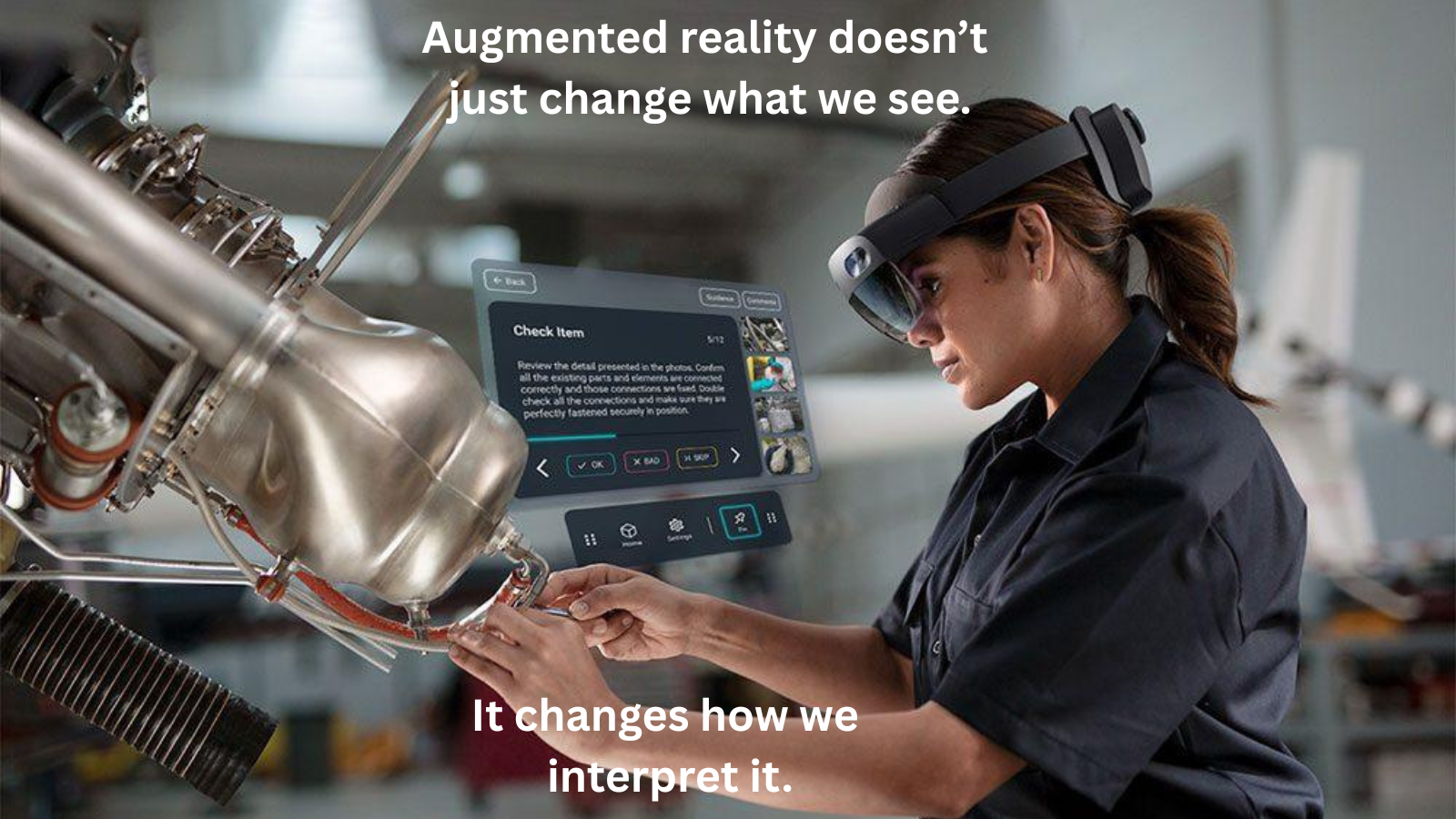
AR does not just change what we look at. It changes how we interpret what we see.
When information appears in real time, overlaid onto physical space, it shortens the distance between observation and decision. A technician sees instructions directly on the equipment. A shopper sees product details without searching. A user receives context without needing to ask for it.
The environment becomes more responsive.
But the deeper shift is not technical. It is behavioral.
As digital layers become more immediate, attention becomes more directed. Fewer steps are required to move from noticing to acting. The question is no longer just what is available—but how quickly it appears, and how much it influences what we do next.
This is where tools like AR begin to matter.
Not as isolated innovations, but as part of a broader change in how people interact with information—less searching, more receiving; less delay, more immediacy.
Like many technologies, its impact will not come from the tool itself, but from how consistently it reshapes everyday interaction.
And over time, those small shifts tend to matter more than the technology that introduced them.