Irony is one of the most powerful and versatile tools in literature. It can reveal truth through contradiction, soften difficult moments with humor, or expose the distance between appearance and reality. When used effectively, irony does more than add cleverness to a story — it invites readers to pause, reflect, and reconsider what they believe they understand.
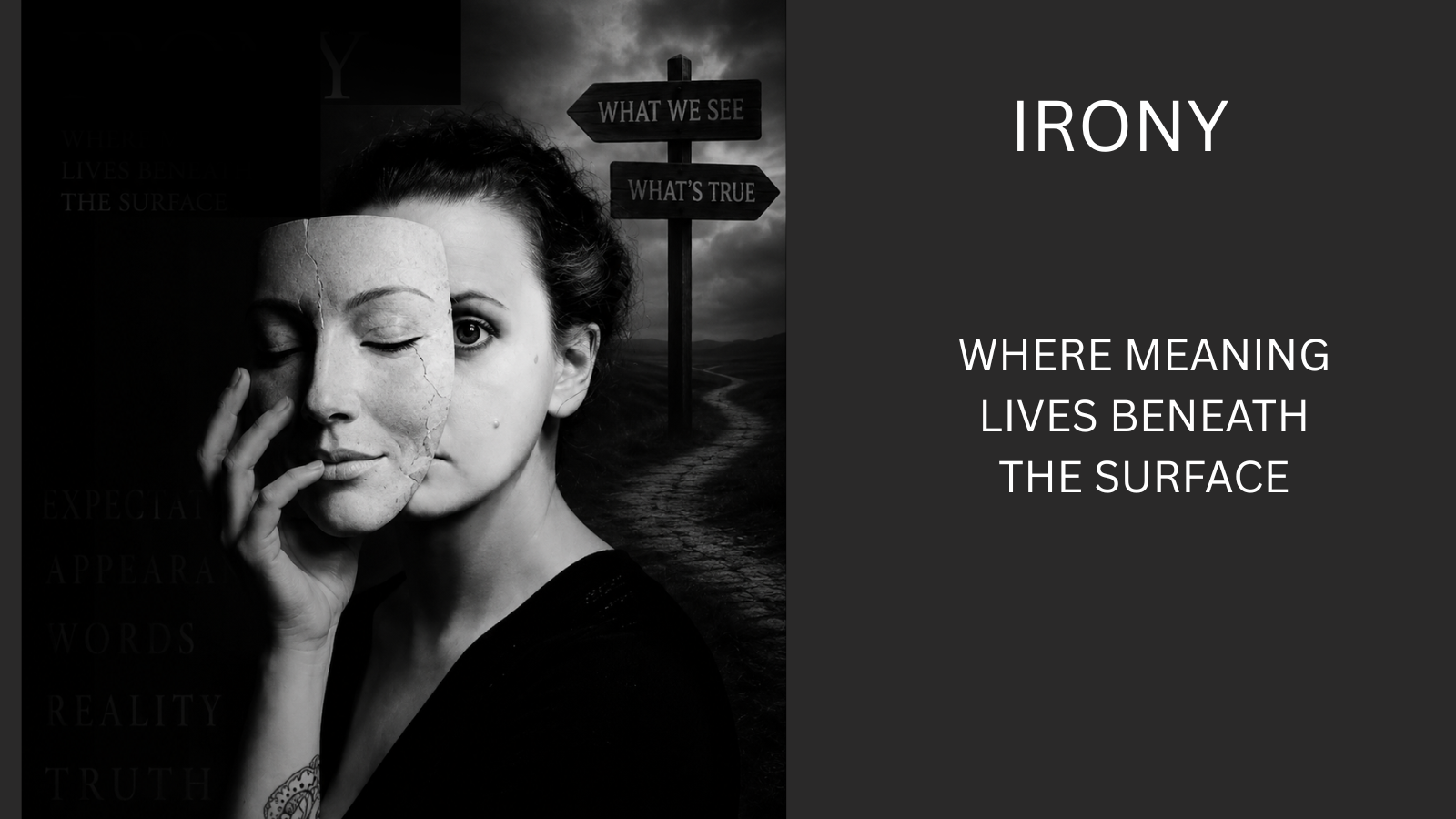
At its heart, irony lives in contrast. It emerges in the space between expectation and outcome, intention and reality, surface meaning and deeper truth. We anticipate one thing, only to discover something entirely different unfolding before us. That tension creates emotional weight. It pulls readers deeper into the narrative because the unexpected often reveals something more honest than the obvious ever could.
Irony can be subtle or dramatic. Sometimes it appears in dialogue, where words mean more than they seem to say. Other times it emerges through circumstance, when events unfold in ways that expose human misunderstanding, vulnerability, or even fate itself. In each case, irony asks us to look beyond the immediate moment and search for the meaning underneath.
This is why irony often lingers in memory long after a story ends. It mirrors real life. People say one thing while feeling another. Plans collapse while unexpected opportunities appear. Moments that seem insignificant at first later become defining experiences. Irony reflects the unpredictability of human experience and reminds us that truth is rarely as simple as it first appears.
In literature, irony is not merely about surprise. It is about recognition. The reader suddenly sees a deeper layer hidden beneath the surface — a contradiction, a quiet truth, or an uncomfortable reality that could not have been expressed as powerfully in a direct statement.
Often, irony is where literature becomes most human.
And sometimes, it is where the deepest meaning quietly waits to be discovered.
Click below for another article that is full of the gap between what characters say, what they understand, and what the reader recognizes.