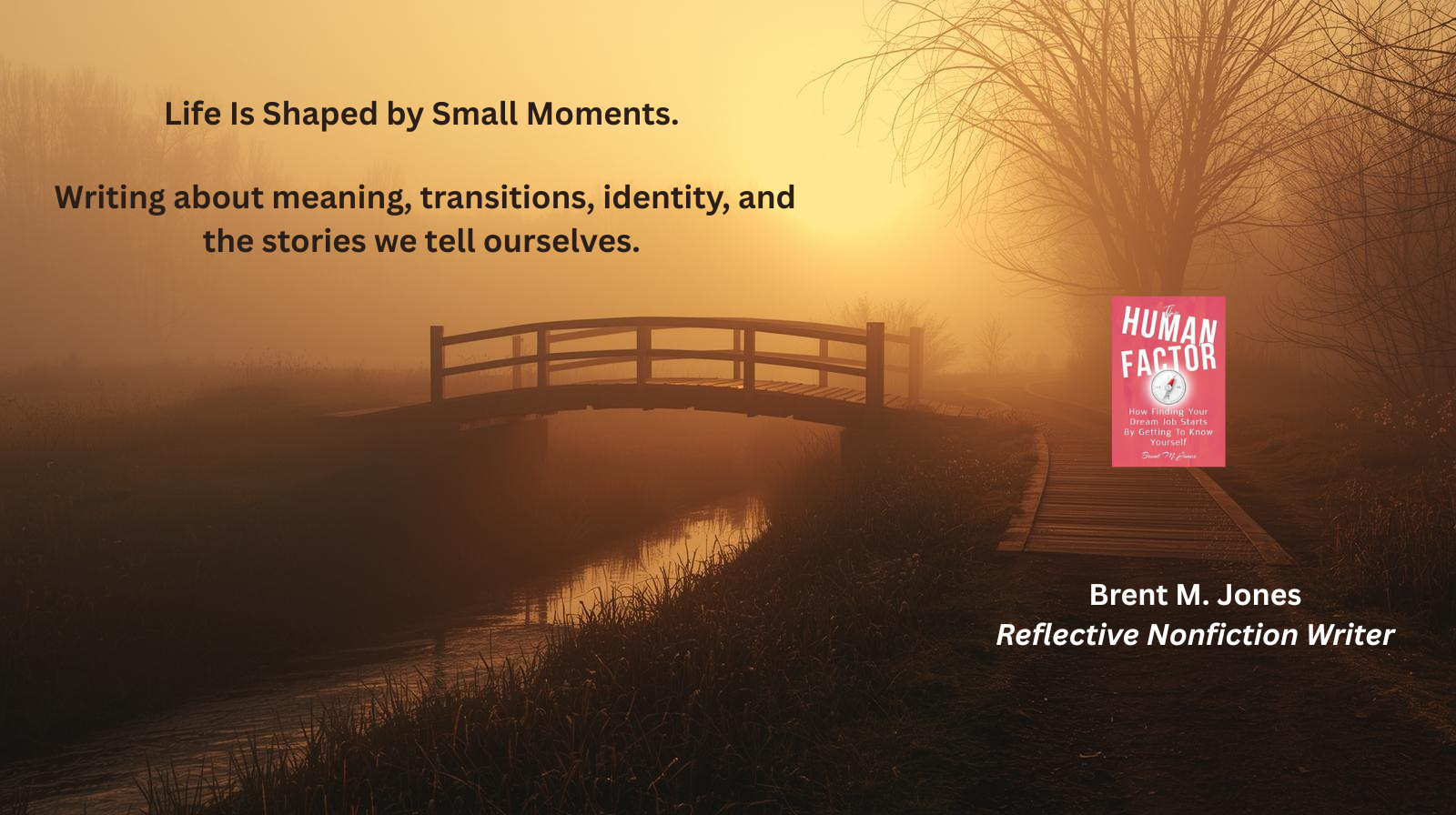
Why The Human Factor Needed to Change
I wrote The Human Factor more than once because the questions it explores kept deepening.
The original version was honest, but over time I realized it wasn’t finished—not because it was wrong, but because I had changed. The way I understood work, identity, and purpose had shifted. The language needed to catch up.
As I continued writing, coaching, and paying attention to my own moments of transition, it became clear that the book wasn’t really about careers or outcomes. It was about the quieter space underneath those things, the moments when something no longer fits, even if we can’t yet explain why.
Those moments tend to arrive without instructions. They don’t announce themselves clearly. They show up as restlessness, uncertainty, or a feeling that an old story is starting to loosen. I wanted the book to reflect that reality more honestly.
So I rewrote it. Not to add more advice. Not to offer better answers. But to create more room for reflection.
The expanded edition leans further into listening, noticing, and understanding ourselves before rushing to fix or define what comes next. It allows more silence between ideas. More space for readers to recognize their own experience without being told what it should mean.
This version of The Human Factor is quieter, slower, and more intentional. It reflects a belief I’ve come to trust: clarity doesn’t arrive through force. It emerges when we stop arguing with what we’re feeling and start paying attention to it.
If you’ve read an earlier version, this edition may feel different. That difference is intentional. It mirrors the way growth actually happens, not in straight lines, but through small shifts in understanding over time.
This book changed because I did.
And because the questions it explores deserve the time and space to unfold.
If you’d like to return to the book itself, you can read more about The Human Factor on the main book page.