HUMANS BOW DOWN, by James Patterson & Emily Raymond →
The Great War ended. The human race lost and the machines one. The robots are replicas of humans in every way, except they lack feelings and emotions. Over time, these same robots evolved into something of better suited to be a replacement for humans called Hu-Bots.
The Hu-Bots require all humans to bow down when asked or be killed. They must serve their new masters or be banished to the Reserve where the landscape and environment is unforgiving and where it is a crime just to be human. It doesn’t seem really clear what the Hu-Bots really expect from the humans since they still have their own robots doing the work.
The evil leader of the bots is planning to first capture all the humans in the Reserve and make them bow down but then he also wants to eliminate every human.
The humans are just referred to by number and Six is a very determined woman who lost her parents in the Great War and whose brother and sister are in a prison. She has a trusted partner, Dubs, and they are running for their lives. They discover a secret that may help them free the humans.
It seems odd that the most interesting character is Hu-Bot, MikkyBo. She undergoes a moral awakening and her struggles are interesting. The book seems to lose something about halfway through. It isn’t clear why the Hu-Bots look at things the way they do, and the plot seems to narrow into a last-minute revelation of the Bot’s leaders’ motive. No explanation as to why it took so long to come out.
James Patterson and Emily Raymond’s book, Humans Bow Down, is a genre change for Patterson with the dystopian world in which people lead wretched, dehumanized, fearful lives. (Rated 2 star out of 5)
See Favorite Authors for more on James Patterson
Bowing Down Quotes
"I will not have my life narrowed down. I will not bow down to somebody else's whim or to someone else's ignorance." ~ Bell Hooks
"And once I knew a meditative rose That never raised its head from bowing down, Yet drew its inspiration from the stars. It bloomed and faded here beside the road, And, being a poet, wrote on empty air With fragrance all the beauty of its soul." ~ Henry Abbey
"Keep me away from the wisdom which does not cry, the philosophy which does not laugh and the greatness which does not bow before children." ~ Khalil
"Painful for a person is rebellious independence, only in loving companionship with his associates does a person feel safe: Only in reverently bowing down before the higher does a person feel exalted." ~ Thomas Carlyle
If you like James Patterson you will like Jeffery Deaver. Click for review of The Never Game
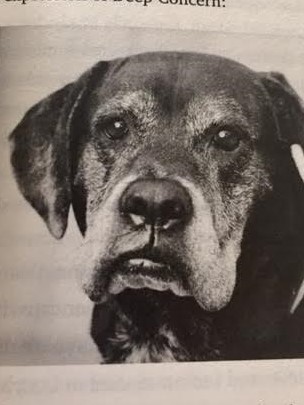
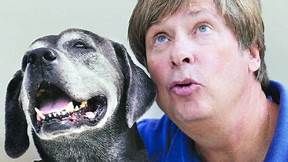
Lessons From Lucy, by Dave Barry
The Simple Joys of an Old Happy Dog
Dave Barry is 70 years old, the same age in dog years as Lucy his 10 year old dog, so he has started thinking more about how much time he, Dave, has left. He said: “If our lives were movie credits, we’d be way down at the bottom, past the assistant gerbil wrangler. If our lives were Cheez-It bags we’d be at the stage where you hold the bag up and tilt it into your mouth to get the last crumbs. In other words: the end Is in sight.” Stephen King said of the book “If you have grown old along with Dave, who is now seventy, you will want to read this book.” King is also in his seventies and a good friend of Dave, but his advice is still good.
The first of the seven life lessons he learns is the to “Pay Attention to the People You Love (Not Later. Right Now.).” Lucy lives in the moment. She does have moods and even gets mad. When the garbageman comes, she “objects vociferously—she cannot believe we allow this to happen—he is taking our garbage,” but as soon as he leaves, Lucy has forgotten him and moves on to the next moment in her life. Barry tries to apply this lesson but finds it hard to be present, rather than looking at his phone.
Another lesson he learns from Lucy is “Don’t Lie Unless You Have a Really Good Reason, Which You Probably Don’t.” Lucy doesn’t lie as we learn when she knocked down the Christmas tree. She greeted the family when they came home “whimpering and flattening herself on the floor in the yoga position known as Pancake Dog.” Barry takes a lesson from this but thinks he is doing ok with this lesson.
The last lesson in the book was an add on inserted after the epilogue and tells a touching story of the Barry families recent near tragedy. It adds some meaningful depth to the book.
The book is one of Barry’s best.
Quotes
"Never be afraid to try something new. Remember that a lone amateur built the Ark. A large group of professionals built the Titanic."
"Everyone has a right to be stupid. Some just abuse the privilege.”
"Your hand and your mouth agreed many years ago that, as far as chocolate is concerned, there is no need to involve your brain."
"Proofread carefully to see if you any words out."
"The Democrats seem to be basically nicer people, but they have demonstrated time and again that they have the management skills of celery. They're the kind of people who'd stop to help you change a flat, but would somehow manage to set your car on fire. I would be reluctant to entrust them with a Cuisinart, let alone the economy. The Republicans, on the other hand, would know how to fix your tire, but they wouldn't bother to stop because they'd want to be on time for Ugly Pants Night at the country club"
"I had no shoes and I pitied myself. Then I met a man who had no feet, so I took his shoes.
"Although golf was originally restricted to wealthy, overweight Protestants, today it's open to anybody who owns hideous clothing."
Use the Buy Button Below to Buy this Book on Amazon
The Postcard Killers by James Patterson & Liza Marklund
Jacob Kanon, a New York City police investigator travels to Europe to hunt down the murderer of his daughter Kimmy who has killed young couples in Paris, Copenhagen, Frankfurt, and Stockholm. In Sweden Kanon joins up with journalist Dessie Larsson who has gotten a postcard from the killers. For each of the murders a postcard has been sent to the local newspaper.
The two young attractive killers stalk other young couples almost following a script and coaching their victims back to their hotel room to kill them.
The plot twists and turns and holds you but slows down a little at the end.
See More about James Patterson at Favorite Authors Tab click here
James Patterson Quotes
"Imagine life is a game in which you are juggling five balls. The balls are called work, family, health, friends, and integrity. And you're keeping all of them in the air. But one day you finally come to understand that work is a rubber ball. If you drop it, it will bounce back. The other four balls...are made of glass. If you drop one of these, it will be irrevocably scuffed, nicked, perhaps even shattered."
"Your mind creates your reality. If you expect nothing, you open up the universe to give you options. If you expect the worst, you usually get it."
"Stop trying to write sentences and start trying to write stories."
"You see, one of the best things about reading is that you'll always have something to think about when you're not reading."
"For a long time it had seemed to me that life was about to begin -- real life. But there was always some obstacle in the way, something to be gotten through first, some unfinished business, time still to be served, a debt to be paid. Then life would begin. At last it dawned on me that these obstacles were my life."
Bad Luck and Trouble, A Jack Reacher Novel, by Lee Child
Bad Luck and Trouble is what Jack Reacher finds when he starts hearing about the death of old friends. One with two broken legs is pushed out of a helicopter 3000 feet over the California desert in the middle of the night. Others on the former elite ex-army investigators are also being hunted down when Reacher is tracked down to help.
Finding him is no small feat as he has nothing but the cloths on his back and a ATM card and no address constantly wandering. Frances Neagley who served with him in the old elite team finds him by putting an anonymous deposit to his bank account which Reacher automatically analyses the amount. The deposit of $1030 which Reacher recognizes as their old army code, 10–30, for urgent help needed.
Reacher and Neagley find that 3 of the old team of 5 are missing but the others work together to find out what has happened. The team trusts each other but the twists and turns of the plot keep us on the edge of our seats to the very end.
See Favorite Authors for more on Lee Child click here
Quotes
“You do not mess with the special investigators.”
“Slippery slope. I carry a spare shirt, pretty soon I'm carrying spare pants. Then I'd need a suitcase. Next thing I know, I've got a house and a car and a savings plan and I'm filling out all kinds of forms.”
“Now they broke my toothbrush, I don't own anything.”
“We investigate, we prepare, we execute. We find them, we take them down, and then we piss on their ancestors’ graves.”
“Facts were to be faced, not fought.”
“You tell a lot of lies, Ms. Berenson,” he said. Berenson said nothing. Neagley said, “She’s Human Resources. It’s what they do.”
Yondering, by Louis L'amour
Yondering is a collection of short stories by Louis L'Amour, published in 1980. Unlike his traditional Old West subject matter, Yondering contains a mix of adventure and character studies, primarily set in the first half of the 20th century.
The best way to understand why L’Amour would write the type of stories in Yondering is to read his book The Education of a Wandering Man that starts with him dropping out of school at age 15 becoming a wandering young man. He first became a hobo on the Southern Pacific Railroad, then a Cattle Skinner in Texas. He even became a world traveler, merchant seaman, based in Singapore. He made a living anyway he could. He worked as a hired hand, cowboy, and even as a prize fighter. He traveled the rails, lived in hobo camps, and learned while listening to men around the fires in the evening teaching him to be a natural storyteller.
Yondering tells stories that likely had there setting in early travels before L’Amour settled on western plots. It contains two stories that are set in the World War 11 time period and others in oceans and cities and mountains throughout the world
L’Amour said about the stories: “I have collected some of these in Yondering. They are glimpses of what my own life was like during the early years. Those were the rough years; often I was hungry, out of work and facing situations such as I have since written about.”
The stories are interesting. They bring the time and places into real focus and represent some of his best work. Your left wishing, he had written an entire book rather than just a short story.